Blueprint Engines Break-In Oil: What to Use and What to Confirm First
The short answer
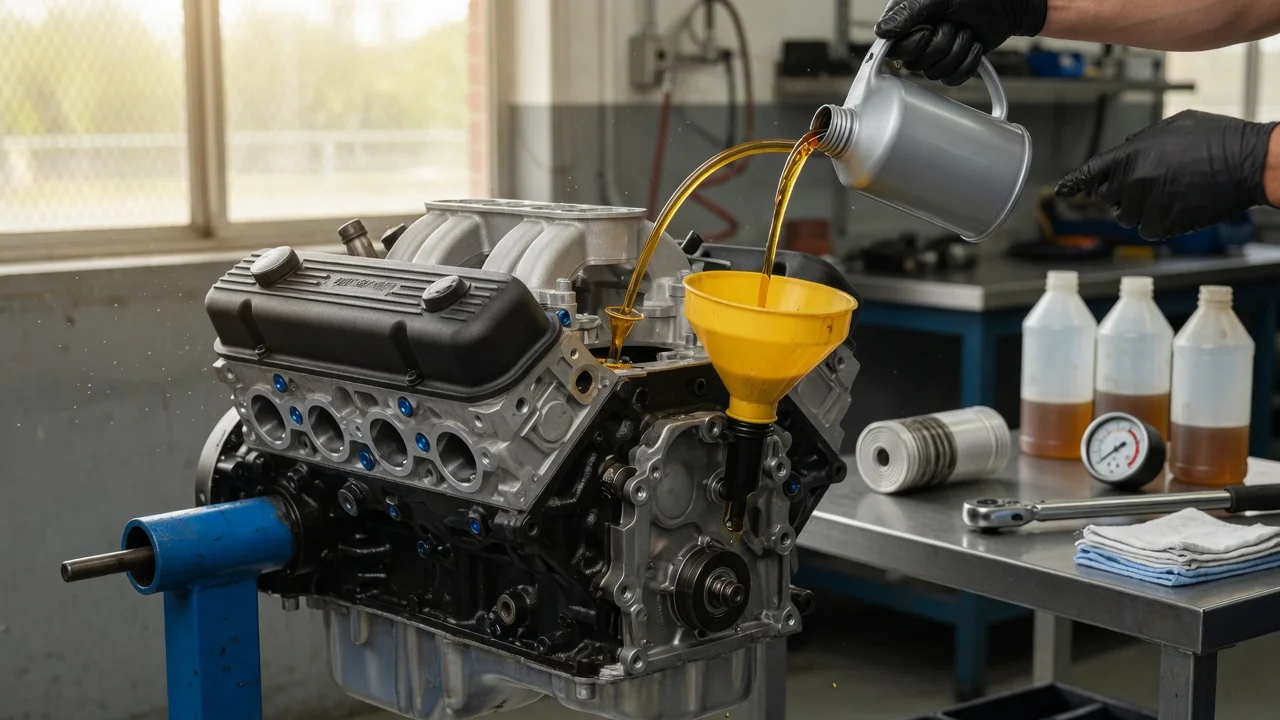
Use the break-in oil, viscosity and procedure specified in the paperwork that shipped with your specific Blueprint engine. That documentation, not a general rule, is the authority, because the right oil depends on how your particular engine was built. The single detail most likely to change the answer is the camshaft and lifter design: an engine with a flat-tappet camshaft generally needs an oil with enough anti-wear additive to protect the cam during its first run, while a roller-cam engine is far less sensitive to this. If you no longer have the instructions, or they do not name a product, contact Blueprint Engines directly with your engine's part or serial number before first start-up.
This guide could not confirm which oil brand, viscosity grade, change interval or break-in mileage Blueprint currently specifies for any engine in its range. Those details were not available in the material used here, so treat the points below as a checklist for getting the correct answer rather than as a substitute for it.
Why the camshaft type matters most
A flat-tappet camshaft uses lifters that slide across the cam lobes. During the first minutes of running, the lobe and lifter surfaces wear in against each other under very high contact pressure. Oil with an adequate level of anti-wear additive, most commonly zinc dialkyldithiophosphate (ZDDP), helps prevent the lobes from wearing away during this stage. Many modern passenger-car oils contain reduced levels of this additive, which is why flat-tappet engines are often paired with a dedicated break-in oil.
A roller camshaft uses lifters with a small wheel that rolls along the lobe instead of sliding. That greatly reduces the contact stress the oil has to manage, so the cam itself is less dependent on a high-additive break-in oil. Piston rings, bearings and other parts still go through a break-in period, however, so the builder's oil and procedure instructions still apply.
Blueprint's lineup covers more than one engine family, and this guide could not verify which camshaft type each model uses. Check your engine's specification sheet or build documentation rather than assuming based on engine size or family.
What to check before you buy oil
Engine part number and serial number, which identify the exact build. Camshaft and lifter type: flat-tappet or roller, hydraulic or solid. The oil product, viscosity grade and any additive the instructions name or rule out. Whether the engine was dyno-tested or run at the factory, and if so, whether the instructions change the break-in steps because of it. The required first oil and filter change point and the oil to use afterward. Any warranty conditions tied to the break-in oil, procedure or documentation you must keep.
Warranty considerations
Crate engine warranties can depend on following the builder's installation and break-in instructions, including the oil used. The specific terms of Blueprint's warranty, and whether they require a named oil or proof of purchase, could not be confirmed here. Read the warranty document for your engine, and keep receipts for the oil and filter you use during break-in in case they are requested later.
If your instructions are missing or unclear
Avoid filling the engine based on a forum recommendation or the oil you use in another vehicle. Contact Blueprint Engines' customer support, have your engine's part and serial numbers ready, and ask three direct questions: which oil and viscosity to use for break-in, how long to run it before the first change, and which oil to switch to afterward. Getting those answers in writing before first start-up protects both the engine and any warranty claim.