Bleed brakes through an ABS module
The short answer
On many cars with an anti-lock braking system (ABS), you can bleed the brakes the same way as on a car without ABS: open each caliper or wheel-cylinder bleeder in the order the manufacturer specifies and push old fluid and air out. This usually works when air has only entered the lines, calipers or wheel cylinders. The ABS module needs special treatment when air may have reached its internal valves and passages. That can happen if the master cylinder or reservoir ran dry, the ABS hydraulic unit was replaced or disconnected, or the pedal stays soft after a careful conventional bleed. In those cases, many manufacturers specify an automated or assisted bleed that uses a scan tool to cycle the ABS pump and valves.
The correct method depends on the vehicle. ABS designs and bleed procedures differ between manufacturers, and sometimes between model years and trims of the same model. The service information for the specific vehicle is the authority on bleed sequence, tool requirements and whether a scan-tool procedure is required.
Key terms
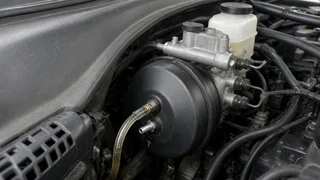
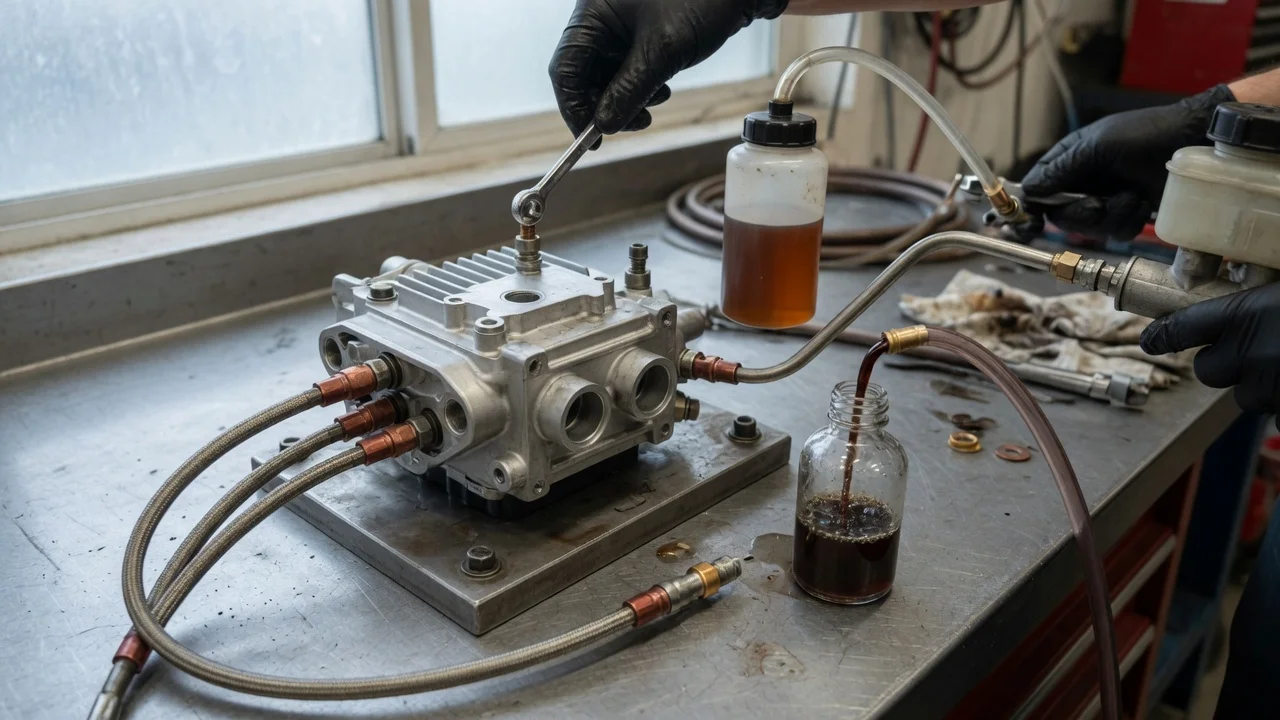
ABS module: in everyday use, the combined electronic control unit and hydraulic control unit (HCU) that modulates brake pressure at each wheel. Hydraulic control unit (HCU): the valve block, often with an integrated pump, that brake fluid passes through on its way to the wheels. Conventional bleed: manually pushing fluid through the system with a pedal-and-bleeder routine, a pressure bleeder or a vacuum bleeder. Automated or assisted bleed: a procedure in which a scan tool commands the ABS pump and valves to run so trapped air moves out of the module and into the lines, where a conventional bleed can then remove it.
Which approach fits your situation
Situation | Typical approach | Qualification; Routine fluid change, reservoir never ran dry | Conventional bleed at each wheel | Follow the vehicle's specified wheel order; Caliper, hose or line replaced at one wheel | Conventional bleed, sometimes at that wheel only | Check service information on whether all corners must be bled; Master cylinder replaced or reservoir ran dry | Often requires a scan-tool ABS bleed plus a conventional bleed | Requirements vary by manufacturer; ABS hydraulic unit replaced | Procedure depends on whether the replacement unit is supplied pre-filled | Some units arrive filled with fluid, others dry; a dry unit generally requires the scan-tool procedure; Pedal still soft after a correct conventional bleed | Suspect air trapped in the ABS unit and consider a scan-tool bleed | Rule out leaks and other mechanical faults first
General sequence for an ABS-equipped car
Find the vehicle-specific procedure. It gives the bleed order, which on many vehicles starts at the wheel farthest from the master cylinder but on some follows a different pattern, especially with diagonally split brake circuits. It also states whether a scan-tool ABS bleed is required. Use the fluid type marked on the reservoir cap or listed in the owner's manual. Keep the reservoir above the minimum mark throughout. Letting it run low can pull air into the master cylinder and the ABS unit. Perform the conventional bleed at each wheel in the specified order until clear, bubble-free fluid comes out. If a scan-tool bleed is required, run the ABS bleed function as instructed. These routines usually prompt for pedal applications and bleeder openings in a set order. Afterwards, repeat the conventional bleed to remove the air that has been pushed out of the module. Check pedal feel with the engine running and stopped, and confirm the ABS warning light is off before driving. Test the brakes at low speed in a safe area before normal use.
Cautions that apply to ABS systems
Avoid triggering ABS activation during the bleed, such as by test-driving on loose surfaces, before the conventional bleed is complete. On some systems this can move trapped air from the module into the lines. When pedal-bleeding with an older master cylinder, many technicians limit pedal travel rather than pushing it to the floor. Full strokes can drive the master-cylinder seals over deposits in the bore. Brake fluid damages paint and absorbs moisture. Clean up spills promptly and do not reuse old fluid. Generic scan tools do not all support ABS bleed functions for every make. Confirm the tool supports that function on the specific vehicle before relying on it.
When to use a shop
If the vehicle needs a scan-tool ABS bleed and you have no compatible tool, a workshop with manufacturer-level diagnostics is the practical route. The same applies if the pedal is still soft after a correct bleed. A low or sinking pedal is a safety issue, and the car should not be driven until it is resolved.
Limits of this guide
This article gives general guidance on ABS-equipped hydraulic brake systems and does not cover any specific make, model, model year or market. No vehicle-specific procedures, bleed sequences, scan-tool menus or specifications were available for it. Vehicles with brake-by-wire systems, integrated electro-hydraulic brake units or some hybrid and electric powertrains may require procedures that differ substantially from those described here, often with mandatory diagnostic tools. Check the vehicle's service information before starting.