Biggest Turbocharger for a Car
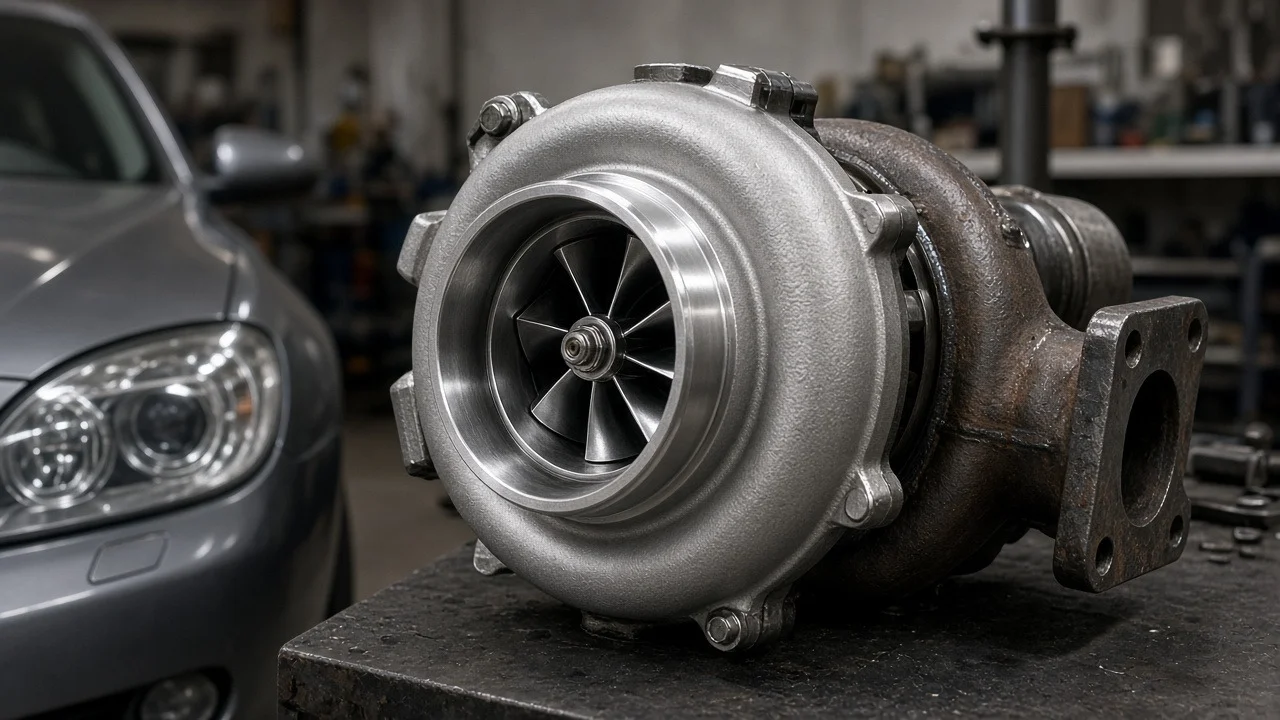
Owners drawn to record-setting street or race builds do not simply bolt on the largest housing they can find. The term “biggest turbocharger for a car” is relative: a compressor that works on a large-displacement V8 may choke a 2.0-liter engine at low rpm. The realistic upper limit depends on wheel inducer and exducer dimensions, turbine housing geometry, available exhaust energy, and how much boost pressure the intake and charge-air temperature can tolerate. This guide explains why a physically large turbo is meaningful only when its compressor outlet flow and response curve match the engine’s operating range.
Essential answer
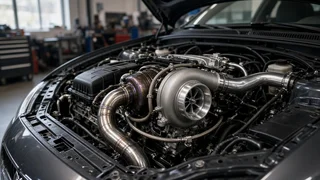
There is no single largest automotive turbocharger for every car because the useful ceiling is set by the engine's exhaust flow, not by the physical size of the unit alone. A massive frame turbo used on a high-horsepower tractor pull or drag car can produce enormous airflow, yet it may not build meaningful boost pressure on a stock street engine until very late in the rev range. The subject therefore covers custom race units, large-frame commercial turbochargers adapted to automotive use, and nominally smaller turbos that are oversized for a specific displacement.
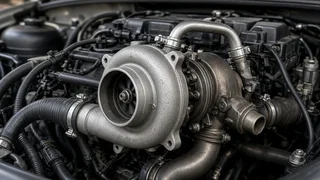
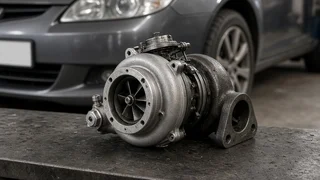
When evaluating a big turbo, look past the shiny compressor housing and consider the compressor wheel inducer size and turbine housing A/R relationship. A unit with a very large inducer can move a lot of air, but the turbine side must receive enough exhaust energy to spin it quickly. Charge-air temperature also rises sharply at high pressure ratios. Without an appropriate intercooler, the denser charge becomes less useful, and pressure loss through restrictive piping or undersized hose connections can cancel the airflow gain that the larger compressor was meant to provide.