Best Bluetooth OBD2 Scanners: Choosing a Wireless Diagnostic Tool
Start with the intended use
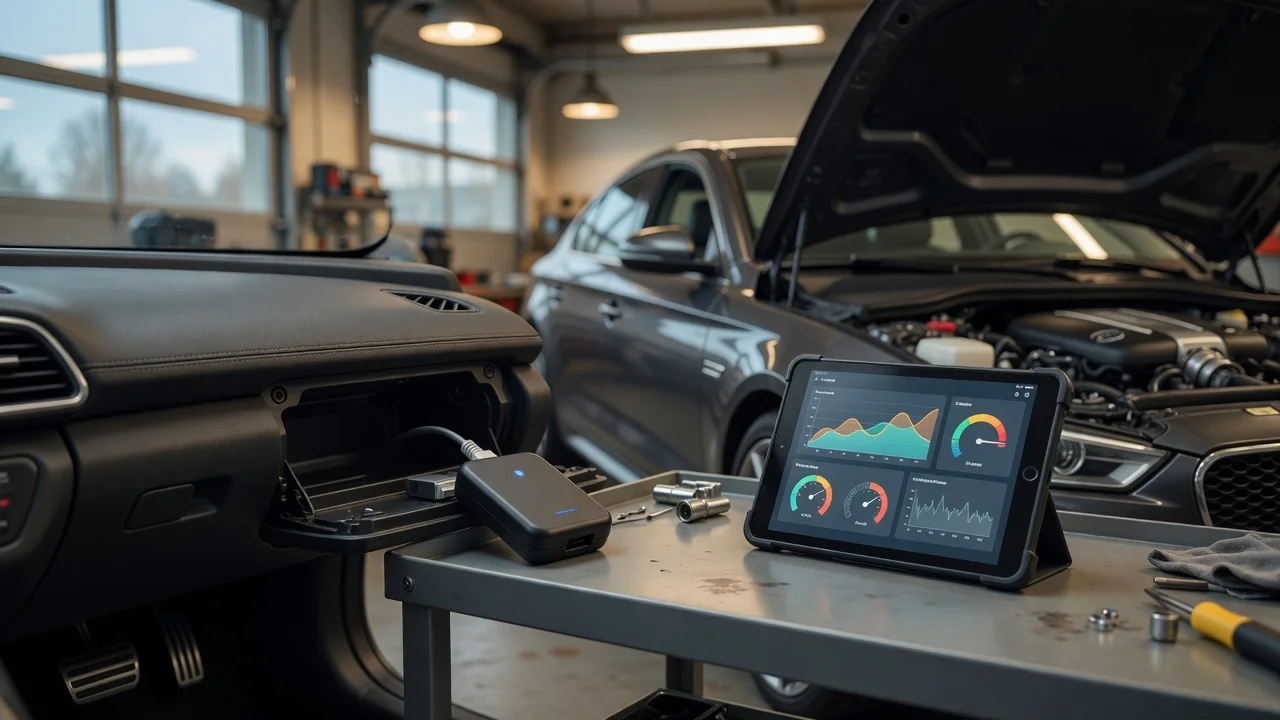
A Bluetooth OBD2 scanner is most useful when you decide where it will live and what it should do. The common setup is a small adapter that stays plugged into the vehicle's OBD2 port and sends data to a phone or tablet over Bluetooth. Some people carry one adapter between cars for quick code checks. Others keep a dedicated adapter in a daily driver and open a diagnostic app before a long trip or after a warning light appears.
Think about the phone, mounting position and cabin environment as part of the setup. A phone placed on a dashboard mount needs a stable wireless connection without the driver touching it while moving. A wireless diagnostic scanner should also be easy to remove when the vehicle is parked in a hot or cold space, because extreme cabin temperatures can affect the adapter housing and connector.
Define the result you need before comparing specifications. Reading and clearing basic engine codes is different from monitoring live sensor data, checking emissions readiness or viewing manufacturer-specific modules. Write down whether the scanner only needs to support a check-engine light, or whether it must remain connected during a drive while an app records coolant temperature, speed, fuel trim and other values.
Features that matter
Bluetooth versions affect connection stability and how easily the adapter pairs with a phone. A newer Bluetooth version can improve reconnection after the vehicle is restarted, but the app and phone radio also affect behavior. Wireless range matters less inside a car than interference and automatic reconnection. The adapter should stay paired when the app is reopened and should not require removing and reinserting it for every session.
The supported OBD2 protocols are important for older vehicles. OBD2 has several signaling protocols, and a scanner must support the ones used by the target vehicle. Many current adapters cover the common CAN protocols as well as older ISO and SAE variants, but compatibility should be checked against the vehicle rather than assumed from the adapter's marketing description.
App support changes what you can do with the same adapter. Some tools are designed around their own app, while others work with third-party diagnostic applications. A basic app may only read and clear trouble codes. A more capable app can display live parameters, graph sensor readings, read freeze-frame data and show emissions monitor status. The adapter hardware and the app together determine whether a feature is available, so evaluate them as a pair.
Sleep and power behavior deserves attention. A Bluetooth car diagnostic scanner can draw a small current from the OBD2 port even when the engine is off. Many adapters include a low-power sleep mode, but the behavior may vary depending on the vehicle and whether the phone remains connected. If the vehicle is parked for weeks at a time, check the adapter's documented sleep behavior and consider removing it when it is not needed.
Check compatibility
Start with the vehicle rather than the adapter. Bluetooth OBD2 works with a broad range of cars and light trucks, but the model year and market can affect protocol support. Vehicles sold in the United States from 1996 onward are generally required to support OBD2, while the introduction date can differ in other regions. Diesel vehicles, hybrids and some early OBD2 implementations may have different access or fewer supported parameters.
Phone and app compatibility are equally important. Check whether the diagnostic app supports the operating system version on your phone or tablet. Some adapters require a specific app for firmware updates or advanced features, while others can be used with several apps. An adapter that works with a common third-party app gives you more flexibility, but the app must still document support for the adapter's communication profile.
Connector fit can be a practical issue. The OBD2 connector is standardized, but its location and surrounding trim vary by vehicle. A compact adapter is easier to fit where the port is recessed or close to a panel. If the adapter is too tall, the connector may be stressed or the trim may not close. This does not change diagnostic performance, but it affects whether the scanner can stay installed safely.
Supported formats and updates should be confirmed in the app documentation. A wireless OBD2 scanner does not create universal access to every module in every car. Engine and emissions data are usually accessible, while ABS, airbag or transmission modules often depend on the vehicle and the app's manufacturer-specific support. If you need those systems, look for an app and adapter combination that explicitly describes that coverage for your vehicle.
Build a shortlist
Use a short checklist that matches your intended use. A practical shortlist can be built from the following requirements:
Vehicle year, fuel type and OBD2 protocol; Phone or tablet operating system and diagnostic app; Bluetooth version and reconnection behavior; Basic code reading and clearing; Live data access, freeze-frame data and emissions readiness; Sleep mode or low power draw for long parking periods; Physical size and fit in the OBD2 port location
Compare only the features you can verify from the product documentation or app description. A higher Bluetooth version or a longer feature list does not automatically mean better behavior in your vehicle. Start with the vehicle compatibility, then eliminate adapters that cannot run on your phone or do not fit the port location. After that, compare the app experience for the diagnostics you will actually use.
For a simple code check, a basic wireless scanner with a reliable mobile app may be enough. For frequent monitoring or emissions diagnosis, prioritize stable live data, freeze-frame support and clear presentation of readiness monitors. If the adapter will stay installed, give more weight to sleep behavior and a compact shape. The best Bluetooth OBD2 scanner is the one that remains convenient in your car and gives you usable information without adding a complicated setup each time.