Bad Turbocharger Symptoms and How Long a Turbo Should Last
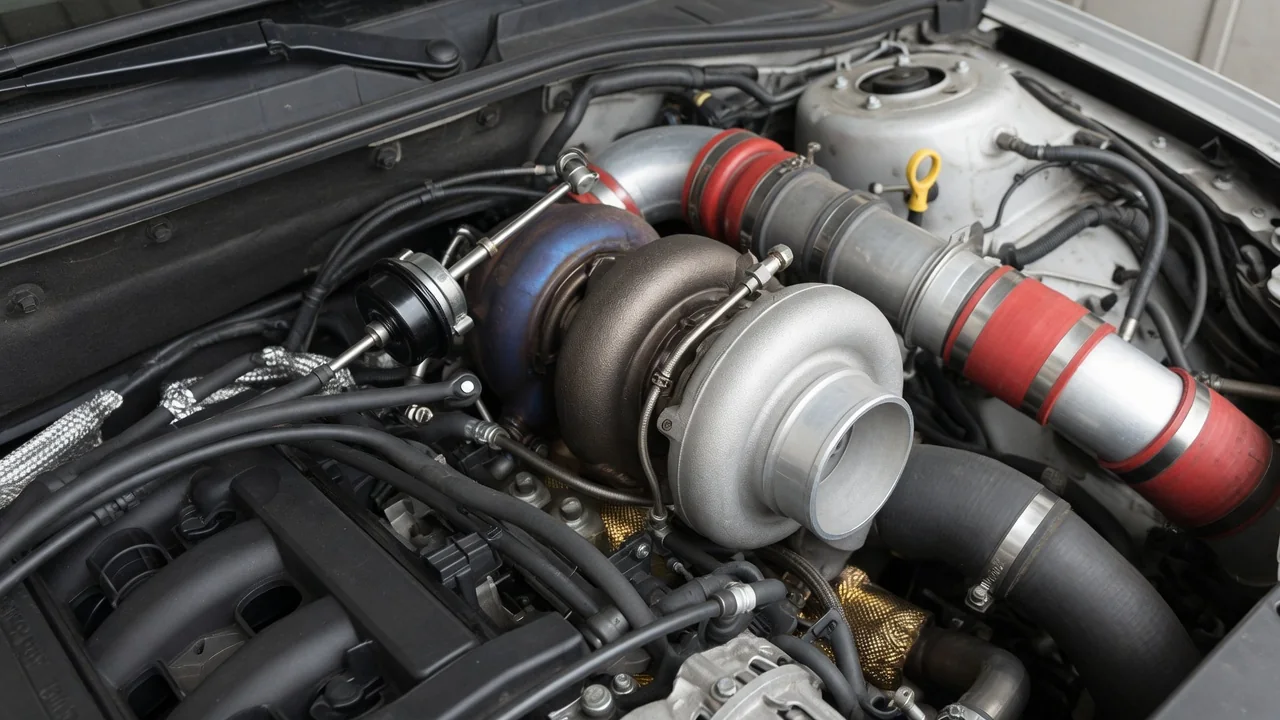
A failing turbocharger often shows itself through exhaust smoke, turbo whine, rising oil consumption, and weak acceleration. Those bad turbocharger symptoms can also come from charge-air leaks, boost-control faults, or engine problems, so they need interpretation rather than an automatic replacement. How long a turbocharger lasts varies with oil supply, heat, and driving load. A structured inspection separates a serviceable unit from one that needs repair or replacement.
Smoke, Noise, Oil Use, and Power Loss That Warrant Attention
A new high-pitched turbo whine, a siren-like tone that rises with engine speed, slower acceleration, higher oil consumption, and persistent exhaust smoke are among the bad turbocharger symptoms worth noting. None of those findings by itself proves the turbocharger has failed. Boost pressure can fall because of a charge-air leak, a stuck wastegate, or a sluggish turbo actuator as easily as from bearing wear. The combination of noise, smoke, and power loss is more informative than any single complaint, especially if the change appeared suddenly after a period of normal operation.
Smoke color and when it appears help narrow the possibilities without locking in a diagnosis. Blue-tinged exhaust smoke under boost can suggest oil reaching the turbine or compressor, while black smoke on a diesel more often points to excess fuel or restricted air. White smoke can reflect coolant or unburned fuel rather than turbo seals. A light oil film in intake plumbing is common and does not establish failed seals. Sudden oil use, new smoke, and a change in sound together still warrant prompt inspection.
When to Stop Driving and What to Observe Safely
If an oil-pressure warning appears, heavy exhaust smoke fills the mirrors, grinding replaces the usual turbo sound, or the engine suddenly loses most of its power, pull over when it is safe, shut the engine off, and arrange towing. Continuing to drive can starve the turbo of oil supply or send debris through the charge-air path. A diesel that accelerates uncontrollably is a different emergency: move people away from the vehicle and seek emergency help. Do not open the hood or try to intervene while the engine is running.
When the situation is not an emergency, note when the noise, smoke, or power loss occurs, whether at cold start, under boost, after a long idle, or at a particular speed, because that timing later guides diagnosis. Check oil level only with the engine off, following the owner's manual procedure, and only if it is safe to do so. Owner observations should stay limited to warning lights, visible oil or coolant leaks, and accessible loose hoses once the engine is off and cool. Do not inspect a spinning turbo, probe the compressor housing, or attempt disassembly.
What Determines Turbocharger Life on Gas and Diesel Engines
There is no universal mileage or age that answers how long a turbocharger lasts. Some units remain serviceable for the life of the vehicle, while others fail much earlier when oil supply, contamination, or heat overwhelm the bearings. Oil quality and the correct specification matter because the shaft rides on a thin film; dirty oil, the wrong viscosity, or a restricted feed line accelerates bearing wear. High exhaust temperature and sustained heavy load raise thermal stress on the turbine and center housing, whether the engine burns gasoline or diesel.
Gasoline and diesel turbochargers share those oil and heat vulnerabilities, and neither fuel type guarantees a longer life. Diesels often run higher boost pressure and can expose variable-geometry hardware to soot, while gasoline engines can see hotter exhaust pulses, but those differences do not translate into a fixed lifespan ranking. Follow the vehicle's maintenance schedule and operating guidance for oil specification, filter service, and any manufacturer notes on cooldown or severe-duty use. Inventing a universal idle-down routine or a one-size oil-change interval is less useful than matching the actual engine's requirements.
Professional Tests That Establish the Cause
Intake leaks, a charge-air leak at a clamp or intercooler, wastegate or turbo actuator faults, exhaust restrictions, and engine problems such as misfire or fueling errors can all mimic bad turbocharger symptoms. A useful car turbocharger repair diagnosis therefore compares requested boost pressure with actual boost, then tests charge-air system integrity rather than assuming the rotating assembly is at fault. Technicians also check actuator travel, wastegate movement where fitted, and whether oil supply and drain passages are clear. Restricted drainback can push oil past seals even when the turbo itself is not worn out.
A stored fault code is evidence to interpret, not proof that the turbocharger has failed. Manufacturer-dependent codes need confirmation against the exact vehicle's documentation before anyone treats them as a replacement authorization. Internal bearing wear, compressor or turbine wheel damage, and excessive shaft movement require qualified inspection against manufacturer specifications, often with the unit off the engine. Replacing a turbo solely because a boost-related code is present skips leaks, control faults, and oiling problems that would damage a new unit just as quickly.
What a Diesel Turbocharger Repair Assessment Should Cover
A diesel turbocharger repair assessment has to start with the boost-control system actually fitted, whether wastegate, variable geometry, or an electronic turbo actuator, and with any exhaust aftertreatment that can raise backpressure when restricted. Fueling faults, a charge-air leak, or a blocked diesel particulate filter can produce black exhaust smoke and weak pull without establishing turbo damage. Comparing commanded and measured boost under load, then isolating air-path leaks, keeps the diagnosis from jumping to a cartridge swap.
Before approving turbo work, the shop should look for oil contamination, coolant in the oil, metallic debris, and foreign-object damage on the compressor or turbine wheels, then identify the original failure cause. Installing a rebuilt or new turbo over dirty oil, a collapsed drain, or intake fragments repeats the failure. Variable-geometry vanes and electronic actuators, where fitted, often need specialist testing and vehicle-specific calibration after repair. Those steps are part of diesel turbocharger repair, not optional extras, because a mechanically sound core can still underboost if the control hardware is stuck or miscalibrated.
Choosing an Appropriate Repair or Replacement
When inspection shows an otherwise serviceable turbocharger, a confirmed split hose, loose clamp, restricted oil line, or control-system fault can be corrected without replacement. Car turbocharger repair in that situation is the leak, the line, or the actuator, not the cartridge. Specialist rebuilding or replacement is justified when qualified inspection finds internal damage, excessive shaft play, wheel contact, or a unit that the manufacturer treats as non-serviceable. Evidence should include the measured findings, not only a complaint of smoke or a stored boost code.
A useful estimate names the diagnosed cause, the proposed turbo or associated parts, labor, necessary oil-system or charge-air work, calibration where an electronic actuator is fitted, and the warranty terms that apply if the original cause is also corrected. After the work, the shop should verify boost operation against requested values, confirm there are no charge-air leaks, and recheck exhaust smoke and oil consumption under the same conditions that first raised concern. Leaving a contaminated oil supply or a restricted drain unaddressed makes even a quality replacement a short-lived repair.