Turbocharger Repair and Replacement: What the Job Involves and What Drives Cost
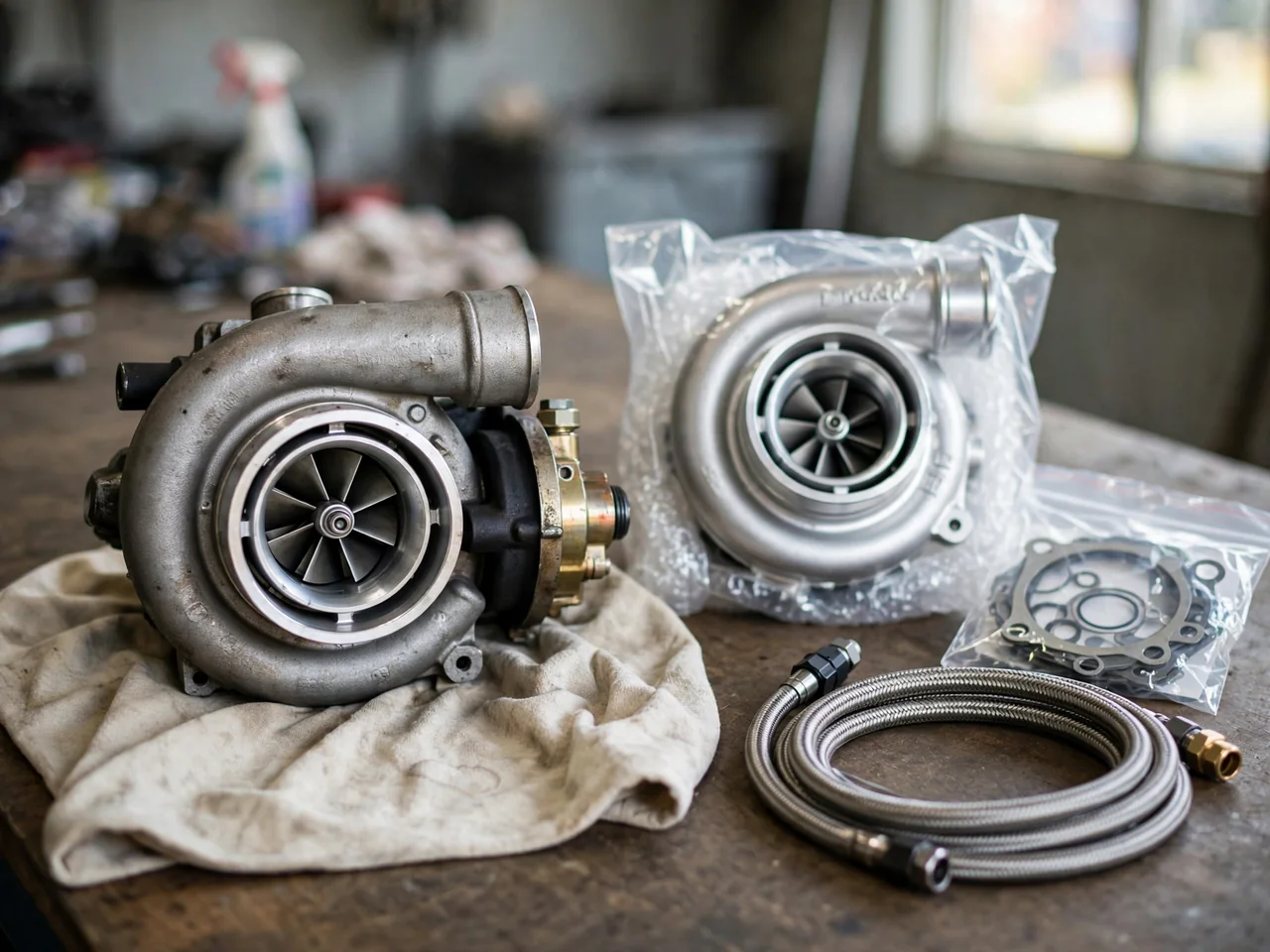
A struggling turbocharger can show up as lost power, odd noises, or smoke, but those symptoms don't always point to the turbo itself. Whether to repair, rebuild, or replace the unit depends on what failed and why. This guide explains how shops confirm a turbo fault, what the replacement job involves, which related parts deserve attention, and what shapes the final bill.
Signs a turbocharger needs attention and how a shop confirms the fault
Owners usually notice a turbo problem as sluggish acceleration or a car that no longer pulls the way it used to, sometimes with a check engine light. A rising whine, siren-like howl, or grinding sound under load can point to bearing wear. Blue or gray smoke and oily residue in the intake tract suggest seals are passing oil. None of these signs proves the turbo is at fault. A split boost hose, a clogged air filter, or a faulty pressure sensor can produce very similar complaints.
Before condemning the turbo, a technician typically checks shaft play at the compressor wheel and looks for wheel contact marks on the housing. They also inspect the intercooler piping for pooled oil and compare logged boost pressure against expected values. A stored boost-related code is only a starting point. Its meaning depends on the manufacturer, so it must be confirmed for the specific vehicle. Owners can safely look and listen with the engine cold, but actuator, variable geometry, and oil supply faults need professional testing. Never run the engine with intake piping removed.
Repair, rebuild, or full assembly replacement: what each option actually covers
A targeted repair fixes one component, such as a sticking wastegate actuator, a failed boost sensor, or a leaking oil feed line, and leaves the turbo itself in place. A rebuild replaces the rotating core, known as the turbo cartridge or CHRA, along with its bearings and seals, while reusing the original compressor and turbine housings. A full assembly replacement swaps the entire unit, including the housings and actuator, for a new or remanufactured turbo. Each route suits a different kind of damage, so the diagnosis decides the option.
A rebuild makes sense when the housings are intact, the turbine housing shows no cracks, and neither wheel has foreign object damage. Damaged housings or a seized or badly worn variable geometry mechanism usually favor replacement. New, remanufactured, and specialist-rebuilt units differ in warranty terms and core charges, so check both before buying. Most importantly, a turbo rarely fails on its own. Oil starvation, contaminated oil, a restricted drain, or excessive exhaust temperatures must be found and corrected, or the new unit will be at risk of the same failure.
What the replacement process involves from drop-off to test drive
This overview is meant to help you understand the job, not to serve as repair instructions, since the work involves hot exhaust parts, pressurized oil, and sometimes coolant. The shop gains access by removing heat shields, intake piping, or the downpipe, and on some engines by lifting the engine or lowering a subframe. It disconnects the oil feed and drain lines and any coolant lines, removes the manifold fasteners, and fits the new unit with fresh gaskets. Turbo location varies widely between engines, so access is the biggest labor variable. Corroded exhaust studs can add considerable time.
Before first start, the technician primes the oil supply so the bearings don't spin dry. A competent shop then checks oil pressure, inspects every oil and coolant connection for leaks, runs a boost pressure test, and scans for stored codes. It usually lets the engine idle before putting it under load. Many manufacturers advise gentle driving for an initial period and an oil level check soon afterward. Exact break-in guidance varies, so follow what the vehicle maker or turbo supplier specifies rather than a generic mileage.
Related parts and checks worth doing at the same time
The oil feed line is commonly replaced alongside a turbo, because carbon or sludge inside it, or a clogged banjo bolt filter screen, can quickly starve a new unit of oil. The drain line and its gasket deserve the same attention, since a restricted return backs oil up into the center housing and past the seals. Fresh turbo-to-manifold and downpipe gaskets are standard. Brittle or corroded coolant lines are worth swapping while everything is apart. An oil and filter change is routine with any turbo replacement.
When a turbo fails, metal fragments and oil can travel into the intercooler, charge pipes, and intake, so these should be cleaned or inspected before the new unit runs. Check the air filter and ducting too, because a torn filter or loose clamp lets debris strike the new compressor wheel. If the old turbo pushed oil into the exhaust, ask the shop whether the catalytic converter or particulate filter needs inspection. That doesn't mean it will need replacing. Confirm fitment for every part by engine code rather than by model name alone.
What determines the price of the turbocharger unit itself
The unit's price depends first on where it comes from. A new turbo from the vehicle manufacturer usually costs the most. Next come new units from the original turbo maker sold through the aftermarket, then remanufactured assemblies. A bare cartridge for a rebuild is typically the cheapest part. Design matters too. A simple fixed-geometry turbo with a basic wastegate generally costs less than a variable geometry or twin-scroll unit with an electronic actuator, which adds precision components and control electronics.
The vehicle and engine also shift the price range. Turbos for small gasoline engines tend toward the lower end, while diesel units, performance applications, and engines with two turbos cost more. Many suppliers add a core charge that is refunded when you return the old unit in rebuildable condition, so keep the failed turbo intact and ask about the return terms. Some sellers include gaskets and fitting kits, while others sell them separately. Prices change and vary by region and supplier, so treat any figure as a rough range until you have a quote.
Total cost of the job: labor, add-ons, and how to read a quote
A complete quote combines the unit and the labor hours, which depend mostly on access. It also covers consumables such as oil, filter, gaskets, and coolant, plus any related parts and diagnostic time if the fault hasn't been confirmed yet. Owners are often surprised that a rebuild saves less than expected, since removing and refitting the turbo takes the same labor either way. Supplying your own part can backfire too. Many shops decline customer-supplied turbos or limit their warranty to labor, leaving you exposed if the unit turns out to be faulty.
When comparing quotes, ask whether the unit is new, remanufactured, or rebuilt, and which gaskets, lines, and fluids are included. Confirm whether finding the root cause is part of the price, what warranty covers both part and labor, and whether the intercooler and intake will be cleaned. Totals vary widely with vehicle type, unit design, and local labor rates. A lower quote that leaves out these items may not end up being the cheaper job once the work is done properly.