AutoZone In-Tank Fuel Pump
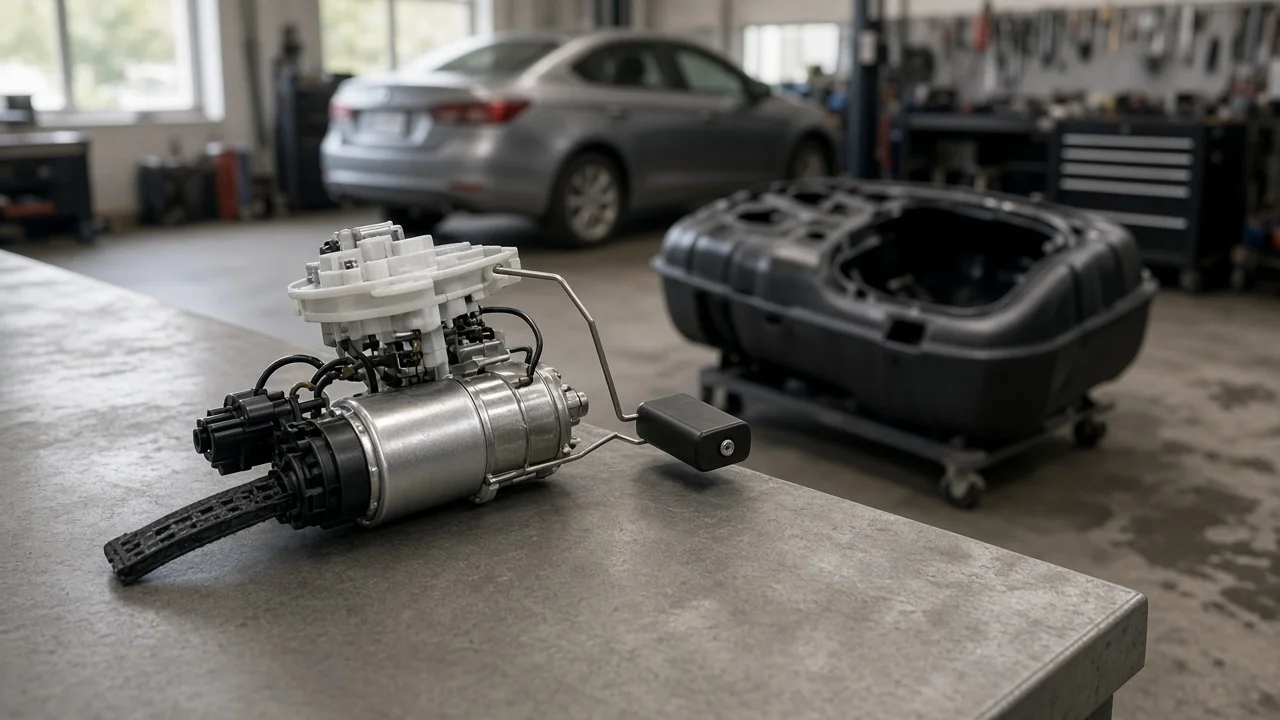
A weak or failing in-tank fuel pump changes how a vehicle starts, accelerates, and holds speed under load. Shoppers looking at an AutoZone in-tank fuel pump are usually trying to solve a no-start, a long crank, a stumble at wide-open throttle, or a lean misfire. The assembly sits submerged in fuel, where it cools the electric motor and supplies steady fuel pressure to the injectors. Understanding that role helps separate a genuine pump issue from a clogged fuel filter, a relay fault, or a wiring problem before the fuel tank is opened.
Essential answer
An in-tank fuel pump is the electric assembly mounted inside the fuel tank that draws fuel through a strainer and pushes it forward under pressure. At AutoZone, the term generally identifies a replacement module, hanger assembly, or pump cartridge designed to restore that flow when the original unit loses output. Because the pump is submerged, fuel lubricates and cools it; low fuel levels and debris can shorten its life. The essential distinction is location: an in-tank unit is not an inline pump mounted on a frame rail or under the hood.
A replacement selection must match the engine configuration and tank design because pump depth, connector shape, and pressure output vary. A pump that fits one model year may not deliver correct fuel pressure for another, and a wrong module can cause a rich or lean fuel trim even if the vehicle starts. The stored fault code is a starting point, not proof the pump has failed. Low pressure at the rail can also come from a clogged fuel filter, a weak relay, poor ground, or a kinked line, so the pump should be tested in the context of the complete fuel system.