AutoCraft Gold Car Batteries: What to Check Before You Buy
The Short Answer
An AutoCraft Gold battery can be a sensible mid-range replacement for many vehicles that originally came with a conventional flooded lead-acid battery, as long as it matches your vehicle's group size, terminal layout, cold cranking amps and battery technology. Two conditions change that answer. If your vehicle has automatic start-stop or originally shipped with an AGM (absorbent glass mat) or EFB (enhanced flooded battery), a standard flooded battery is usually the wrong choice, and you should look at an AGM option instead. And if your old battery died early or keeps going flat, test the alternator and charging system before buying, because a new battery will not fix a charging fault.
Where the Gold Line Fits
AutoCraft is a store-brand battery line associated with Advance Auto Parts in the US. The range has typically been split into tiers, with Gold sitting between a more basic option and a premium option that is usually AGM. In practice, a mid-tier battery tends to offer more starting power, reserve capacity or warranty coverage than the entry model for the same group size, without the higher cost of AGM. Exact specifications, warranty terms and pricing vary by group size and can change over time, so read the label and the warranty terms for the specific battery you are buying rather than relying on the tier name alone.
What to Check Before Buying
Group size: the BCI group number defines the case dimensions and general layout. Use the size listed in your owner's manual, on the original battery, or in the store's fitment lookup for your exact model year, engine and trim. Terminal position and type: confirm the positive terminal is on the same side as your old battery and that the post type (top post or side post) matches your cables. Cold cranking amps (CCA): this rating indicates starting ability in cold weather. Meet or exceed your vehicle's original specification, especially in colder regions. Reserve capacity (RC): the number of minutes a battery can supply a steady load if the alternator stops charging. Higher RC helps vehicles with many electronics or frequent short trips. Battery technology: flooded, EFB or AGM. Replace like with like, or upgrade from flooded to AGM; avoid downgrading. Hold-down fit: the base ledge and height must suit your vehicle's clamp or strap so the battery cannot shift. Manufacture date code: batteries slowly lose charge on the shelf. Choose a recently made unit and ask staff how to read the date code if it is not obvious. Warranty terms: check the free-replacement period, any prorated period afterward, and what proof of purchase is required.
Specification | What it tells you | Where to confirm it; Group size | Physical dimensions and layout | Owner's manual, old battery label, fitment lookup; CCA | Cold-weather starting power | Original battery label or vehicle specification; RC | Backup power if charging fails | Battery label; Technology (flooded, EFB, AGM) | Compatibility with start-stop and charging strategy | Original battery label, owner's manual; Terminal layout | Whether cables reach without strain | Compare with the old battery
Flooded vs. AGM: Don't Downgrade
Vehicles with start-stop systems cycle the battery far more often than conventional vehicles, and many modern cars use charging strategies tuned for a specific battery type. AGM and EFB batteries are built to tolerate that repeated cycling. Fitting a standard flooded battery in their place may work at first but often leads to shortened battery life, start-stop features that stop operating, or warning messages. If the original battery says AGM or EFB, choose that type. If your vehicle originally used a flooded battery, a flooded mid-tier battery such as a Gold-level option is a reasonable match, and an AGM upgrade is optional rather than required.
Make Sure the Battery Is Actually the Problem
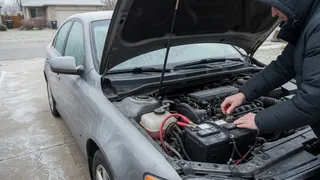
A battery that failed young or keeps discharging often points to something else in the electrical system. Many parts stores offer free battery and charging-system tests, and a basic multimeter can give you a first look. As a general guide, a fully charged, rested 12-volt battery usually reads around 12.6 volts with the engine off, and a working charging system typically raises that to roughly 13.5 to 14.5 volts with the engine running. Some newer vehicles use variable charging that can read outside that range during normal operation, so a professional load test is more reliable than a single voltage reading.
The battery or charging warning light comes on while driving. Headlights or dash lights dim and brighten with engine speed. The battery goes flat repeatedly even after a long drive. You hear whining or grinding from the alternator area, or smell hot electrical components. The vehicle starts fine after a jump but dies again within a short time. The battery dies after the car sits for a few days, which may indicate a parasitic drain rather than a weak battery.
If any of these apply, have the alternator, belt, cables and grounds checked first. Corroded or loose terminals alone can mimic a failing battery and are worth cleaning and tightening before you replace anything.
Installation Considerations
Battery registration: some vehicles, particularly certain European models, use a battery management system that must be told a new battery was installed. Skipping this step can cause overcharging or reduced battery life. Memory settings: disconnecting the battery may reset radio presets, clock, idle learning or window auto-up functions. A memory saver can help, or you may need to follow a relearn procedure. Location: some batteries sit under a seat, in the trunk or behind panels, which can make professional installation worthwhile. Core charge: US retailers commonly add a refundable core charge that is returned when you bring back the old battery for recycling. Connection order: disconnect negative first and reconnect it last, and make sure the hold-down is secure.
When a Different Tier Makes More Sense
Choose an AGM option if your vehicle has start-stop, originally came with AGM, or carries heavy electrical loads such as aftermarket audio, winches or extensive accessories. Consider a higher tier if you live somewhere with harsh winters or very hot summers, since heat and cold both shorten battery life. An entry-level battery may be enough for an older, simple vehicle you plan to keep only briefly. A mid-tier flooded battery like the Gold line suits a typical daily driver that originally used a flooded battery and needs reliable starting without the cost of AGM.