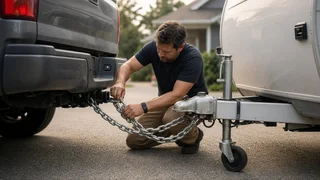
Australian Standard for Trailer Safety Chains
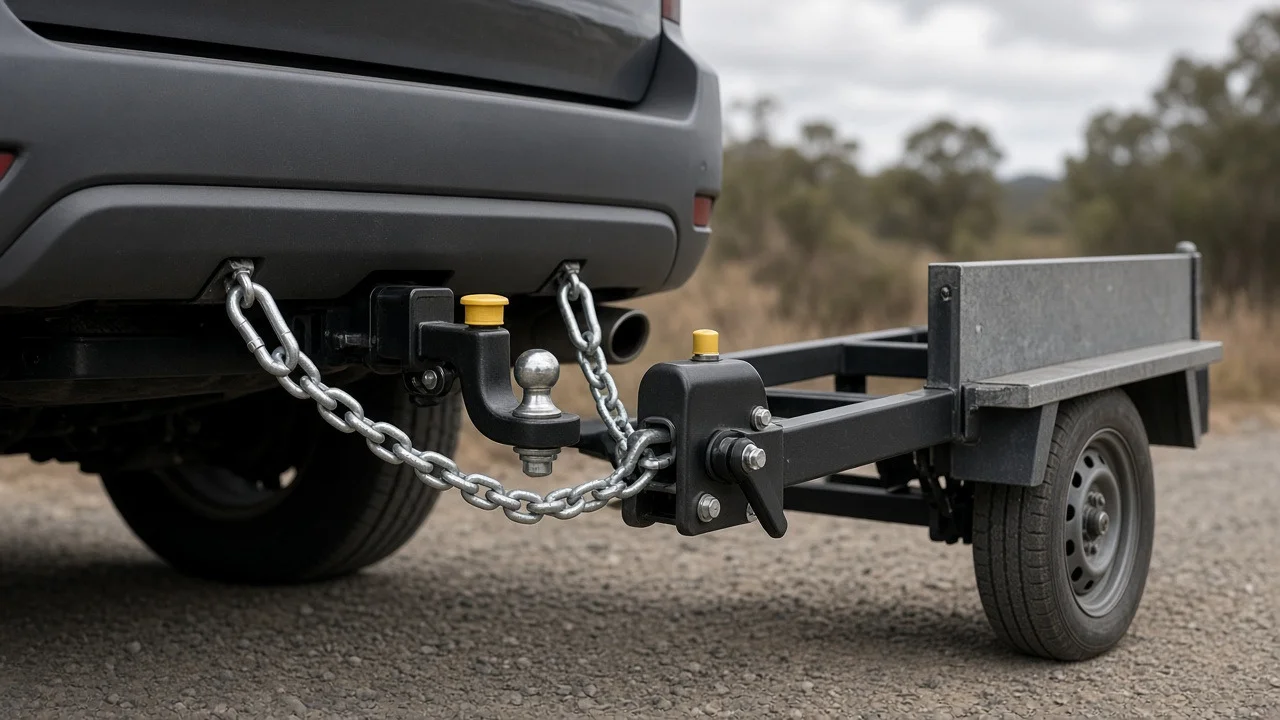
Towing safely depends on the secondary connection between a trailer and the tow vehicle, and Australian requirements for trailer safety chains address that link in a specific way. A driver researching this subject is usually trying to understand what the standard covers, how it differs from familiar US chain practices, and why the terminology matters when selecting or inspecting equipment. The Australian framework treats the chain not as a universal afterthought but as a load-rated part of the towing setup. That distinction affects everything from chain grade and attachment to how the trailer behaves if the primary coupling separates.
Essential answer
The Australian Standard for trailer safety chains establishes requirements for the chain, shackles, and connection points intended to retain a trailer if the main coupling fails. In practical terms, it is a design and selection standard rather than a simple length recommendation. The chain must be capable of carrying the trailer’s loaded weight under sudden loading, and the attachment method must prevent the drawbar from digging into the road surface. Understanding this changes the conversation from merely having a chain to confirming that the chain assembly has an appropriate load rating.
A major qualification is that compliance depends on the configuration of the trailer and tow vehicle. The required chain capacity relates to the aggregate trailer mass, not just the unladen weight or tongue weight. Because the chain can be the final restraint during a coupling separation, its strength must reflect the full loaded trailer rather than a lighter nominal figure. Drivers should also recognize that manufacturer-dependent chain ratings and attachment details require vehicle-specific confirmation, since a chain suitable for one trailer configuration may be inadequate for another with a higher axle rating or combined weight rating.