Audi A1 steering angle sensor

A faulty steering angle sensor on an Audi A1 can change how the stability control reacts, often leaving the driver with warning lights or heavier steering effort. The sensor measures where the wheel is pointed and compares that position with yaw and acceleration data. On this platform, diagnosing the fault means distinguishing a failed component from a disrupted calibration, damaged clock spring, or incorrect wheel alignment. Electric power steering and chassis systems rely on this signal, so even an intermittent reading can trigger visible symptoms and alter brake intervention during cornering.
Essential answer
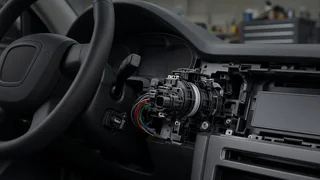
The steering angle sensor tells the vehicle which direction the driver is commanding; it is typically mounted in the steering column near the wheel or integrated with a contact reel. When the signal is missing or implausible, the stability program cannot compare steering intent with the car’s actual rotation. Because the sensor is a measurement point rather than a wear item that fails on a fixed schedule, diagnosis usually starts with reading faults and checking whether the value responds smoothly as the wheel moves lock to lock.
An Audi A1 owner should not assume the sensor is defective simply because a warning lamp appears. A low battery, disconnected harness, or steering rack work can erase learned positions and require re-initialization. Loose mounting points or joint play in the column and suspension can also produce values that drift. If the sensor output is offset after a wheel alignment, the electronic stability control may interpret normal straight-line driving as a yaw error and reduce power or brake one wheel.