Arduino race car data logger
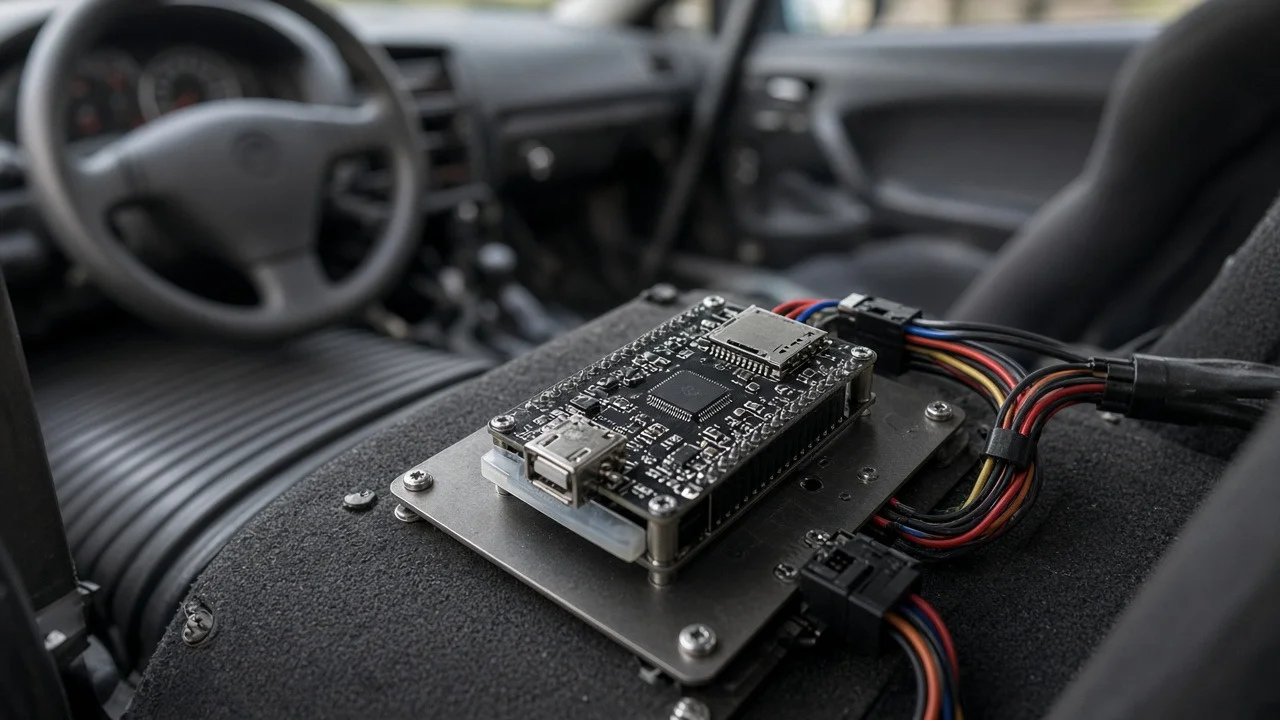
Building a DIY Arduino race car data logger gives you a practical way to capture what the chassis and driver are doing lap after lap. Instead of relying only on seat-of-the-pants feel, you can record sensor channels such as wheel-speed pulses, brake pressure, steering angle, throttle position, engine rpm, coolant temperature and accelerometer readings. The goal is a synchronized log with timestamps that can be exported and turned into a lap trace, helping you find where time is gained or lost. An Arduino-based logger is attractive because it is inexpensive, configurable and open enough to grow with your car and driving goals.
Essential answer
An Arduino race car data logger is a small microcontroller-based system that reads vehicle and driver inputs, then stores those values with a common timestamp for later analysis. It typically combines an Arduino board, a real-time clock or GPS module, an SD-card or flash storage shield, and a set of sensors or signal-conditioning circuits. The logger does not replace a commercial motorsport dash or ECU log, but it can record the data channels most useful for club racing, autocross, track days and testing.
The system's real advantage is flexibility. You can choose which sensors to add and how fast to sample them, so the logger can emphasize channels that matter for your car and driving style. The output is normally a plain data file that can be exported to a spreadsheet or visualization tool and turned into a lap trace. However, the quality of that analysis depends heavily on signal synchronization, sensor calibration and a stable sampling rate. Without those, a large file can contain noisy or misleading information.