American Hybrid Cars
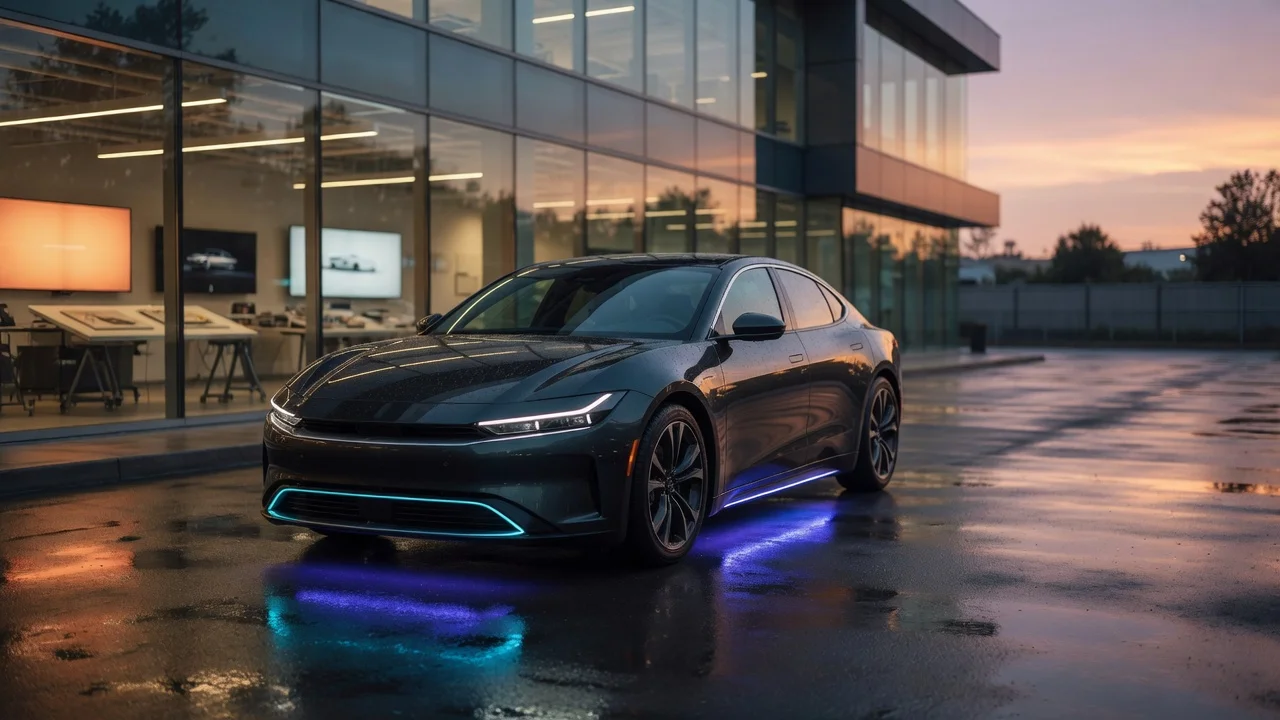
What American hybrid cars are
American hybrid cars are passenger vehicles that combine a gasoline engine with electric-motor assistance and are either sold under a U.S. brand, built for the U.S. market, or assembled in the United States. The phrase is used in all three ways, and the distinction changes which vehicles belong on a shortlist.
If the question is about U.S. nameplates, the relevant makers are Ford and Lincoln; General Motors brands such as Chevrolet, GMC, Cadillac, and Buick; and Stellantis’s U.S. brands, including Jeep, Ram, Chrysler, and Dodge. Those groups sell hybrid cars, crossovers, SUVs, minivans, and pickup trucks, with availability depending on model year, generation, powertrain, trim, and market. If the question is about hybrids Americans actually buy, Japanese and Korean brands account for a large share of U.S. hybrid sales, and several of those models are assembled in American plants. Tesla and other battery-electric specialists are outside this category: they do not use a gasoline-electric hybrid powertrain.
How hybrid systems differ
A hybrid pairs an internal-combustion engine with one or more electric motors and a battery. The battery is charged mainly by the engine and by regenerative braking. A plug-in hybrid (PHEV) adds a larger battery that can be charged from an outlet, so a useful stretch of driving can be done on electricity alone before the gasoline engine takes over.
Mild hybrid: a small motor-generator assists the engine, smooths stop-start, and recovers some braking energy. It does not propel the vehicle on electricity alone.
Full or strong hybrid: the motor can drive the wheels at low speed or light load without the engine, and the system can shut the engine off in traffic. No plug is required.
Plug-in hybrid: a larger battery and a charge port allow several to several dozen miles of electric-only range, depending on the model year and battery. After that range is used, the vehicle behaves like a conventional hybrid.
U.S. brands use all three layouts. Ford has offered full hybrids in compact pickups, crossovers, and full-size trucks, plus plug-in versions of some crossovers in certain years. Jeep’s 4xe models and the Chrysler Pacifica Hybrid are plug-in hybrids. General Motors has fielded full hybrids, plug-in hybrids, and performance hybrids in selected cars and trucks; several earlier GM hybrid passenger cars have been discontinued, so a current-year window sticker and the specific generation matter more than the brand’s history. Exact electric range, fuel economy, horsepower, towing ratings, and pricing are variant-dependent and should be read from the EPA label and the manufacturer’s specification for that model year, powertrain, and trim. Those figures are not restated here because they change by year and configuration.
Scope that changes the shortlist
Brand origin, assembly location, and sales market do not line up. A Ford Maverick Hybrid or Jeep Wrangler 4xe is an American-brand hybrid. A Toyota Camry Hybrid or Honda Accord Hybrid sold in the United States is an American-market hybrid, and many such vehicles are built in U.S. factories. A vehicle assembled in Mexico or Canada for U.S. sale may still be treated as a domestic product under trade rules while remaining a foreign brand in the showroom. Readers comparing “Buy American” claims, fleet incentives, or parts-content labels need the window sticker’s assembly and content information for that VIN’s model year, not the brand’s headquarters country alone.
Body style also shifts the field. Among U.S. brands, hybrids are more common in pickups, three-row SUVs, and minivans than in compact sedans. Shoppers who want a small hybrid sedan from a U.S. nameplate will find fewer current options than shoppers who want a hybrid truck or a plug-in SUV. Import-brand hybrids fill much of the compact-car and compact-crossover space in the U.S. market.
What they are for
Full hybrids suit mixed commuting where a plug is inconvenient. They cut fuel use most in city and suburban traffic, where the engine can shut off and regenerative braking recovers energy. On long highway trips they still use gasoline, with a smaller efficiency gain than in stop-and-go driving. Plug-in hybrids suit drivers who can charge at home or work and whose daily miles often fit inside the electric range; gasoline remains available for trips beyond that range. Mild hybrids mainly improve smoothness and a modest amount of fuel use; they are not a substitute for a full hybrid if electric-only creeping in traffic is the goal.
Pickup and SUV hybrids from U.S. brands are often bought for towing, payload, and cabin space as much as for fuel savings. Hybrid torque can help from a stop, but towing capacity, payload, and cooling limits are still set by the specific truck or SUV configuration. A hybrid badge does not by itself mean a higher tow rating than the gasoline twin. Those ratings are published per cab, bed, axle ratio, and powertrain and should be checked for the exact build.
Ownership points to confirm before buying
Confirm the powertrain type on the window sticker: hybrid, plug-in hybrid, or mild hybrid. For a PHEV, confirm charge-port type, onboard charger rate, and EPA electric range for that model year. Confirm whether the vehicle can use regular gasoline or requires a higher octane. Confirm spare-tire, towing-package, and all-wheel-drive availability, because some hybrid trims omit a spare or limit towing compared with gasoline versions of the same nameplate.
Battery and hybrid-system warranties on U.S.-market hybrids are typically longer than the basic vehicle warranty, but terms vary by manufacturer and model year. Ask for the federal emissions warranty and any state-specific zero-emission or hybrid coverage that applies where the vehicle will be registered. Plug-in hybrids may qualify for tax credits or state incentives in some years and markets; eligibility depends on battery size, assembly, MSRP caps, and buyer income rules in effect at purchase, which are not stable enough to treat as a fixed feature of the vehicle.
Service access matters. Hybrid high-voltage work is dealer- or specialist-level. Independent shops can handle brakes, tires, and much routine maintenance, but inverter, battery-pack, and transaxle repairs usually go to a brand-trained technician. Parts availability for older GM two-mode systems, early Ford hybrids, and discontinued sedan hybrids is a separate check from current-model support.
How to choose the next step
Decide first whether “American” means a U.S. brand, U.S. assembly, or a hybrid sold in the United States. Then match duty cycle: no plug and mixed driving points to a full hybrid; a nightly outlet and a short commute points to a plug-in hybrid; towing and payload point to a hybrid truck or SUV whose published ratings cover the load. Compare the specific model year and trim, not the nameplate in the abstract. Read the EPA fuel-economy and, for PHEVs, electric-range figures on that vehicle’s label, and confirm towing, seating, and cargo against the build sheet.
This guide does not substitute for a test drive or for current manufacturer specifications. Fuel-economy results, electric range, and real-world charging behavior vary with climate, speed, load, and charging habits, and they are not reported here as independent test findings. Where a current U.S.-brand hybrid sedan, a particular GM passenger-car hybrid, or a given incentive amount is required, those details have to be verified against that model year’s order guide, because several earlier American hybrid cars are out of production and replacement nameplates change.