Upgrade 3rd Gen 4Runner Brakes with Tundra Parts
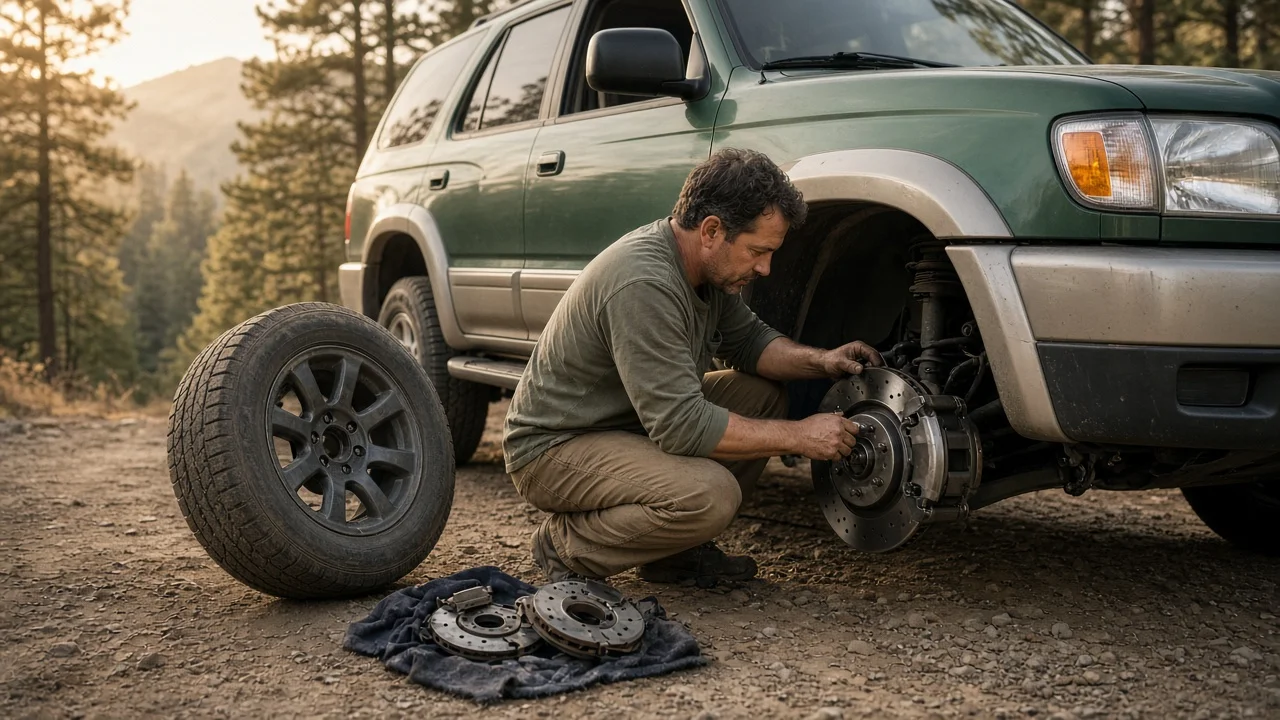
The 3rd gen 4Runner Tundra brake upgrade is one of the best-known brake improvements for the 1996–2002 Toyota 4Runner. It replaces the factory front calipers and rotors with larger first-generation Tundra parts that bolt onto the 4Runner's existing front hardware. Owners usually choose it because the stock front brakes can feel overworked once the truck carries larger tires, extra weight from armor or gear, or regular towing loads.
The Short Answer
Yes, a 3rd gen 4Runner can use front calipers and matching rotors from an early first-generation Tundra. The result is more caliper piston area, a larger and heavier rotor, and generally better resistance to brake fade. Three things qualify that answer. First, it changes only the front brakes; the rear drums stay stock. Second, the larger rotor and caliper need more room inside the wheel, so some smaller-diameter wheels will not clear. Third, the right parts depend on the Tundra's model year, so buying by year range alone, without checking the caliper and rotor, can produce a mismatch.
What the Swap Changes
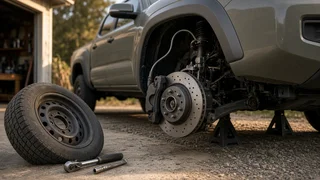
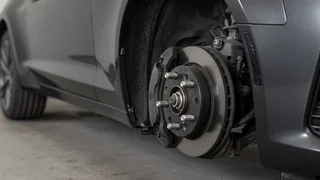
The factory 3rd gen 4Runner uses a multi-piston front caliper clamping a solid-hat vented rotor. The Tundra caliper commonly used for this swap is often called the 13WL caliper after its casting mark. It has larger pistons and a larger pad, and it pairs with a rotor that is both bigger in diameter and thicker than the 4Runner's. In practical terms, that adds three things:
Greater clamping leverage: the larger rotor diameter means the pads act farther from the hub center, so the same clamping force creates more braking torque. More pad area: the larger brake pads spread friction material over more surface, which helps manage heat and pad wear. More thermal mass: a heavier, thicker rotor absorbs and sheds heat more effectively, which reduces fade during long descents, towing or repeated hard stops.
The upgrade does not change the ABS system, the rear brakes or the master cylinder. Because the front calipers move more fluid per stroke, pedal feel can change. Many owners describe a firmer, more confident pedal, but results vary with the condition of the rest of the hydraulic system.
Parts Typically Involved
Component | Source | Notes; Front calipers (left and right) | Early first-gen Tundra | Confirm the caliper casting and that the bracket matches the 4Runner knuckle mounting; Front rotors | Matching Tundra application | Must suit the caliper; check hub pilot and lug pattern compatibility; Brake pads | Matching the Tundra caliper | Choose a friction material suited to your use (street, towing, off-road); Brake fluid | Type specified on the 4Runner reservoir cap | Needed for bleeding after the swap; Crush washers and banjo hardware | New | Replace rather than reuse when reconnecting hoses
Calipers are widely sold as remanufactured units, which is the simplest route for most owners. Rotors and pads are sold under the Tundra application. Some vendors also sell complete kits labeled for 3rd gen 4Runner or same-era Tacoma fitment. Read the listed application carefully, because later Tundra brakes use different hardware and are not interchangeable.
Vehicle Fitment Checks Before You Buy
Confirm your drivetrain: 4WD and 2WD 3rd gen 4Runners do not always share front hub and knuckle details, so verify that the swap is documented for your configuration. Check wheel clearance: the larger caliper sits farther out radially. Factory 16-inch wheels are commonly reported to clear, while many 15-inch wheels do not. Aftermarket wheels vary with spoke design and inner barrel shape. Inspect the dust shields: the shields behind the rotors often need trimming to clear the larger rotor. Look at the brake hoses: the stock flexible hoses usually reconnect to the new calipers, but confirm the banjo fitting and routing, especially on lifted trucks where hose length is already a concern. Match the year range: buy calipers and rotors from the same Tundra application so the caliper and rotor dimensions agree.
If you are unsure about wheel clearance, a printed caliper-profile template or a measurement taken from an installed caliper is more reliable than general forum claims. When in doubt, test-fit the wheel before final assembly.
Installation Overview
This is not a step-by-step procedure, and the factory service manual for your exact model year should govern torque values and specific steps. The general sequence looks like this:
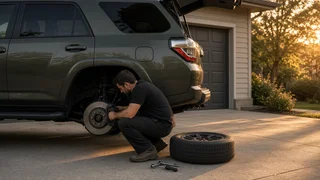
Raise and safely support the front of the vehicle, then remove the wheels. Disconnect the brake hose from the caliper and cap or clamp it to limit fluid loss. Unbolt and remove the factory caliper, then remove the factory rotor. On 4WD trucks, this may require removing the hub assembly, depending on configuration. Trim the dust shield if the new rotor contacts it. Install the Tundra rotor and caliper with new pads, torquing fasteners to specification. Reconnect the hose using new crush washers. Bleed the brakes thoroughly with fresh fluid, then confirm a firm pedal before moving the vehicle. Test-fit the wheels, check for contact while turning lock to lock, and bed in the new pads according to the pad manufacturer's procedure.
Brakes are safety-critical. If you are not comfortable with hub service, hydraulic bleeding or torque procedures, have a qualified shop do the work.
Brake Fluid and the Hydraulic System
Old, moisture-laden brake fluid boils at a lower temperature, so a fluid flush is worth doing while the system is open. Use the fluid type marked on the reservoir. Because the larger calipers draw more fluid, keep the master cylinder reservoir topped up during bleeding so you don't draw air into the system. On ABS-equipped trucks, a careful manual or pressure bleed is usually enough when the system has not been run dry. If air reaches the ABS actuator, more involved bleeding may be needed.
Wear Limits and Ongoing Maintenance
After the swap, follow the minimum-thickness specification stamped on the new rotors and the wear limits for the Tundra pads, not the old 4Runner figures. Inspect pads and rotors at regular intervals, watch for uneven pad wear that could signal a sticking caliper slide or piston, and replace the brake fluid on the schedule Toyota recommends for your vehicle.
Is the Upgrade Worth It?
For a 3rd gen 4Runner running oversized tires, carrying significant added weight or towing, the Tundra brake upgrade is widely regarded as a cost-effective way to restore stopping confidence using OEM-style parts rather than a specialty big-brake kit. For a stock-height truck on stock tires driven mostly in light use, a fresh set of quality factory-spec pads, new rotors and a fluid flush may deliver most of the improvement a driver will notice. The deciding factors are how much the truck's weight and tire size have grown, whether your wheels will clear, and whether you want to keep 15-inch wheels. That last point alone can rule the swap out.