2017 Ford Escape Trailer Sway Control

When a trailer begins to sway behind a 2017 Ford Escape, the vehicle’s stability electronics can respond before the driver feels the oscillation build. Trailer sway control is not a separate add-on switch in every case; it is often an integrated function within the electronic stability control system. Understanding how this feature works helps an owner evaluate towing behavior, connect the trailer more safely, and interpret dashboard warnings without mistaking a chassis calibration message for a confirmed component failure.
Essential answer
The 2017 Ford Escape can provide trailer sway control as part of its electronic stability and roll stability programming when the vehicle is equipped for towing. The system monitors yaw, lateral acceleration, steering input, and wheel-speed signals to detect a repeating trailer-induced side force. If the pattern indicates sway rather than a normal lane change, the stability controller may reduce engine torque and apply individual brakes to help straighten the vehicle and trailer combination.
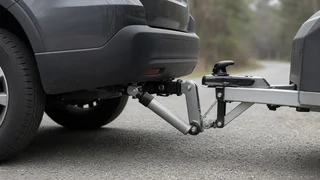
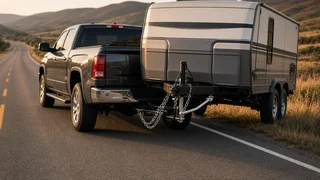
Trailer sway control should not be confused with a traditional load-leveling hitch or a standalone aftermarket sway damper. It is an electronic driver aid that reacts to motion already occurring, while mechanical weight distribution and proper tongue weight shape how the trailer behaves before instability starts. The system’s effectiveness is limited by the trailer’s configuration, the available payload, gross vehicle weight rating, gross combined weight rating, axle ratings, and the condition of the tires and brake components.