Yukon Locking Hub Selection: How to Choose the Right Hubs for Your 4WD
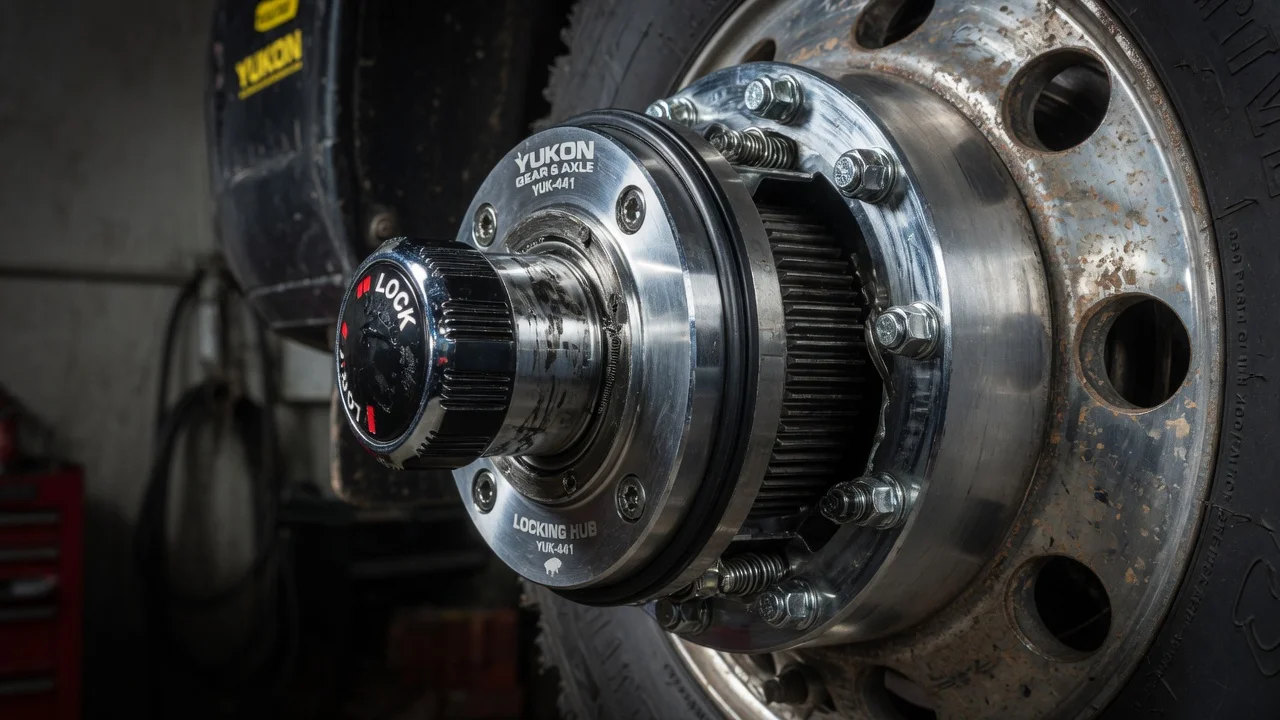
Yukon locking hubs are aimed at owners of part-time four-wheel-drive trucks who want manual control over when the front wheels connect to the front axle. Some buyers are replacing worn factory hubs, while others are converting away from automatic or vacuum-actuated systems. The right choice depends less on the brand name than on your axle, spline count and how the truck is actually used. This guide walks through those checks so you can narrow the options before ordering parts.
Define the job the hubs must do
A manual locking hub connects or disconnects a front wheel hub from its axle shaft. When the hubs are unlocked and the transfer case is in two-wheel drive, the front wheels can turn without back-driving the axle shafts and differential. When they are locked, engine torque can reach the front wheels once four-wheel drive is selected. Before comparing products, be clear about which problem you are solving: a factory hub that slips or will not engage, an automatic or vacuum system you no longer trust, or a build that now sees harder off-road use than the original parts were chosen for.
Your operating conditions shape what matters. A truck that engages four-wheel drive a few times each winter on snowy roads asks something very different from a rig with larger tires, lockers and regular rock or mud work. Higher loads on the front driveline make the hub a more important link, and frequent water crossings make sealing a bigger concern. Be honest about how often you engage the front axle and how much traction the tires and differential setup can actually put through it.
Practical constraints also count. Manual hubs mean stopping and turning a dial on each front wheel before you need four-wheel drive, which some owners welcome and others find inconvenient. Consider your budget for the hubs and any related parts, whether you will do the installation yourself, and whether the vehicle has electronic four-wheel-drive controls that are designed around the factory hardware.
Check compatibility before anything else
Fitment starts with the exact vehicle configuration, not just the make and model year. Identify the front axle model, ideally from the axle tag or factory build information, because the same truck line can use different axles across years and trim levels. Then confirm the spline count of the outer axle shaft stub that the hub engages. If the truck has had aftermarket axle shafts installed, the spline count may no longer match the original manufacturer specifications, so counting the splines on the stub during inspection is more reliable than assuming.
Next, check the interface between the hub and the wheel hub: the bolt or stud pattern that holds the locking hub body, the outer diameter it must seat into, and how the hub is retained. Some vehicles only need the old manual or automatic hub removed and the new one bolted in place. Others, especially those with integrated wheel end systems or vacuum-actuated disconnects, may require a conversion kit and different components behind the hub. Read exactly what a kit includes and what it assumes is already on the truck.
Finally, look at wheel clearance. A locking hub sits in or near the wheel center bore, and the dial or body of an aftermarket hub may differ in size from the part you are replacing. If you run aftermarket wheels, verify the center bore and wheel design leave room for the hub and allow you to reach the dial.
Features that affect the choice
The most meaningful features are those you can verify. Spline count and axle application are hard facts. Clear information about internal parts, seals and the availability of rebuild or replacement components is also useful, because a hub that can be serviced may outlast one that has to be replaced whole when a single part wears. A dial that positively clicks into its locked and free positions, and makes the selected position easy to see, reduces the chance of driving with one side engaged and the other not.
Be more careful with labels such as heavy duty or hardcore. They may reflect genuine design differences within a product line, but on their own they are not a measurement. If a listing gives no comparable strength figure or material detail, treat that wording as a description of where the product sits in the range rather than proof of how it performs. Compare against the rest of your front driveline: if you have upgraded axle shafts and run large tires, a hub at the stronger end of the range makes more sense than if the truck is otherwise stock.
Sealing deserves attention if the truck sees water, mud or road salt. Look for information about the O-rings or gaskets between the hub body, cap and dial. Water inside a hub can contaminate grease and the adjacent wheel bearing, so a design that is easy to reseal during routine service is a practical advantage.
Limitations and ownership costs
Installation is more than swapping a part. The old hubs come off, mating surfaces should be cleaned, and it is a natural time to inspect wheel bearings, seals and spindle nuts. Wheel bearing adjustment and fastener torque must follow the manufacturer specifications for your axle rather than a general figure. Budget for new gaskets or O-rings, fresh grease and any retaining hardware that should not be reused. If a shop does the work, conversion kits that involve components behind the hub can add noticeable labor time.
Ownership involves periodic inspection and lubrication. There is no universal service interval for locking hubs, so follow the maintenance schedule for your vehicle and inspect more often after deep water crossings, heavy mud or long periods of hard use. Many owners also engage the hubs from time to time even when four-wheel drive is not needed, which keeps the internal parts moving. Keeping a service history that notes when the hubs and bearings were last opened helps you judge when the next inspection is due.
Know what the hubs cannot do. They will not fix worn wheel bearings, damaged axle shafts, failing U-joints or ball joints, or a transfer case problem. They do not add traction the way a locking differential does; they only connect the wheel to the axle. And they cannot engage themselves, so both dials must be set before you need the front axle, ideally before reaching difficult terrain.
Build a practical shortlist
Start by recording the facts for your truck: front axle model, outer stub spline count, hub mounting pattern, whether the current system is manual, automatic, vacuum-actuated or integrated, and any aftermarket shafts or wheels. Only consider hubs whose stated application matches all of those points. Then confirm whether you need a hub alone or a conversion kit, and list the extra parts and supplies the installation will require so the price comparison reflects the full job.
With compatible options identified, compare them on the evidence that matters to your use: documented construction details rather than labels, sealing design, dial clarity, and whether rebuild parts are offered. Match the hub's place in the range to the loads your front driveline actually sees. A short list of two or three hubs that clearly fit, suit your operating conditions and can be serviced over time is a better basis for a decision than chasing the strongest-sounding name.