Yellow Fluid Leaking From Your Car: Causes and Urgent Warning Signs
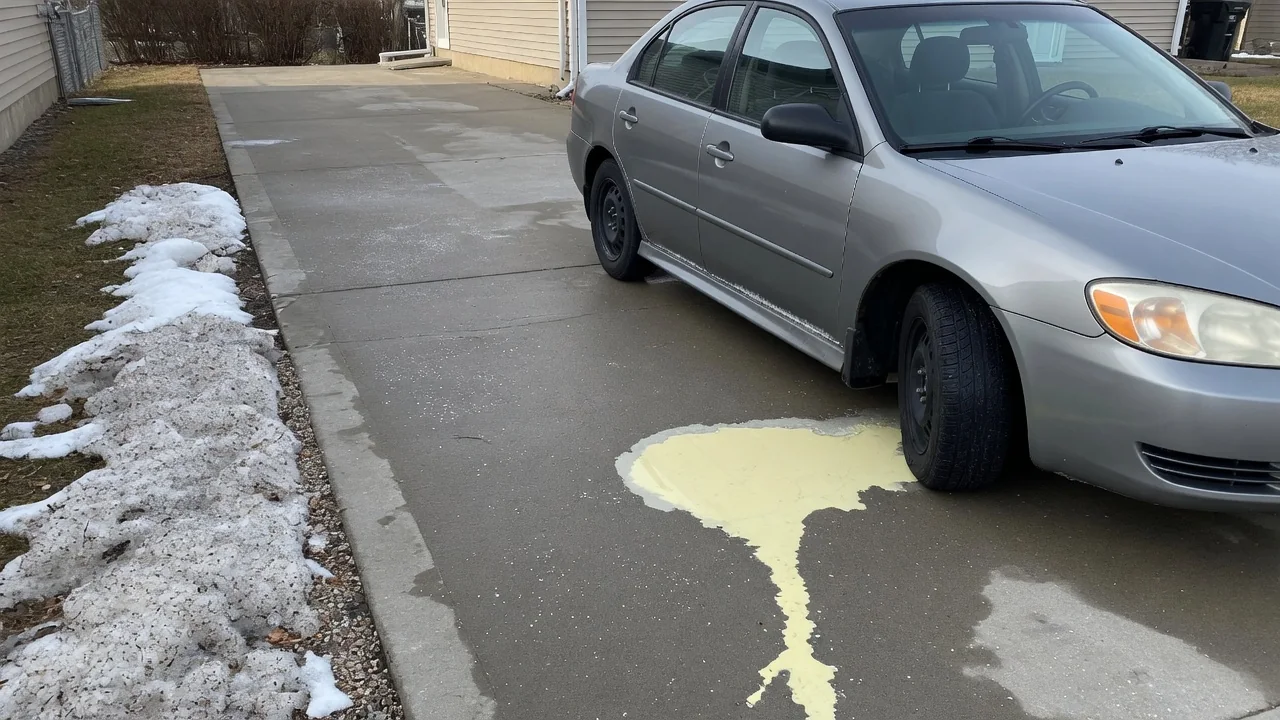
Finding yellow fluid leaking from your car raises an immediate question: what is the yellow fluid, and does it mean you should stop driving. Color alone cannot name the leak. Light yellow, yellowish, neon yellow, or yellow-green traces can come from coolant, pale brake fluid, washer fluid, dye, or contaminated water. Location, recurrence, and dashboard warnings help you decide how urgently to get the source identified.
What a Yellow Puddle Can Tell You
A yellow puddle under a parked vehicle is a reason to investigate, not a diagnosis. The same yellowish look can belong to coolant, pale amber brake fluid, some washer fluids, or water that picked up dirt, rust, or underbody residue. Because those fluids have very different consequences, color cannot tell you whether the car is safe to drive. Treat unidentified yellow stuff leaking from the car as unknown until a technician or a permitted visual check of a labeled reservoir can narrow the source.
Stay outside the vehicle and keep children and animals away from the spot. Do not touch, taste, or deliberately smell the fluid. Note where the puddle sits relative to the wheels, about how large it is, and whether it returns after you wipe or move the car. If you can do so without reaching underneath, place a clean white absorbent sheet on the ground and let a drip land on it so the true color is easier to see than it is on pavement.
Possible Sources of Light Yellow and Neon Yellow Fluid
When people ask what yellow fluid is leaking from a car, coolant is often the first guess because it is sold in several colors, including yellow. That factory or aftermarket tint does not identify the coolant specification, and it does not mean leftover yellow coolant is safe to add. A coolant leak can show as a light yellow or yellowish drip near the front, but so can other fluids. Never open a hot cooling system to sample the liquid; heat and pressure make that unsafe.
Pale yellow or amber brake fluid is a safety-critical possibility. If braking feel changes or a brake warning light is on with signs of leakage, treat that as urgent professional work rather than a color match. Some washer fluids are yellow, and a drip may appear after you use the washers, yet color still does not confirm washer fluid. Fluorescent leak detection dye can leave neon yellow or vivid yellow-green traces without naming the leaking part. Air conditioning condensation is normally clear, though water can pick up residue after it leaves the vehicle.
Clues From the Passenger Side, Front, Rear, and Underbody
Yellow fluid leaking from the front of a car, including the front passenger side, still has more than one plausible source. Reservoirs, hoses, washer plumbing, and drain paths sit in different places depending on the vehicle, so a passenger-side puddle does not identify a failed part. A coolant leak or a washer-system leak can both appear toward the front without proving that a particular reservoir or connection has failed. Photograph the stain relative to the wheels from a standing position; do not crawl under the car to chase the drip.
Yellow fluid leaking from the rear of a car also needs investigation. Brake hardware, underbody runoff, and vehicle-specific lines can place a stain behind the cabin even when the original drip started elsewhere. Fluid leaking from under the car is especially easy to misread because splash shields, a slope in the parking surface, and airflow while you were still rolling can carry liquid away from its source before it hits the ground. Location is a clue for a technician, not a substitute for identifying the fluid.
Why Yellow Marks Appear in Snow
Yellow fluid leaking from a car in snow is easier to notice than the same drip on dark pavement, because even a small colored trace stands out. Melting and refreezing can spread that mark well beyond the original drip point, so a wide yellow stain in snow does not mean a large leak. The same patch can also come from road residue, contaminated meltwater, or nonvehicle sources such as animal urine. None of those possibilities should be assumed harmless, and none identify what yellow fluid is leaking from the car.
If it is otherwise safe to move the vehicle, park on a clean, dry spot and see whether a fresh mark recurs beneath it. Recurrence after a short sit is more useful than a single snow stain that may have been stretched by melt. A yellow mark in snow still cannot establish fluid type, how much liquid was lost, or whether the car is safe to drive. Treat a repeating colored drip as an unidentified leak that needs assessment, not as proof that winter weather created a cosmetic stain.
Why the Car Leaves Yellow Fluid After Parking
Yellow fluid leaking from a car when parked is a common way owners first notice the problem, but residual fluid and water can keep dripping after shutdown. Discovery at rest does not prove the leak started then. A damaged fluid reservoir, a weeping hose connection, or a failing seal can all leave a puddle after the engine is off, and the stain still does not name the failed part. Note whether the drip follows a drive, washer use, rain, or snowmelt, and whether the puddle repeatedly grows.
Owner checks should stay limited. Read dashboard messages, including a brake warning light or an engine temperature warning, and look at visible reservoir levels only where the owner's manual allows a visual check. Do not remove caps to identify unknown fluid, and never open a hot cooling system. A falling level in a labeled reservoir is useful information for a shop, not permission to top up with whatever yellow liquid is on the ground. Rapid or repeating loss still needs professional identification.
When to Stop Driving and Arrange Professional Testing
If you suspect brake-fluid loss, braking behavior has changed, or a brake warning light is on with signs of leakage, stop safely and arrange a tow. Do not use a road test to confirm the problem. An engine temperature warning, steam, or other overheating signs call for stopping, shutting the engine off, and waiting for professional help without opening the cooling system. Those situations are urgent because continued driving can worsen a coolant leak or leave you with reduced braking, and color on the pavement cannot rule either out.
Rapid fluid loss, a falling reservoir level, or a recurring unidentified leak needs prompt assessment even when no warning lamp is lit. A shop can identify the liquid and run system-specific leak testing instead of guessing from a neon yellow, light yellow, or yellowish stain. Harmless runoff, including tinted air conditioning condensation or underbody wash-off, should be treated as harmless only after the source is reasonably established. Neither a small puddle nor a pale color clears the car to keep driving. Why the car is leaking yellow fluid is a question for inspection, not for waiting until a warning appears.