Wiper Switch and Stalk Replacement: Signs and What It Involves
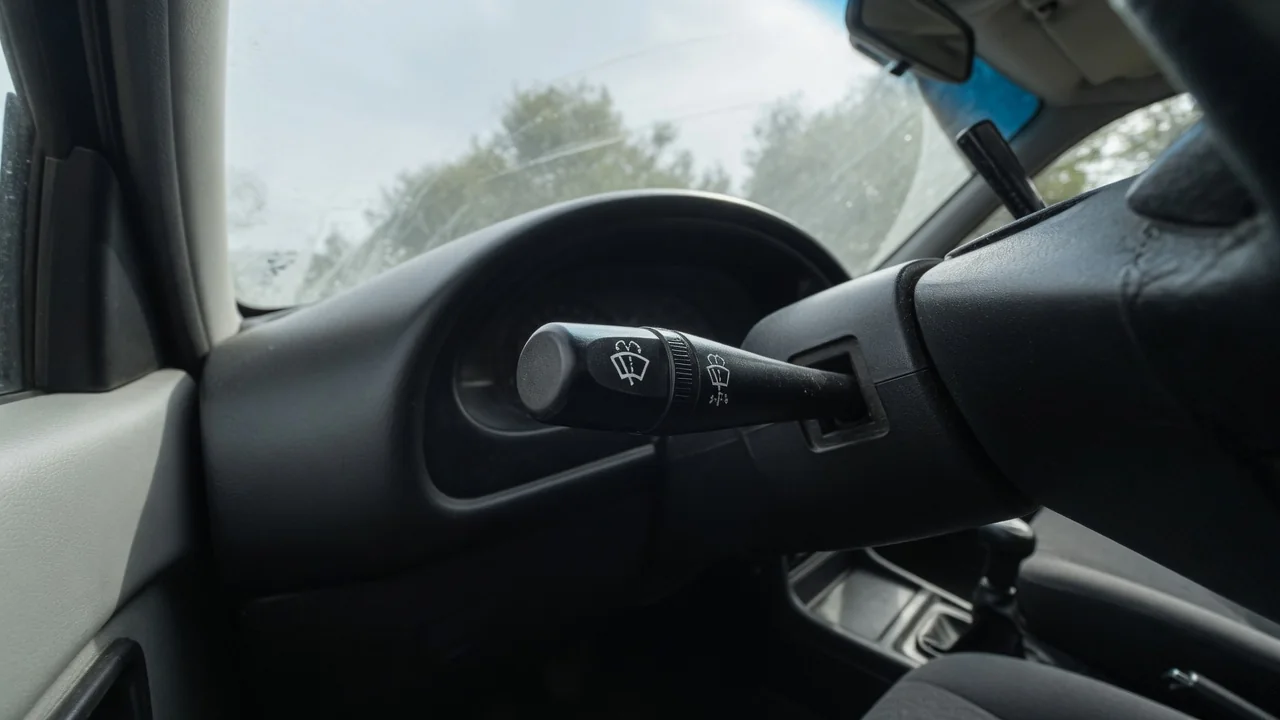
The windshield wiper handle is the lever drivers use to request wipe and wash functions. That handle, often called a wiper control stalk, operates a windshield wiper switch or a multifunction switch on the steering column. When settings fail, feel loose, or no longer match the blades' behavior, the cause may be the switch, the wiper motor, wiring, or something blocking the glass. Reliable wiping needs a sound request from the stalk and a motor that can finish the sweep.
What the Wiper Handle and Switch Control
On most vehicles, the windshield wiper handle is a stalk mounted on the steering column. Moving that stalk does not power the blades by itself. It operates a windshield wiper switch that sends a request for off, low, high, or intermittent wipe, and often for washer control as well. Some windshield wiper switches are simple rotary or lever contacts; others feed a body-control module that then commands the wiper motor. Layouts differ, so the same motion can mean mist, delay, or continuous wipe depending on the vehicle.
Many cars combine wipers with turn signals, high beams, or cruise controls in one multifunction switch. In that design, a single electrical connector and housing serve several circuits, so a problem in the assembly can affect more than wipe speed. Rear-wiper or rain-sensing features, when equipped, may share the same stalk or use a separate control. Before deciding a setting is dead, confirm how your vehicle's controls are supposed to work in the owner's manual. That check prevents mistaking an unfamiliar delay detent or a dedicated washer ring for a failed windshield wiper switch.
Symptoms That Can Point to a Faulty Wiper Stalk
A loose, cracked, or sticking windshield wiper handle is a mechanical clue, not a complete diagnosis. The stalk must move through detents and return from a wash or mist position. If it binds, wobbles on the column, or has a broken tip, the internal windshield wiper switch may not reach the intended contacts. Missing settings, a delay band that skips, or a stalk that no longer clicks between speeds can point to worn internals. Inconsistent response to the same movement also belongs on the inspection list, especially if the rest of the electrical system seems otherwise normal.
Wipers that stop mid-sweep, fail to return to the wiper park position, or keep running after the stalk is off can involve the switch, but they can also involve the wiper motor, park switch, linkage, or a control module. A windshield wiper switch that cannot command off is one possibility; a stuck relay or a motor that never receives a park signal is another. Visible stalk damage raises the priority of inspecting that assembly. Symptoms still cannot prove that you must replace a windshield wiper switch until the rest of the circuit is considered.
Safe Observations Before Scheduling Diagnosis
Before scheduling diagnosis, note which settings actually respond while the vehicle is parked, the windshield is wet, and the wipe path is clear. Cycle off, intermittent wipe, low, and high, and try washer control once, without forcing the stalk. Write down whether delay timing changes, whether mist works, and whether other functions on the same stalk also misbehave. Those notes help a technician separate a windshield wiper handle problem from a motor or wiring issue. Neither a dead washer nor a working washer proves the switch is good or bad.
Ice, packed snow, or a blade frozen to the glass can stop the arms even when the windshield wiper switch is commanding motion. Do not keep cycling the stalk if the blades cannot move freely; that load can damage the motor or linkage and confuse later diagnosis. Clear the path and try again only after the glass is free. If rain, spray, or road film requires wiping and the system is not reliable, postpone driving until the wipers work. A failing handle is one reason for that caution, but any unexplained loss of wipe function deserves the same restraint.
How a Technician Confirms the Switch Is at Fault
Diagnosis follows the vehicle's wiring and control design, which may use a direct switch, a relay, or an electronic module between the stalk and the wiper motor. A technician typically checks whether the windshield wiper switch produces the expected signals in each detent, whether the electrical connector is sound, and whether power and ground reach the circuit. Downstream operation is then compared with those inputs so a silent motor is not blamed on a live switch. Detailed probing belongs in a shop procedure, not a roadside shortcut.
The wiper motor, linkage, washer pump, fuse, relay, and column wiring can produce overlapping symptoms, including no sweep, no wash, or no return to park. A stored fault code, when present, is evidence to interpret against the wiring diagram; it is not proof that a part has failed, and manufacturer-dependent codes need vehicle-specific confirmation. Windshield wiper switch repair depends on the confirmed defect and on whether the affected piece is serviceable. Some housings allow a separate switch pack; others require replacing the entire multifunction switch. Replacing a windshield wiper switch is justified only after those alternatives are considered.
What Wiper Switch and Handle Replacement Involves
Windshield wiper handle replacement may mean a separate stalk, a switch assembly behind the lever, or an integrated multifunction unit, depending on how the column was built. Appearance cannot establish compatibility. The replacement must match the vehicle identification and the installed control features, including intermittent wipe, washer control, rear wipe, and any lighting or cruise functions sharing the housing. A look-alike handle can omit a detent, a clock spring interface, or a connector pin that your column needs. Parts catalogs and the original assembly, not color or lever shape alone, should drive the selection.
A shop typically removes column covers, documents connector orientation, takes out the failed assembly, inspects the electrical connector and harness, then installs the new unit and refits the covers. Windshield wiper switch replacement is work near steering-column wiring and, on many vehicles, airbag components. Those areas require vehicle-specific procedures because restraints, clock springs, and harness routing sit in the same space. After installation, the technician confirms that the new windshield wiper handle seats fully and that the stalk moves through every detent without binding against trim.
What to Ask About the Estimate and Final Checks
An estimate for this job reflects diagnostic time, how much column access the design requires, whether the part is a small switch or a full multifunction switch, and how the replacement is sourced. Prices are not universal. Ask what test results support replacing the windshield wiper switch, and whether the quoted work includes diagnosis plus final function checks. If the shop is still distinguishing a stalk fault from a wiper motor or wiring fault, the estimate should say so. That clarity helps avoid a handle swap that does not address the actual request path.
Final checks should verify every equipped wipe setting, washer response, shutoff, and correct parking of the blades at the wiper park position. If the multifunction switch also controls signals, beams, or cruise, those circuits deserve a pass after the column covers go back on, because they share the same electrical connector and may have been disturbed. A stalk that now selects speeds but still leaves the arms mid-glass points back to motor or linkage issues, not a finished repair. Return for further diagnosis if symptoms persist after windshield wiper switch repair, rather than repeating stalk movement on a wet road.