Wiper Linkage and Transmission Problems: Loose, Hanging or Uneven Wipers
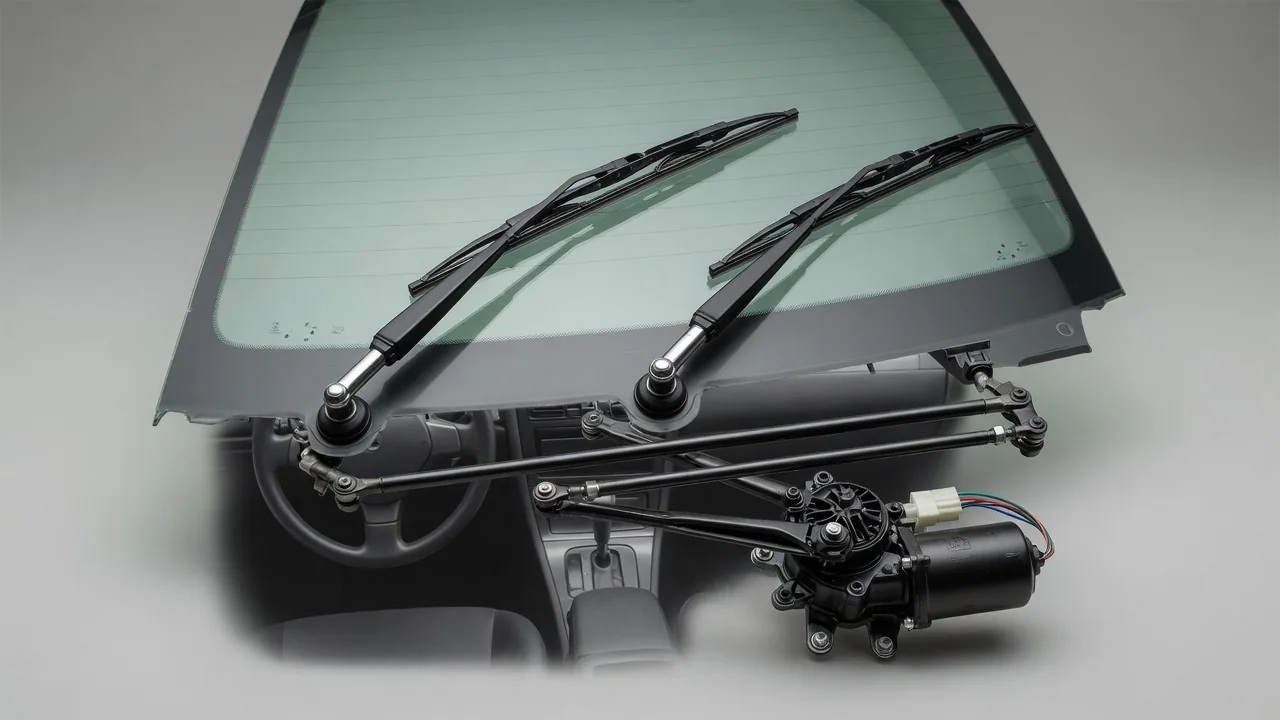
When a windshield wiper hangs, sweeps unevenly, or sits out of park position, the problem is often in the linkage or the arm attachment rather than the blade itself. A typical windshield wiper system diagram shows how the wiper motor, connecting links, and pivot shafts work together. Understanding that layout helps you interpret a hanging windshield wiper, decide when a windshield wiper puller is needed, and choose a realistic repair path.
How the Motor, Linkage, and Arms Move the Wipers
In a typical linked arrangement, the wiper motor turns a crank that converts rotation into a back-and-forth motion. Connecting links then carry that motion to pivot shafts at each side of the windshield. Those shafts rotate the arms, and the blades follow the glass. A windshield wiper system diagram usually shows the motor, crank, windshield wiper link pieces, pivot shafts, arms, and blades in that order. Layouts still vary by vehicle, especially around the cowl panel where the mechanism is hidden.
Parts catalogs may list the same assembly as windshield wiper linkage or as a windshield wiper transmission. Both names usually describe the crank, links, and pivots that convert motor output into coordinated arm travel. The search term windshield wiper regulator is less consistent and should be checked against the vehicle's parts information before ordering. Arm attachment is a separate location from those joints. Movement can be lost at worn linkage bushings, a disconnected windshield wiper link, or at the arm splines where the arm retaining nut clamps the arm onto a pivot shaft.
What a Loose, Hanging, or Uneven Wiper Can Indicate
A hanging windshield wiper is easy to see: one arm may rest far from park position, fail to sweep, or travel a shorter arc than the other. The arms can also lose coordination so they no longer meet in the same rhythm. Irregular travel, a pause mid-stroke, or an arm that sits crooked on the glass all point to lost mechanical drive somewhere between the motor and the blade. Those observations describe what the wiper is doing, not which part has failed.
A loose arm retaining nut, damaged arm splines, worn linkage bushings, or a disconnected windshield wiper link can produce overlapping symptoms. A blade dangling from its arm is not the same as an entire arm sitting out of position. The first often involves the blade clip or the blade itself; the second can involve the arm-to-shaft joint or the windshield wiper linkage under the cowl. Symptoms alone cannot establish which component needs replacement, because several failures look similar from the driver's seat.
Safe Observations Before Arranging a Repair
With the vehicle parked and the wipers off, note whether each arm is in a normal rest location, whether hardware looks missing, and whether ice or debris is blocking the sweep. Record what happened before the failure, including noise, intermittent movement, and whether one or both arms stopped. Avoid repeatedly operating faulty wipers, because a disconnected link or loose arm can collide with trim or scratch the glass. A motor sound without arm movement is useful information, but it does not prove that the motor, the windshield wiper transmission, or a single joint has failed.
Keep hands and tools away from the mechanism under the cowl panel. Automatic wipers can activate unexpectedly if rain sensing or an intermittent setting is still armed. Do not force the arms by hand to restore park position, because that can damage remaining joints or the glass. If weather or road spray requires working wipers, do not drive until the system is restored. Stop operation immediately if the arms collide, hang into the A-pillar, or threaten to scratch the windshield.
When a Wiper Arm Puller Is Needed
A windshield wiper puller helps release an arm that is seized onto its pivot shaft after the arm retaining nut is removed. Corrosion, age, and the taper of the shaft can lock the arm in place even when the nut is gone. Windshield wiper pullers are not all the same. Tool selection depends on access around the cowl, the shape of the arm, and clearance over the shaft rather than an assumption that every windshield wiper puller tool will fit. Some arms need a compact jaw; others need more reach.
Removing an arm does not repair windshield wiper linkage, damaged arm splines, or a faulty wiper motor. The puller only separates the arm from the pivot so inspection or replacement can continue. Do not hammer the shaft or pry against the windshield; those methods can bend the pivot, chip the glass, or drive the arm deeper onto the taper. If the assembly is seized, hidden, or the correct puller will not seat safely, a qualified technician should remove it.
Repair Options for Worn or Disconnected Linkage
Windshield wiper linkage repair starts with identifying the failed joint, bushing, link, or pivot. A visual check under the cowl panel can show a ball socket that has pulled apart, a flattened linkage bushing, or a crank that no longer drives the next windshield wiper link. Where an appropriate service part and an approved procedure exist, a component repair may restore the drive. Some vehicles require replacement of the entire windshield wiper transmission because individual joints are not serviced separately.
To repair windshield wiper linkage correctly, confirm parts and serviceability against that vehicle's information. Universal bushings or improvised retainers are not a substitute for the designed joint. Reconnecting a worn socket without restoring retention can leave the same hanging windshield wiper after the next sweep. Lost retention at linkage bushings or at a ball stud will open again under load. The repair choice should match the failed location rather than assuming every disconnected link can simply be snapped back together.
Professional Transmission Diagnosis and Repair Verification
Binding pivot shafts, damaged windshield wiper transmission components, inaccessible linkage, or uncertain motor operation call for professional testing. A technician can separate a seized pivot from a motor that is stalled, and can confirm whether the crank still turns when commanded. Checking the mechanical drive and motor operation before deciding which assembly needs service prevents replacing the motor when a broken windshield wiper link is the actual problem, or replacing the transmission when the motor is not receiving a command.
Windshield wiper transmission repair is not complete until the arms are installed and aligned using that vehicle's service information. Universal torque or park-position guesses can leave one arm high on the glass or colliding with the other. After service, verify coordinated travel, correct parking, clearance from surrounding trim, and unobstructed operation under conditions that match how the system is used. Both arms should sweep together, return to park position, and stay clear of the cowl panel without binding.