Wiper Blade Refills: When You Can Replace Just the Rubber
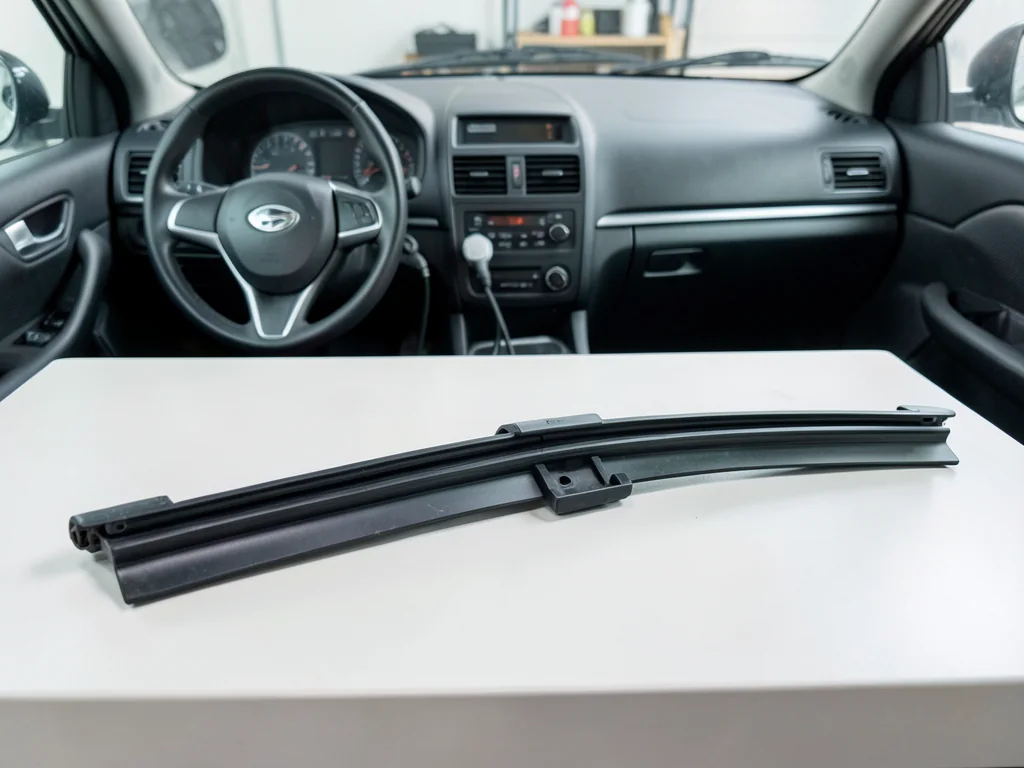
A windshield wiper blade insert, often sold as a refill or replacement rubber, lets you put a new wiping edge on your blade without buying a whole new one. That only works if the blade on your car was designed to take a refill. This guide explains what a rubber-only refill replaces, how to check that your blade accepts one and match the right strip, and when replacing the whole blade is the smarter, safer choice.
What a Wiper Rubber Refill Replaces
The rubber insert is the flexible strip that actually touches the glass. It sits inside the blade assembly, which clips onto the wiper arm, the spring-loaded metal arm moved by the wiper linkage. On a refillable blade frame, the strip slides into a channel and is held by retaining rails, claws, or a locking tab. Some also have a removable end cap. Knowing these parts makes it clear that replacing the rubber renews only the wiping edge. The frame, its pressure points, and the arm stay the same.
Product names can mislead. A package labeled windshield wiper inserts, refills, or refill blades describes a type of product. The label doesn't guarantee that the strip fits your blade. Two refills with similar names can differ in width, backing design, or locking method. In this guide, replacing the rubber means installing a serviceable refill into a blade whose maker designed it to accept one. If your blade is a sealed unit, the rubber isn't meant to be replaced by itself, and a complete blade is the correct replacement.
How to Confirm Your Blade Accepts a Rubber Insert
Start with the blade that is on the car now, not just the vehicle. Look for a brand name and part number printed on the frame, adapter, or end cap. Then check that manufacturer's information to see whether it explicitly supports refills. A blade that looks like it has a removable strip may still be bonded or crimped in place. Labels like conventional, beam, or hybrid describe how the blade spreads pressure. None of them tells you by itself whether a rubber-only replacement is supported.
Documented features help confirm the answer. Examples include retaining tabs designed to release, a channel with a defined entry point for the refill, or an end cap the maker describes as removable. Don't pry, bend, or cut sealed parts to find out, because a damaged frame won't hold any strip properly. The same approach applies to Toyota windshield wiper blade refills. Note the model year and other vehicle details, then identify the installed blade. A previous owner may have fitted an aftermarket blade that needs its own specified refill, not the one listed for the factory blade.
Match the Refill Length, Profile, and Retainers
Check each blade position separately. The driver and passenger blades are often different lengths, and a rear blade may use a different design entirely. Look up the specified refill for every blade instead of assuming one pair fits both sides. Length is only the first check. The insert profile, meaning the cross-sectional shape of the rubber and its backing, must match the channel width and the way the frame's claws or rails grip it. A strip that is slightly too narrow can shift, and one that is slightly too wide can bind.
Locking features matter as much as size. Some windshield wiper refills come with new retaining rails already fitted. Others expect you to move the rails over from the old strip, and the refill's instructions should say which. If you miss that detail, the rubber can end up unsupported and lift off the glass at speed. Trim a refill only if its maker explicitly says to and shows where. Cutting a random strip of wiper rubber to length doesn't make it a compatible refill, because its profile and locking points still won't match.
Inspect the Rubber and Frame Before Replacing Parts
Look closely at the wiping edge before you order parts. Splits, tears, missing sections, hardened spots, and an edge that has rounded over or stayed bent out of shape are all visible signs of worn rubber. Streaking, chatter, and missed patches are less clear-cut. Road film, wax, or bug residue on the glass can cause the same symptoms. So can a strip that isn't held securely or an arm that doesn't press evenly. Clean the windshield and the rubber edge first, then decide whether you actually need new rubber.
The condition of the frame decides whether a refill makes sense. Replace the complete blade instead if you find damaged channels, broken or missing retainers, a twisted or bent frame, corrosion at the pressure points, or an adapter that no longer latches securely. New rubber can't make up for a frame that no longer holds it flat against the glass. Have a professional inspect the arm and wiper mechanism if the arm looks bent, contact stays uneven with fresh rubber, or the wipers park in the wrong spot or move erratically.
Replace the Rubber Using the Blade's Specified Procedure
Park securely, turn the ignition and wipers off, and check the owner's manual. Some vehicles need the wipers moved to a service position before the arms can clear the hood. Lay a folded towel on the windshield. A raised arm is under spring tension, and if it snaps back without a blade on it, it can crack the glass. Then follow the blade maker's instructions for replacing the rubber. Release the refill retainer and pull the old strip out in the direction the instructions specify, without bending clips or forcing end caps.
If the instructions tell you to transfer the rails, note which way they face before you remove them. Rails are often curved to match the frame, and installing them upside down changes how the blade presses on the glass. Feed the new insert through every guide or claw along the frame, not just the ones at the ends. Push the locking tab or end cap fully into place and check that the strip is held the way the instructions describe. Stop if the strip binds partway, stays loose, or seems to need filing, cutting, or extra clips. You most likely have the wrong refill or a damaged frame.
Check Retention and Test on Wet Glass
Before lowering the arm, look along the blade to confirm the insert sits in the whole channel with no gaps or bulges. Check that every retainer is engaged and that no metal claw, rail end, or cap can touch the glass. Return the arms to their normal position as the manual directs, especially if you used a service position. Then soak the windshield with washer fluid or water and run the wipers briefly. Running them on dry glass strains the new rubber and won't show you how well it actually wipes.
Stop the wet-glass test right away if the insert shifts, you hear scraping, or the blade catches anywhere in its sweep. Recheck the fit and installation before running the wipers again. A light haze in the first few passes can clear as the new edge settles. If streaks or chatter continue after you've cleaned the glass and confirmed the installation, the problem is likely blade contact or the arm, so arrange an inspection. Make sure you can see clearly before driving in rain, even if that means fitting a complete new blade.