Winter Tires for a Tesla: What Owners Need to Know
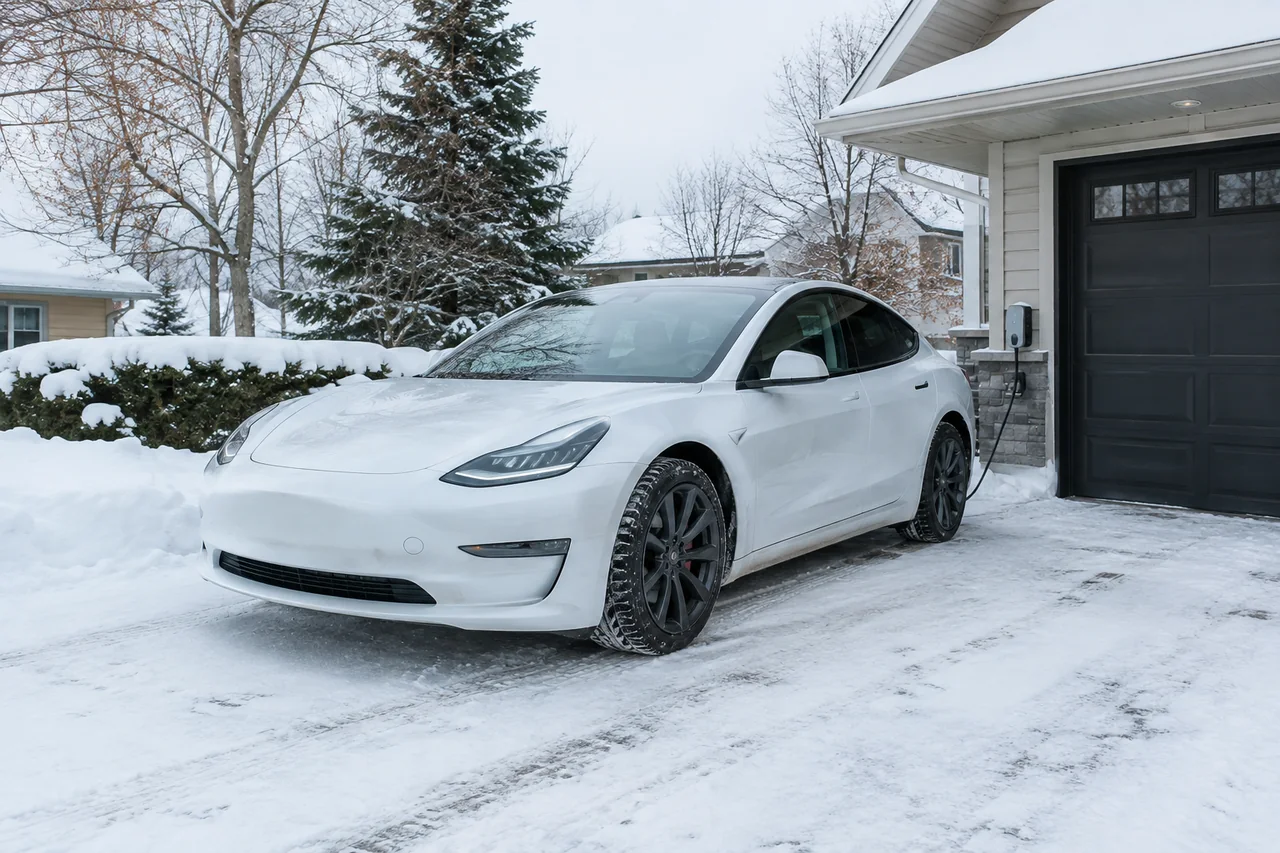
Tesla winter tires matter because cold, snow, and ice change how a heavy electric car stops, turns, and uses energy. Winter tires for Tesla owners are not a styling choice; they are a traction and load-capacity decision that also shows up in winter range and cabin noise. Electric car winter tires still have to match the vehicle's size, load rating, and wheel setup, including any second set of wheels and sensors.
What a Tesla Winter Tire Setup Needs to Address
Sustained cold, packed snow, and ice reduce available grip even on dry-looking pavement, and a Tesla's mass and instant torque make that loss easier to feel in stops and lane changes. Whether dedicated winter rubber is warranted depends on climate and the owner's routes: daily highway commuting in slush is a different problem than occasional driveway frost. A compound that stays flexible below freezing, plus a tread that sheds snow, is the starting point. All-season rubber that hardens in the cold cannot restore that contact-patch behavior on its own.
The three-peak mountain snowflake symbol indicates that a tire met a standardized snow-traction qualification; it does not certify ice performance, braking distances, or how the tire will behave on polished ice or black ice. Owners still need to match that marking to a tire that also meets size and load needs. All-wheel drive, traction control, and regenerative braking help manage slip once a tire is already working, but they do not create extra rubber-to-road friction for braking or cornering. The tire remains the only part that actually grips.
Confirm Tire Size and Load Requirements for Your Tesla
Confirm size and load from the vehicle's tire-and-loading information label, the owner's manual, and any manufacturer fitment guidance that applies to the model year, trim, and wheel configuration. Front and rear sizes can differ, so both positions need to be checked before a purchase. A four-tire winter set should follow that labeled combination rather than mixing leftover summer sizes or assuming a single catalog listing covers every Tesla. Wheel diameter, width, and offset still have to match the chosen winter wheel fitment.
Load index, speed rating, and extra-load or reinforced designations describe how much mass a tire is designed to carry at a given inflation, not a one-size specification for every Tesla. Vehicle weight and axle loads matter because many electric cars are heavier than similar-size gasoline models, yet EV branding alone does not prove a tire is suitable. The correct tire load index is the one that meets or exceeds the vehicle's requirement for that axle. Suitability comes from matching labeled load and size, not from sidewall marketing language.
Account for Winter Tires When Planning EV Range
Tire construction, rolling resistance, inflation, and wheel diameter can change winter range, but there is no single guaranteed penalty that applies to every winter tire. Tread blocks designed for snow often add hysteresis compared with a low-rolling-resistance summer or all-season tire. Heavier wheels and a different overall diameter can also shift consumption. Those tire-related effects sit on top of, and should not be confused with, cold-battery chemistry, cabin heating, wet or snow-packed roads, higher speeds, and headwinds.
Plan charging stops with a winter reserve rather than relying on a summer estimate. Observed consumption on familiar routes is the most useful way to refine expectations after the winter set is mounted. Check cold tire pressure against the vehicle's specified pressure on the door-jamb label, not against a guess intended to claw back range. Underinflation raises rolling resistance and heat; overinflation to chase efficiency can shrink the contact patch on snow and ice. Pressure should be set when the tires are cold, after the car has been parked.
Understand Road Noise and Foam-Lined Winter Tires
Perceived road noise in a Tesla is shaped by winter tread design, pavement texture, speed, and a quiet cabin that makes tire roar more obvious than in many combustion cars. Siping and aggressive blocks that help in snow can generate more pattern noise on dry or coarse asphalt. Wheel size and tire volume change the pitch. Acoustic tire foam, sometimes called acoustic foam lining, is meant to damp certain cavity resonances inside the tire, not to cancel all road noise. Cabin isolation still depends on speed, surface, and the rest of the vehicle.
Foam lining does not establish winter traction, load capacity, or fitment suitability; those still come from the snowflake marking, the load index, and the labeled size. A foam-lined winter tire can be appropriate, but the foam is an acoustic feature, not a winter performance rating. Puncture assessment and repair eligibility depend on the injury, remaining tread, and the tire maker's guidance. Foam-lined tires should be evaluated by a qualified tire shop rather than assumed to be plug-and-drive or automatically non-repairable. Do not treat a foam liner as proof that a tire is Tesla-specific.
Check Second-Set Wheel Fitment and TPMS Compatibility
A second set of winter wheels needs verification of diameter, width, offset, load capacity, mounting specifications, and brake clearance for the exact Tesla configuration, including caliper differences that vary by trim. Catalog claims of universal electric-car fitment are not a substitute for that check. Winter wheel fitment that is too narrow, too wide, or offset incorrectly can rub, stress hubs, or change load sharing. Confirm the hub bore, bolt pattern, and hub-centric rings against the vehicle, then confirm that the tire size chosen for those wheels still matches the labeled combination.
TPMS compatibility is model- and build-date dependent. A sensor marketed only as Tesla-compatible is not confirmation that it will register, stay paired, or report correctly on a particular car. Follow the vehicle's instructions for any wheel-configuration setting and for the sensor recognition or learning procedure that applies after a seasonal swap. If TPMS warnings persist after installation, check cold tire pressure first, then have a shop diagnose sensor type, battery condition, and protocol match rather than ignoring the light. Pressure display and warning thresholds still assume sensors the vehicle can actually read.
Inspect and Maintain the Winter Setup Through the Season
Through the season, look for uneven wear, cuts, bulges, embedded objects, and remaining tread depth on a parked, cool vehicle, and stop driving for a professional assessment if damage is suspected. Pressure loss, vibration, pulling, or rubbing after a winter swap is not something to dismiss as normal winter-tire behavior. Those symptoms can point to a mounting issue, a damaged belt, incorrect pressure, or a fitment problem. Have the car inspected promptly. Visual checks do not replace a shop's inspection of inner sidewalls, beads, and fasteners.
Have the winter set installed by a shop that will follow vehicle-specific lifting points and wheel-fastening requirements, including torque and any hub-centric hardware, rather than attempting a driveway procedure that can damage battery enclosures or leave wheels under-torqued. After the season, store tires clean and dry, away from sunlight and heat, following the tire maker's guidance for mounted or unmounted storage. Keep them away from solvents and ozone sources. A labeled, pressure-checked set that is stored correctly is easier to remount next winter without discovering a flat-spotted or cracked tire at the first freeze.