Winter Driving Tips for Truck Drivers: Safety Guide for CDL and Commercial Operators
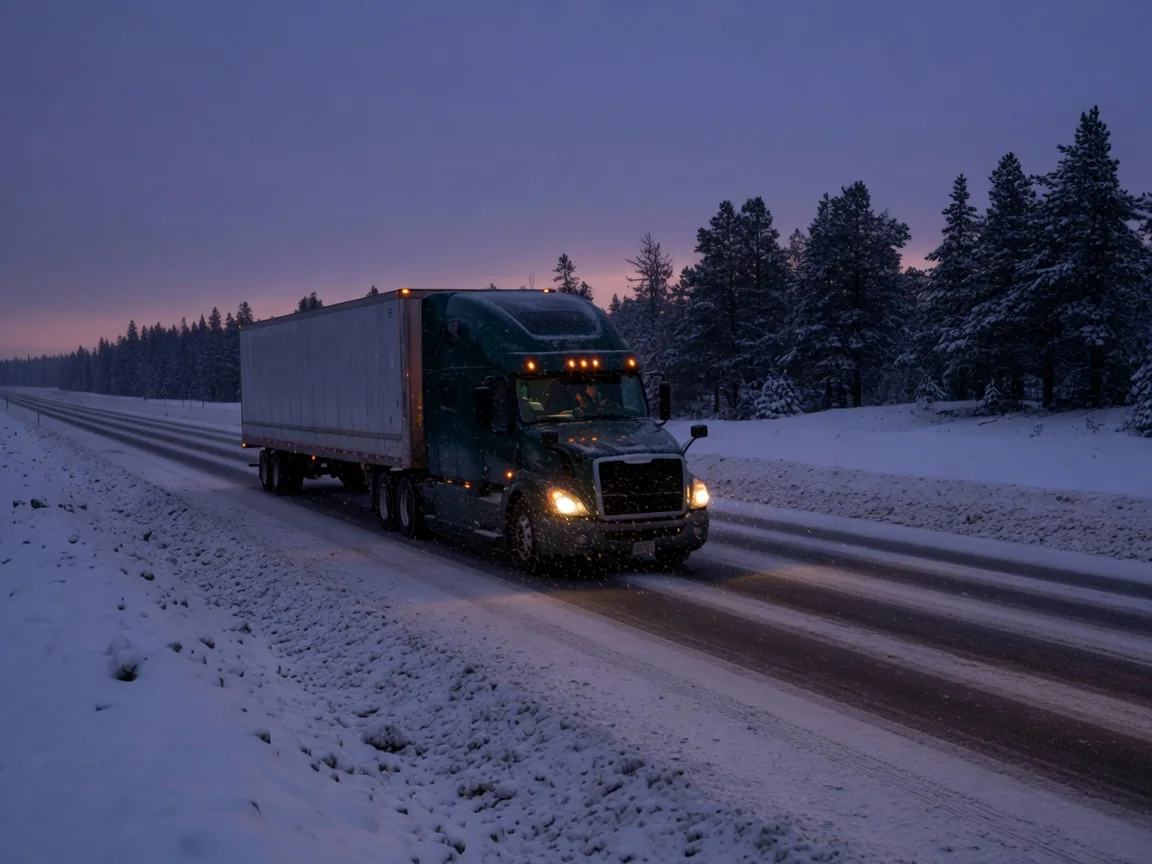
Winter turns routine truck driving into a series of calculated risk decisions. Black ice, whiteout conditions, and trailer swing demand adjustments to speed, following distance, and pre-trip inspections. For CDL and commercial operators, understanding how cold affects air brakes, tires, and traction is the difference between arriving safely and ending up in a ditch. These winter driving tips for truck drivers translate general safety guidance into practical actions for tractor-trailers and other commercial motor vehicles.
Winter Pre-Trip Inspection: What CDL Drivers Should Check Before Rolling Out
A winter pre-trip inspection must account for how snow, ice, and road spray degrade visibility and components. Tires need deeper tread for snow traction, and all lights and reflectors require cleaning because spray quickly obscures them. Wipers and washer fluid rated for freezing temperatures keep the windshield clear, while mirrors must be adjusted and wiped before departure. Clearing snow and ice from the cab roof, trailer top, lights, and windows prevents dangerous shedding onto following traffic.
Air brake systems demand special attention in cold weather. Check that air tanks are drained because moisture can freeze and block lines or valves. Listen for abnormal air leaks or slow pressure buildup, and watch for warning signals that could indicate freezing in the system. Suspected air system faults need a qualified technician, not roadside improvisation. Drivers should follow their carrier's inspection procedures and applicable regulations, which set minimum standards for commercial motor vehicle condition.
Speed, Following Distance, and Longer Stopping Distances on Snow and Ice
Heavy vehicles cannot stop quickly on snow and ice because traction is limited and weight works against you. Posted speed limits assume dry pavement, so they may be far too fast for current conditions. A good rule for truck driving in winter is to reduce speed well below the limit and increase following distance to at least double or triple the dry-road gap. This creates escape space and time to react if the road surface changes unexpectedly.
Smooth, gradual inputs for steering, throttle, and braking help maintain tractor-trailer traction. Abrupt moves can break the tires loose and start a skid. Black ice is a serious threat on bridges, overpasses, and shaded stretches where temperatures hover near freezing; a wet-looking surface with no tire spray is a visual clue. Disengage cruise control on slick roads, and be cautious with engine brakes, which can cause drive-wheel lockup; follow manufacturer or carrier guidance for their use.
Preventing Jackknifes and Trailer Swing in Tractor-Trailers
A jackknife or trailer swing develops when wheels lose traction during braking, acceleration, or turning, causing the trailer to push or pivot out of line. Light or empty trailers are more prone to losing grip because they have less downforce on the drive and trailer axles. Drivers should reduce speed accordingly and watch the mirrors for the trailer drifting. Easing off the throttle or brake gently rather than making abrupt corrections is the general principle for recovering control.
Approach curves, grades, and downhill sections by slowing before the hazard rather than braking hard in it. Hard braking transfers weight forward and reduces trailer tire grip, increasing the chance of swing. Stability systems vary by truck model, so drivers must know their own equipment and how it responds in slippery conditions. The safest strategy is to maintain a speed that keeps the combination aligned and allows gentle corrections before any loss of traction begins.
Chaining Up Safely and Knowing Chain Requirements
Chain requirements vary by jurisdiction and even by specific road, so drivers must check current rules for their route before and during the trip. Chain control signs can appear suddenly, and requirements may change from one pass to the next. Choosing a safe, designated chain-up area away from travel lanes is essential; use hazard lights, reflective gear, and warning devices to make yourself visible to other traffic. Practicing chain installation in good conditions beforehand builds confidence and reduces time exposed beside the road.
Inspect chains for damage such as broken links or loose fasteners before putting them on. Drive at reduced speed with chains installed and stop periodically to recheck tension and condition. Remove chains when conditions and rules allow, as running them on bare pavement can damage tires and road surfaces. Ignoring posted chain controls creates serious safety and legal risk, including fines and being placed out of service.
Trip Planning, Weather Monitoring, and Driver Fatigue in Winter
Trip planning in winter starts with checking forecasts, road condition reports, and closure information before departure and at every stop. Weather can change quickly in mountain passes or open plains, and a route that was clear in the morning may be closed by afternoon. Building extra time into the schedule reduces pressure to speed or skip rest breaks. Communicate early with dispatch about weather delays so that adjustments can be made without last-minute decisions.
Winter driving is more mentally tiring because of constant vigilance, reduced visibility, and physical stress. Rest breaks and hours-of-service compliance matter even more in bad weather because fatigue slows reaction time and impairs judgment. Identify possible safe stopping points and fuel stops in advance so the truck does not run low in a storm. Keep the cab warm but avoid dozing off; if drowsiness sets in, pull over at a legal spot and rest. Stay alert to changing visibility such as whiteouts and blowing snow.
When to Shut Down and Where to Park During Winter Storms
The driver has both the right and the responsibility to stop when conditions become unsafe. Signs that it is time to shut down include losing traction repeatedly, near-zero visibility, or seeing other vehicles sliding off the road ahead. Stopping early at a truck stop or rest area is far safer than trying to push through and ending up stranded or in a crash. Avoid road shoulders and ramps except in genuine emergencies, because stopped trucks there are often hit by other vehicles.
If stranded, stay with the truck, make it as visible as possible with hazard lights and reflective triangles, and keep in contact with dispatch or emergency services. Be aware of carbon monoxide risk when idling: keep the exhaust pipe area clear of snow so fumes cannot enter the cab. If anyone shows symptoms of carbon monoxide poisoning, such as headache or dizziness, leave the vehicle immediately and seek help. After a long weather stop, check brakes, lights, and chains before resuming.
Quick-Reference Winter Driving Checklist for Truckers
Before the trip: complete a full winter pre-trip inspection, clear all snow and ice, check tire chains and carry them if required, top off washer fluid and fuel, and pack warm clothing, food, water, and a charged phone. While driving: reduce speed, increase following distance, avoid cruise control, watch for black ice, and use smooth inputs. If conditions worsen: find legal parking, shut down if visibility or traction is poor, and communicate with dispatch.
This checklist is general guidance for truck driving in winter and is not specific to any make, model, or jurisdiction. Always follow your carrier's policy and local regulations, which may be stricter than these tips. If you suspect any mechanical, brake, or air system problem during a trip, stop in a safe place and have a qualified technician inspect the vehicle before continuing.