Winter Driving Safety Tips for Snow and Ice
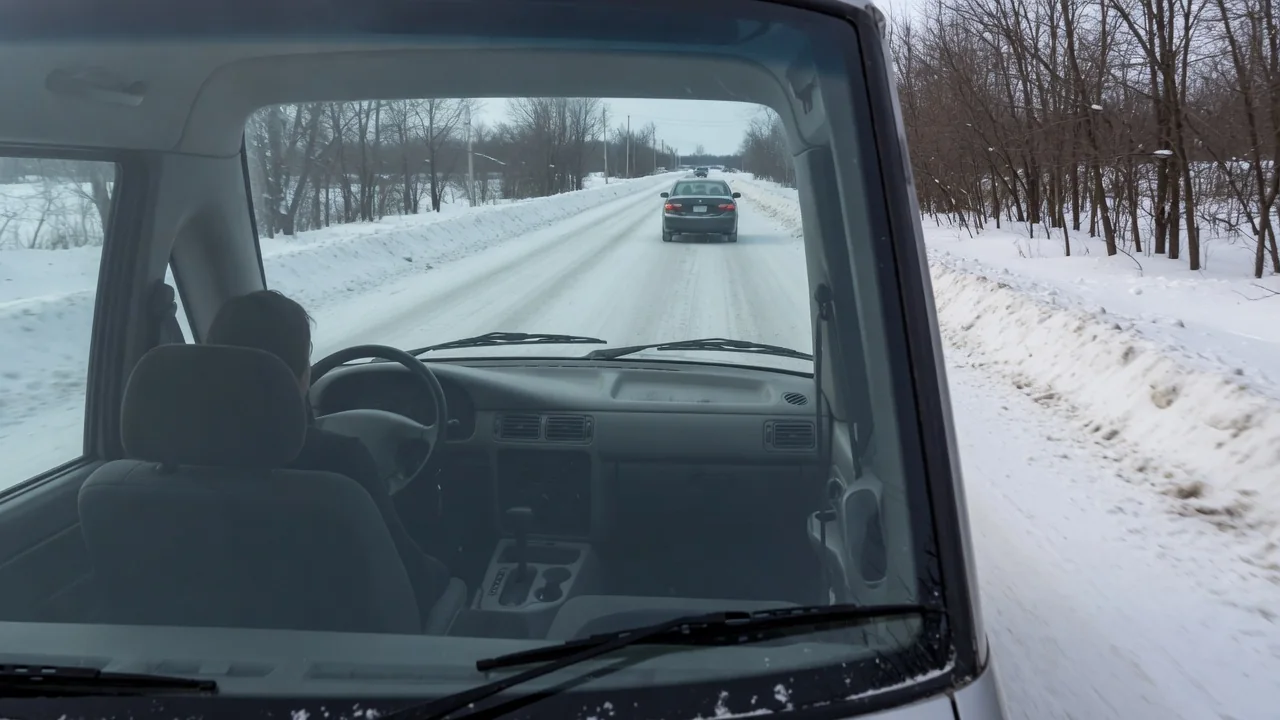
Driving in the winter asks more of every driver, whether you have decades behind the wheel or just earned a license. Snow-covered roads, black ice, and short days shrink the margin for error, so the most useful winter driving tips focus on speed, space, smoothness, and visibility. This winter driving guide explains the habits and decisions that keep traction loss from becoming a crash.
Decide Whether Conditions Allow Safe Driving
The safest winter trip is sometimes the one you postpone. Active snowfall, freezing rain, posted road restrictions, or visibility cut to a few car lengths can turn an ordinary errand into a real hazard, and no technique fully makes up for a glaze of ice. When driving in winter weather looks marginal, waiting for plows and daylight often makes more sense than pushing through. Freezing rain deserves special caution because it can coat pavement evenly while looking merely wet, leaving little grip for braking or steering.
When you do go, the basics matter most. Buckle up, silence the phone, set navigation before moving, and leave early enough that a slow commute doesn't pressure you to rush. Winter driving tips for new drivers start with this: posted speed limits describe dry-road conditions, not a safe speed on snow or ice. Visible pavement doesn't prove adequate grip either, since a thin film can hide in plain sight. This guide sticks to driving decisions and technique rather than vehicle preparation or tire choice.
Choose a Controlled Speed and Leave Room to Stop
When driving in the winter, you should slow down early, long before a hazard appears. A useful test is whether you could stop within the clear road you can see ahead. If falling snow or darkness shortens that view, your speed needs to drop with it. There is no universal winter speed, because stopping distance depends on surface, slope, and grip that can change block by block. Controlled speed is also the first of the three key elements of safe winter driving, along with space and smooth inputs.
To check following distance, note when the vehicle ahead passes a fixed landmark such as a sign, then count until you reach it. Expand that gap substantially as grip or visibility gets worse, keeping in mind that no fixed number guarantees safety. Approach intersections, curves, and downhill stretches with your speed already under control, since braking while turning or descending asks more of limited traction. Accelerate gently from stops, and avoid cruise control on snowy or icy roads so you keep direct control of the throttle as conditions change.
Brake and Steer Smoothly on Snow and Ice
Smooth steering and gradual braking are the heart of defensive winter driving. Squeeze the brake early for routine slowing, turn the wheel progressively, and avoid abrupt acceleration or sudden direction changes that can overwhelm tire grip. In an emergency stop, vehicles with an antilock braking system generally need firm, continuous pedal pressure without pumping. The pulsing or grinding you may feel is the system working. Your owner's manual explains how your vehicle's ABS and stability systems behave, so check it before you need them.
Traction loss often shows up subtly. The steering may feel light, or the car may keep going straight when you turn the wheel, a sign that the front tires have stopped gripping. React calmly rather than with sudden corrective inputs. If the vehicle begins to slide, look toward the safe path you want, ease off the accelerator smoothly, and avoid overcorrecting as grip returns. No single skid-recovery formula covers every drivetrain, speed, and surface, which is why preventing the skid with gentle control remains the better strategy.
Manage Visibility in Snowfall and After Dark
Winter visibility depends on seeing and being seen. Use low-beam headlights in falling snow, because high beams reflect off the flakes and create a wall of glare. Automatic lighting modes don't always turn on the taillights in daytime snow, so confirm that your selected setting lights up the required exterior lights. Keep the windshield defogger and wipers working as you drive. If frost, road spray, or fog keeps coming back faster than you can clear it, stop somewhere safe rather than peering through a small gap.
Winter night driving makes these problems worse. Darkness, oncoming glare, and blowing snow can erase lane edges and hide pedestrians or stopped traffic until very late, so your speed must drop until you can stop within the lit, visible space ahead. When visibility becomes inadequate, leave the roadway at a safe exit, rest area, or parking lot. Avoid stopping in a travel lane, and treat the shoulder as an emergency-only option, since drivers behind you in whiteout conditions may not see a stopped vehicle in time.
Anticipate Hidden Ice and Highway Hazards
Black ice is one of the most dangerous winter driving hazards because it rarely looks different from wet pavement. Bridges and overpasses lose heat from above and below and can freeze first. Shaded curves, underpasses, and spots where meltwater refreezes after sunset can stay slick long after sunny stretches have dried. Clear-looking wheel tracks and the speed of nearby traffic don't prove there is safe traction. Other drivers may simply be taking risks, and the wheel tracks themselves can polish into ice.
Winter highway driving rewards scanning far ahead. Watch for brake lights, forming queues, merging vehicles, and snowplows, and keep enough space to respond gradually instead of abruptly. Minimize unnecessary lane changes. When you must move over, do it gently rather than cutting across slush or snow ridges that can pull the wheels sideways. Give snowplows plenty of room, stay out of the snow cloud they throw, and remember that they may stop or turn with little warning while clearing the road.
Use a Short Winter Driving Safety Talk
For a five-minute safety talk or winter driving safety briefing, the recap is simple: adjust speed, leave space, make smooth inputs, maintain visibility, and stop when conditions exceed safe limits. Picture a driver approaching a curve during steady snowfall. Slowing on the straight before the bend, keeping a long gap to the car ahead, and steering gently through the turn lets the tires use their limited grip for one task at a time instead of braking and turning at once.
Workplace winter driving rules should make it clear that deadlines never outrank safety. Employees and new drivers should call or text about a delay only after parking safely, and supervisors should back that choice. Recurring concerns deserve attention too. Brakes that pull to one side, steering that feels wrong even on dry pavement, or a warning light that stays on should be checked by a qualified technician. Not every unusual response comes from winter conditions, and a warning light is a clue to investigate, not a diagnosis.