Winter Car Emergency Kit Checklist: What to Keep in Your Vehicle
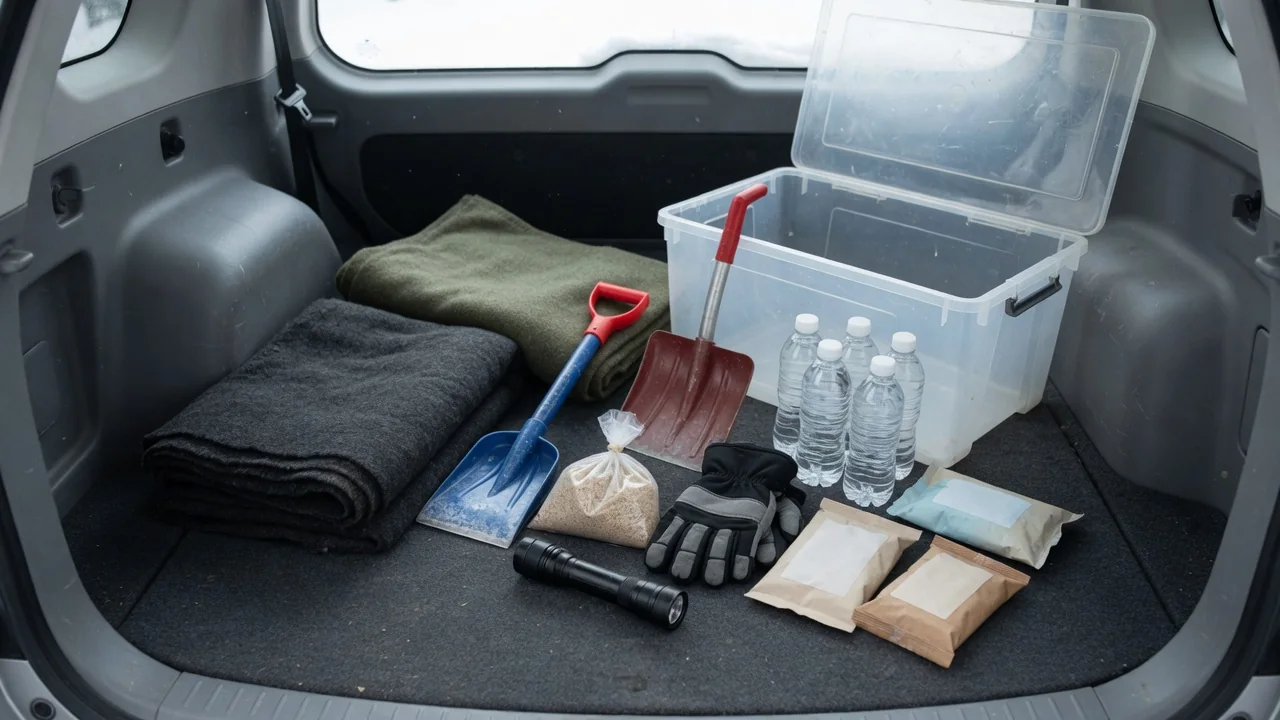
A winter driving safety kit is extra gear you keep in the vehicle so a delay, a stuck wheel, or a dark roadside wait does not become a cold-weather emergency. What to pack in the car for winter driving depends on who rides with you, how far you travel, and how long help might take. This winter emergency driving kit covers carried supplies—warmth, traction, lights, food, and water—not mechanical vehicle prep.
Build Your Kit Around Passengers, Weather, and Possible Delays
An emergency kit for winter driving supports warmth, visibility, communication, hydration, and basic needs while help is delayed. Scale winter driving emergency supplies to passenger count, trip length, forecast conditions, and how quickly assistance can arrive. A winter driving survival kit does not guarantee a set number of hours in the cold. More riders, longer rural stretches, and heavier snow simply mean more blankets, more drinking water, and more food in the winter weather driving kit.
Children, older adults, passengers with medical needs, and pets add winter driving necessities a generic kit may miss: extra insulated layers, age-appropriate snacks, a leash or carrier, and labeled medications. An emergency winter driving kit still belongs in the vehicle on short commutes, because delays can start close to home. Stocking winter driving kits does not make dangerous travel conditions safe. If roads or the forecast look unworkable, postpone the trip rather than relying on a winter driving pack.
Pack Blankets, Dry Layers, and Personal Essentials
Pack blankets or sleeping bags, hats, gloves, warm socks, and dry insulated layers as core winter driving gear. Wet clothing pulls heat away, so a change of socks and a dry jacket can matter as much as an extra blanket during cold-weather exposure. Compact emergency blankets trap some body heat and take little space, yet they do not replace fabric layers or guarantee adequate warmth in a stalled car. Keep these items reachable from the passenger area.
Add a basic first-aid kit, personal hygiene supplies, and a plan for needed medications that follows labeled storage requirements, including any cold-sensitive drugs that should not sit in a freezing trunk. Unusual drowsiness, confusion, slurred speech, or intense shivering that later stops are reasons to seek urgent help rather than wait out the weather. A winter driving emergency car kit cannot treat serious cold injury; it only buys time while you call for assistance.
Carry a Shovel, Scraper, and Traction Material
Winter driving tools that belong in an emergency roadside kit for winter driving include a compact shovel, an ice scraper, a snow brush, and a sealed container of sand or nonclumping cat litter. The shovel clears packed snow from around tires and the exhaust. The scraper and brush restore windshield and lamp visibility before you try to move. Sand or cat litter for winter driving adds temporary grit under a spinning tire; neither melts ice nor guarantees the vehicle will pull free.
Traction aids work only as a thin layer of grit, and product composition matters. Some clumping litter turns mushy when wet and can cake instead of providing bite, which is why nonclumping cat litter is the usual choice. Limit digging and spreading to a safe location away from traffic. If the vehicle sits in a travel lane, if you cannot see approaching cars, or if exertion in the cold feels unsafe, stop and request roadside assistance rather than continuing to clear snow.
Keep Lights and Communication Supplies Within Reach
Battery-powered lights belong near the driver, not only in a buried winter driving car kit. A flashlight or headlamp lets you read maps, check passengers, and inspect the vehicle without walking into darkness. Spare batteries keep those lights working after a long wait. A battery-powered warning light and a reflective vest can mark you and the vehicle, but retrieving or placing that equipment must never require stepping into traffic.
A charged power bank and compatible charging cable help, though phone service and battery endurance remain uncertain in remote or storm-damaged areas. Keep roadside assistance contacts on paper and in the phone. Call for a tow when the vehicle cannot move safely; call emergency services when someone is injured, a medical condition is worsening, or the location itself is dangerous. Stay with the vehicle when it is safe to do so, and follow responder directions once help is on the way.
Store Drinking Water and Ready-to-Eat Food
Drinking water and shelf-stable snacks that can be eaten without cooking belong in the car for winter driving, chosen with allergies and passenger needs in mind. Water can freeze in a parked vehicle, so use containers that tolerate expansion, leave headspace when filling, and keep some water accessible in the cabin. If a bottle freezes, thaw it with body heat rather than flame. Ready-to-eat bars, nuts, or sealed pouches are easier to handle with gloves than foods that need plates.
Include a manual opener if any packed food requires one, plus wipes, tissues, and waste bags so the cabin stays usable during a long wait. Never use a stove, grill, candle, or fuel-burning heater inside the vehicle; those devices can produce carbon monoxide and an open-flame hazard in a closed space. Emergency supplies for winter driving, including food and water, are meant to reduce discomfort and dehydration while you wait, not to support cooking or overnight camping in the car.
Secure Supplies and Check Them Before Winter Trips
Secure winter driving essentials in closed containers so loose gear cannot slide under the pedals and heavy items cannot become projectiles in a stop. Separate frequently needed items from bulk supplies so lights, gloves, drinking water, and phone power remain accessible from the seats. A winter driving preparedness checklist is easier to follow when the small bag you reach first holds the items needed during the first minutes of a delay, while the shovel and traction material stay in a latched cargo bin.
Before trips, check batteries, food packaging, expiration dates, moisture damage, and missing items, then replenish anything used after the last delay. A winter driving supply checklist is useful only if it is dated and compared with what is actually in the vehicle. For travel outside the United States, including the UK, verify local emergency contacts and rules for carried roadside equipment when you pack a winter driving kit. That check is not proof of legal compliance; warning triangles and high-visibility vests can be required differently by country.
Printable Winter Car Emergency Kit Checklist
Use this printable packing checklist as a winter driving kit list. Under warmth, confirm blankets or sleeping bags, hats, gloves, warm socks, dry insulated layers, and compact emergency blankets. Under tools and traction, confirm a compact shovel, ice scraper, snow brush, and a sealed container of sand or nonclumping cat litter. Under lighting and communication, confirm a flashlight or headlamp, spare batteries, a battery-powered warning light, a reflective vest, a charged power bank with cable, and written roadside assistance contacts.
Under food and water, confirm drinking water, shelf-stable snacks, a manual opener if needed, wipes, tissues, and waste bags. Under personal care, confirm a first-aid kit, labeled medications stored as directed, and extra supplies for children, older adults, medical needs, or pets. Record passenger count, quantities, passenger-specific items, and the check date. On departure day, check drinking water, a charged phone and power bank, needed medications, and accessible warm clothing. Stay out of traffic, never run an engine in an enclosed space or with a blocked exhaust, and seek help for danger or serious symptoms.