Windshield Wiper Motor Replacement: Symptoms, Testing and Cost
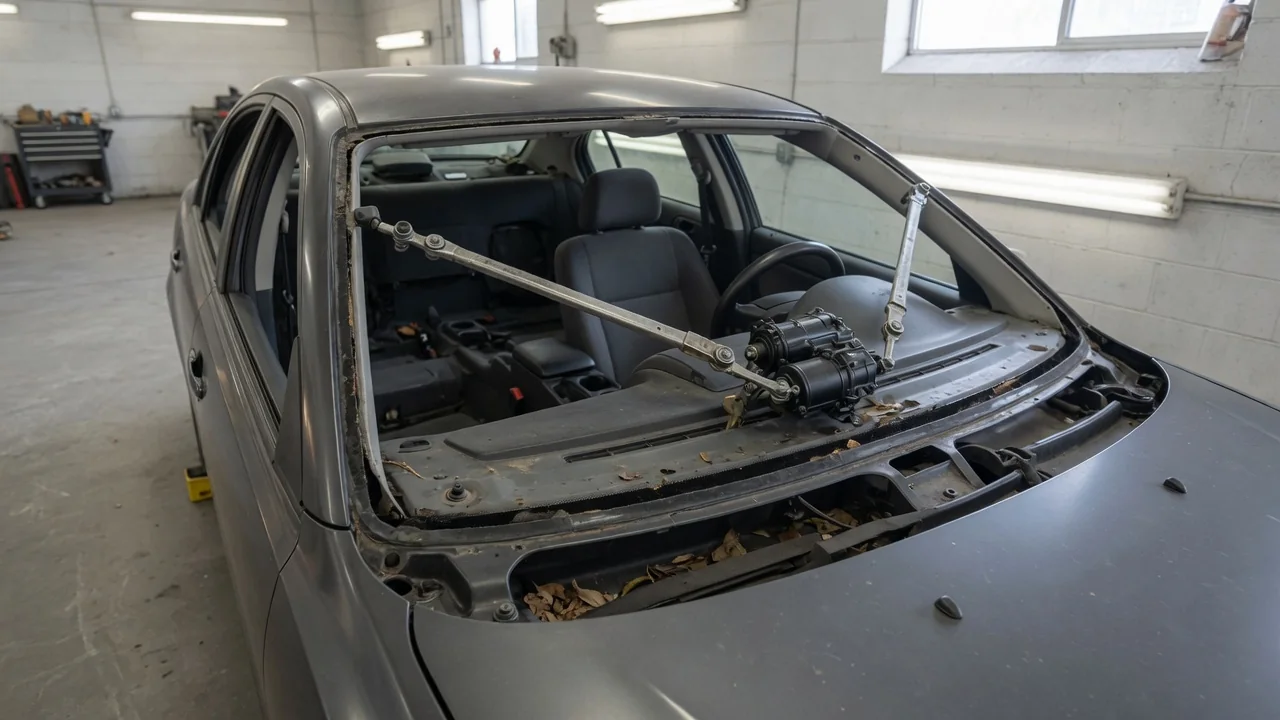
When wipers slow down, stop partway across the glass, or won't park, the motor is the obvious suspect. It is only one part of the system, though, alongside the wiring, the controls, and the mechanical linkage. It helps to understand how the system works, how a fault is confirmed, and what affects repair cost. Then you can decide whether the fix really needs a new motor.
What the Windshield Wiper Motor Does
A windshield wiper motor is a small electric motor, usually paired with a gearbox, that turns rotation into the back-and-forth sweep of the blades. Some people call it a wiper engine, but it burns no fuel and runs on the vehicle's electrical system. Most designs also have a park function, often a switch or sensor inside the motor housing. It keeps the motor running after you switch the wipers off until the blades reach their resting position low on the glass.
On many vehicles, the motor drives a set of arms and pivots under the cowl panel that moves both wiper arms. Some rear wipers and other designs use a different layout. The motor needs solid power and ground, and it takes commands from the stalk switch, a wiper relay, a body control module, or some combination of these. Because the setup varies between makes and models, a symptom that points to one part on one vehicle can point somewhere else on another.
Symptoms That Need a Wiper System Diagnosis
Wipers that run slowly, work only some of the time, stop entirely, or park in the wrong spot all need a proper diagnosis. None of these symptoms proves the motor has failed. Slow wipers can come from a voltage drop in the wiring or from a binding linkage that overloads the motor. Wipers that stop partway across the glass may point to the park circuit, a control fault, or a worn gearbox. If only the intermittent setting misbehaves, suspicion usually shifts to the switch, relay, or control logic.
Sounds give useful clues. A hum with no movement, grinding, clunking, or one arm sitting still while the other sweeps can point a technician toward the gearbox, a loose linkage joint, or a stripped arm attachment. Noise alone can't identify the failed part, though. Write down which speed settings are affected, what the weather was, and whether the fault is constant or comes and goes. Unreliable wipers make driving in rain or snow unsafe, so book service now rather than waiting for the next storm.
How a Wiper Motor Fault Is Confirmed
With the vehicle off and the key removed, you can safely look for obvious obstructions. Check for ice frozen around the blades, leaves or debris packed into the cowl area, and bent or torn blades. Keep your hands away from the arms and pivots, because the wipers can move unexpectedly if the circuit is powered. Never force frozen or stuck arms, which can bend the linkage or strip the splines. A blown fuse means something overloaded the circuit, not necessarily that the motor is bad.
Wipers that don't work at all can be caused by a failed connector, a broken wire, a faulty switch or relay, a control module problem, or a seized linkage. A new motor bought on a guess may not fix any of those. A professional typically checks power and ground at the motor, measures voltage drop under load, confirms the control signals for each speed and for park, and disconnects the linkage to see whether the motor turns freely. Testing with direct power or probing live circuits near moving parts calls for proper equipment, service information for that vehicle, and training.
When Repair or Motor Replacement Is Appropriate
Many wiper problems can be fixed without touching the motor. A corroded or loose electrical connector, a chafed wiring harness, or a poor ground can be repaired, and a worn or disconnected linkage bushing can be fixed with the motor left in place. When testing confirms an internal fault, such as damaged gears or an unreliable park circuit, replacing the motor is usually the practical choice. Rebuilding is only an option if the unit's construction allows it and a specialist in your area offers that service.
Choose the replacement using the vehicle's year, model, trim, and options, and check the part number or specification. Motors that look alike can differ in connectors, mounting, park logic, rotation direction, or control requirements. Before installing it, fix whatever helped cause the failure. A binding linkage will keep overloading a new motor. Water getting into the housing through a blocked cowl drain or damaged seal can corrode the new one too. Correcting those problems is what makes the repair last.
What Determines Wiper Motor Replacement Cost
As a rough planning figure, wiper motor replacement often costs somewhere around $150 to $600 for parts and labor, and some vehicles cost more. Treat that as a broad guide, not a quote, since prices change and vary by region. Access matters a lot: a motor you can reach by removing the cowl panel takes less labor than one that also requires removing wiper arms, trim, or other parts. The motor design, local labor rates, and whether the part is a bare motor or a complete motor-and-linkage assembly also change the total.
A typical bill lists the diagnostic charge, the replacement motor or assembly, installation labor, and any extra repairs found along the way, such as a linkage, connector, or cowl drain fix. Ask for a written estimate that names the exact part and says whether it is new or remanufactured and whether it is an original-equipment or aftermarket unit. The estimate should also spell out the included work, taxes, shop fees, and warranty terms for both parts and labor. That way you can compare quotes fairly.
What the Replacement Job and Final Checks Involve
In general terms, the job starts with disconnecting power as the service information for that vehicle specifies. Next comes getting to the motor, which often sits under the cowl panel below the windshield. The technician may need to remove the wiper arms, the cowl, and sometimes a mounting bracket or the whole linkage before unbolting the old assembly. Then the new unit goes in and everything is reassembled. Cowl clips, arm fasteners, torque values, and electrical precautions vary widely by vehicle, so the correct procedure for your vehicle matters more than a generic tutorial.
Park position and arm alignment matter because a motor installed out of sync with the linkage can park the blades too high, sweep them off the glass, or drive them into the body. A misaligned arm can also hit the trim. Adjustment and powered testing should be left to someone qualified to do them safely. Final checks should confirm every available speed, the intermittent setting, correct parking, clear blade travel, and securely reinstalled cowl panels, all with hands and tools kept well away from the wipers.