Windscreen Repair or Replacement in Rosebud and Elsewhere: How to Choose the Right Next Step
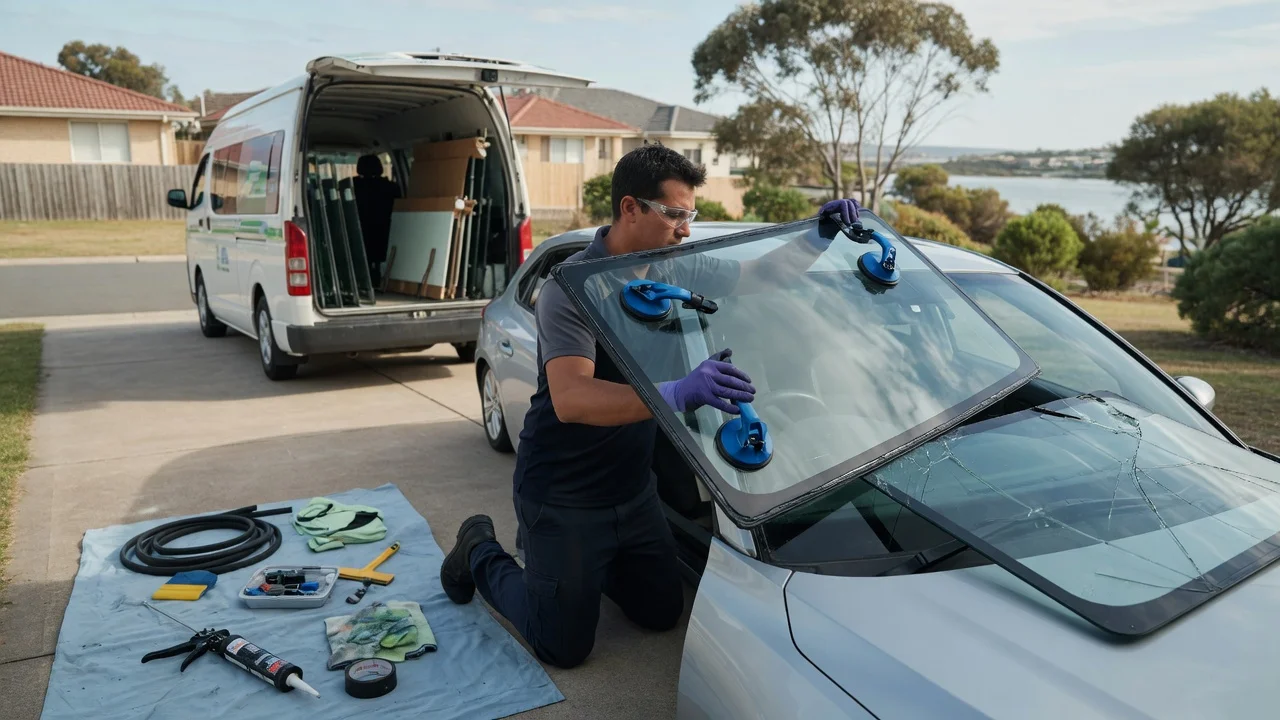
The short answer
If you need windscreen repairs in Rosebud, or in any other town, the first decision is whether the damage can be repaired or the glass must be replaced. A small chip or short crack away from the driver's line of sight and the edges of the glass is often repairable, usually for less money and in less time than a replacement. Long cracks, damage in the driver's direct view, damage near the edge of the windscreen, or damage that has reached the inner layer of glass usually means replacement. Each repairer sets its own size and location limits, so describe or photograph the damage and ask before booking.
Two conditions change the answer. First, if your vehicle has a camera, sensor or heads-up display mounted on or behind the windscreen, a replacement may also need the driver-assistance system recalibrated, which not every glass provider can do. Second, if the damage is growing, obstructs your view or the glass is loose or shattered, treat it as urgent rather than something to book at your convenience.
Finding a windscreen repairer near you
The same approach works whether you are searching around Rosebud on the Mornington Peninsula, Reservoir or Kyabram in Victoria, Dapto, Shellharbour, Narrabeen or Punchbowl in New South Wales, Stirling, or Midrand in South Africa. This article does not include business listings, prices, opening hours or service areas for any of these locations, so you will need to confirm those details directly with providers.
Ask whether the provider offers mobile service at your home or workplace, or only in a workshop. Confirm whether they do chip repair, full replacement, or both. If your car has a windscreen-mounted camera or sensor, ask whether they can recalibrate it themselves or whether you will need to visit a dealer or specialist afterwards. Ask what type of replacement glass they would fit and whether it matches your vehicle's original features. Ask how long you must wait before driving after a replacement, as adhesive curing time varies by product and conditions. If you plan to claim on insurance, check whether your policy covers glass, whether an excess applies, and whether your insurer requires a particular provider. Ask what warranty applies to the repair or installation.
Chip or crack: what it might mean and what to check next
Most windscreen damage comes from stones or debris striking the glass. Cracks can also spread from an existing chip because of temperature changes, road vibration or pressure on the glass. What you can see tells you what kind of damage is present, but only an inspection confirms whether it can be repaired. Laminated windscreens are made of two layers of glass with a plastic interlayer between them, and repair is generally only possible when damage is confined to the outer layer.
Location: note whether the damage sits in the driver's direct field of view or close to the edge of the glass. Both commonly rule out repair. Size and shape: note whether it is a small chip, a star or bullseye pattern, or a line crack, and whether the crack is growing. Depth: run a finger lightly over the inside of the glass. If you can feel damage on the inside, the inner layer may be affected. Nearby equipment: check whether the damage is near a camera, rain sensor or other mounted device, which can affect both repair options and recalibration needs.
Until it is assessed, you can limit further spreading by avoiding sudden temperature changes such as blasting hot or cold air directly onto the glass, avoiding slamming doors, and keeping dirt and water out of a chip with clear tape if the repairer recommends it. Stop driving and arrange help if the glass is shattered, loose in its frame, or the damage blocks your clear view of the road.
Legal and roadworthy rules about windscreen damage differ between states and countries. This article does not include those rules, so check the requirements that apply where your vehicle is registered.
Identifying the correct replacement windscreen
Windscreens for the same model can differ between years, markets and trim levels. Getting an accurate quote depends on identifying which version your vehicle has.
Mounted equipment: look behind the rear-view mirror for a camera housing, rain or light sensor, or a separate bracket. These indicate driver-assistance or automatic-wiper features that the glass must support. Heads-up display: if your car projects information onto the windscreen, it needs a compatible windscreen. Heating elements: fine wires in the glass, or a heated area near the wiper rest, indicate a heated windscreen. Tinting and acoustic layers: a shaded band across the top or a label on the glass may indicate tinted or noise-reducing glass. Markings on the glass: a small printed label, usually in a lower corner, can show the glass manufacturer and specification codes.
Give the provider your vehicle identification number (VIN), registration details, or the exact model year, market and trim, together with photos of the area behind the mirror. This helps them separate look-alike variants. If the markings or features do not match what the provider expects, check your owner's manual or ask a dealer for the specified part before fitting.