Will a Bad Camshaft Position Sensor Cause Rough Idle?
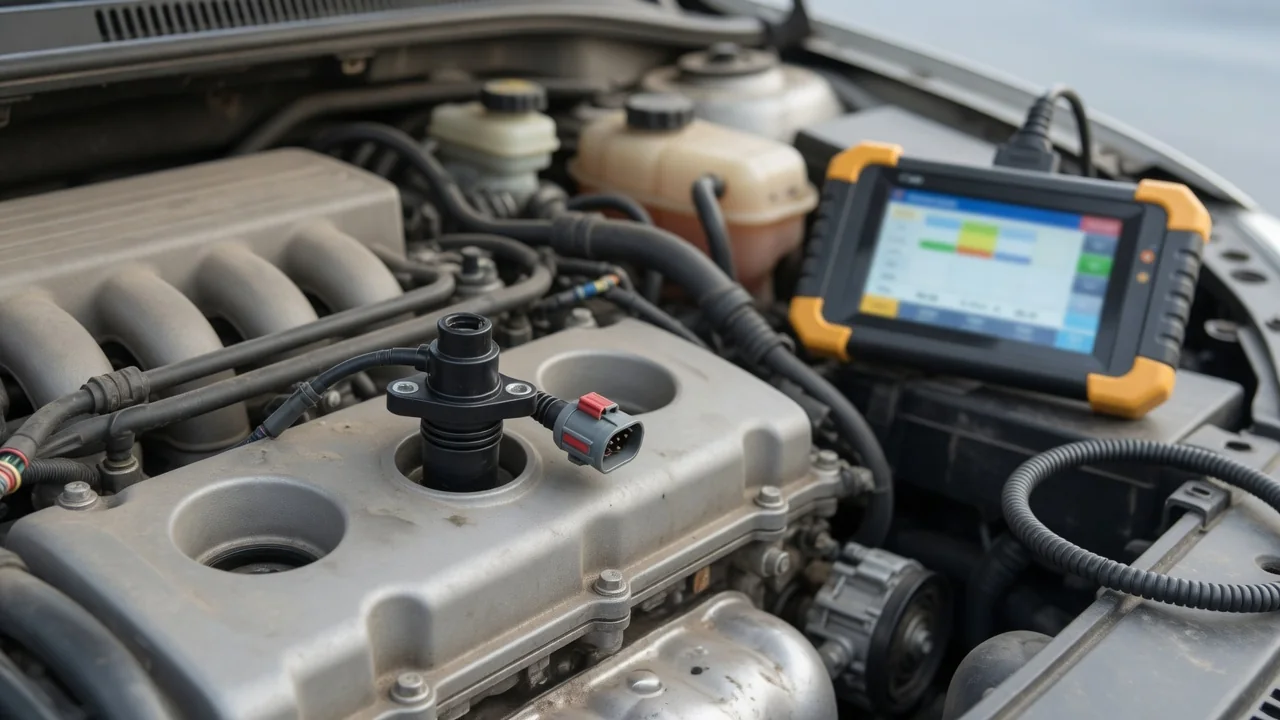
A rough idle can make any drive feel unsettled, with the engine shaking at stoplights or the tachometer needle drifting. If you suspect the camshaft position sensor, you're asking a key question: will a bad camshaft sensor cause rough idle? The answer isn't always simple, but an erratic signal from this sensor can indeed disrupt fuel and spark timing at idle. Understanding how the sensor works and what other problems can mimic its failure is the first step to a smooth-running engine again.
Can a Failing Camshaft Position Sensor Really Cause a Rough Idle?
Yes, a failing camshaft position sensor can cause a rough idle on many engines, but it is not the only possibility. The sensor reports the camshaft's rotational position to the engine computer, which uses that data to time fuel injection and, on many engines, ignition and variable valve timing. When the signal becomes weak, intermittent, or drops out entirely, the computer may inject fuel at the wrong moment or fire the spark plug off schedule. At idle, where engine speed is low and there is little momentum to mask timing errors, the result can be a noticeable stumble, shake, or uneven running.
Engine response to a bad cam sensor signal varies by design. Some computers switch to a backup strategy using the crankshaft position sensor alone, allowing the engine to keep running, though often with reduced performance and a rough idle. Others may struggle more, stumbling, stalling, or even refusing to start if the signal is lost before cranking. Rather than assuming the sensor is the culprit, it is important to consider all symptoms and test properly, because a rough idle can stem from many sources.
Symptoms That Point Toward a Cam Sensor Problem
A rough or surging idle is a common complaint with a failing cam sensor. You may feel shaking through the seat or steering wheel, and the tachometer needle may wander up and down as the engine speed fluctuates. The idle may dip low, almost to stalling, then recover. Because the sensor's signal is used to synchronize fuel injection, any inconsistency can cause the engine to run lean or rich at idle, creating an unstable condition that is most noticeable when the vehicle is stopped and the transmission is in gear.
Stalling at idle or when coming to a stop is another sign that may point to the cam sensor. Intermittent faults often appear only when the engine is hot or after it has been running for a while, as heat can affect the sensor's internal electronics or a marginal wiring connection. Hard starting or long cranking before the engine fires can also occur, and in some cases the engine may crank but not start at all. Related signs include a check engine light, hesitation, reduced power, or a reduced-power mode, and possibly worse fuel economy. None of these symptoms alone proves the cam sensor is at fault—they simply point toward the need for proper diagnosis.
Other Faults That Can Mimic a Bad Cam Sensor at Idle
A rough idle can be caused by many problems that mimic a bad cam sensor. Ignition misfires, vacuum leaks, a dirty throttle body or idle control problems, and fuel delivery issues are common culprits. A misfire may feel similar because one cylinder not contributing makes the engine shake, while a vacuum leak lets in unmetered air and leans out the mixture at idle. A dirty throttle plate can restrict airflow when the throttle is closed, causing unstable idle. Fuel problems, such as a weak pump or clogged injector, can also lead to an uneven idle.
A crankshaft position sensor fault can produce very similar stalling and no-start symptoms because it too provides critical timing information. Wiring, connector, or ground problems in the sensor circuit can create the same signal fault even when the sensor itself is fine—corrosion or a loose pin can interrupt the signal intermittently. Additionally, timing chain or belt wear, stretch, or a jumped tooth can alter the relationship between cam and crank, producing correlation problems that are often wrongly blamed on the sensor. Variable valve timing faults can cause similar codes and rough running. Replacing a sensor on symptoms alone may not fix the idle if the true cause lies elsewhere.
Reading Trouble Codes Without Guessing Their Meaning
A scan tool can retrieve stored and pending diagnostic trouble codes, even if the check engine light has not come on yet. Intermittent faults often set a pending code that may not illuminate the light until the problem repeats several times. Generic cam sensor circuit codes are described in general terms, such as a circuit malfunction or range/performance issue, but exact definitions, sensor bank and position labels, and numbering differ by manufacturer. It is essential to check the vehicle-specific meaning of any code in the service information for your make, model, and engine before acting on it.
A code tells you that a signal was out of expected range or missing, not that the sensor part itself has definitely failed. The fault could be in the wiring, connector, or even a mechanical timing issue that alters the signal. Recording freeze-frame data—such as engine temperature and speed when the code set—can help a technician reproduce the fault and determine whether the problem occurs only under certain conditions. This information is valuable for an accurate diagnosis and prevents unnecessary parts replacement.
Safe Observations You Can Make Before Seeking a Diagnosis
Before seeking a professional diagnosis, you can make safe observations that may help narrow things down. Note when the rough idle happens: only on a cold start, only when the engine is hot, with the A/C on, after refueling, or at stops only. A pattern can indicate whether the issue is sensor-related or tied to engine load or temperature. Also, pay attention to whether the stalling is becoming more frequent, because a car that stalls in traffic is a safety risk and should not be driven normally.
With the engine off and cool, you can perform a visual-only check of the sensor area. Look for obviously damaged, chafed, or oil-soaked wiring, or a loose connector near the sensor. Do not take anything apart, and do not attempt to remove sensors or probe live circuits, as these actions require professional equipment and safety precautions. These observations help narrow possibilities but cannot confirm sensor signal quality. If the rough idle is severe or stalling occurs, have the vehicle inspected promptly.
How Professional Testing Confirms a Cam Sensor Fault
Professional testing can confirm a cam sensor fault with greater certainty. A technician may use live scan data to watch cam and crank signals, sync status, and variable valve timing readings at idle. This can reveal whether the cam signal is dropping out or inconsistent compared to the crank signal. More advanced signal testing, such as with an oscilloscope, can show dropouts or a distorted waveform that a code reader cannot, directly indicating a failing sensor or an intermittent connection.
Circuit checks for power, ground, and signal integrity help separate a wiring fault from a failed sensor. If the sensor is receiving proper power and ground but its output signal is erratic, the sensor itself is likely at fault. Correlation faults may lead to checks of timing components, which require professional equipment and experience. If the engine stalls while driving, will not restart, or the check engine light is flashing, seek professional help promptly, as these indicate more serious issues that should not be ignored.
What to Expect After the Cause Is Found
After the cause is found and repaired, a confirmed sensor or wiring fault should bring back a steady idle and normal starting. It is worth checking the result over several drives, especially under the same conditions that previously triggered the problem, such as a hot engine or stop-and-go traffic. A properly functioning cam sensor allows the engine computer to maintain accurate injection and ignition timing, resulting in smooth operation at idle.
Some vehicles may require codes to be cleared or a relearn procedure afterward, depending on the manufacturer's service information. This ensures the computer uses the new sensor's signal correctly and removes any stored fault codes. If the rough idle returns after a repair, it points to a separate or underlying cause that still needs diagnosis. When choosing replacement parts, select ones that the manufacturer's service information or a trusted parts source confirms fit the exact vehicle, without relying on generic assumptions.