Why Your Check Engine Light Comes On in Cold Weather
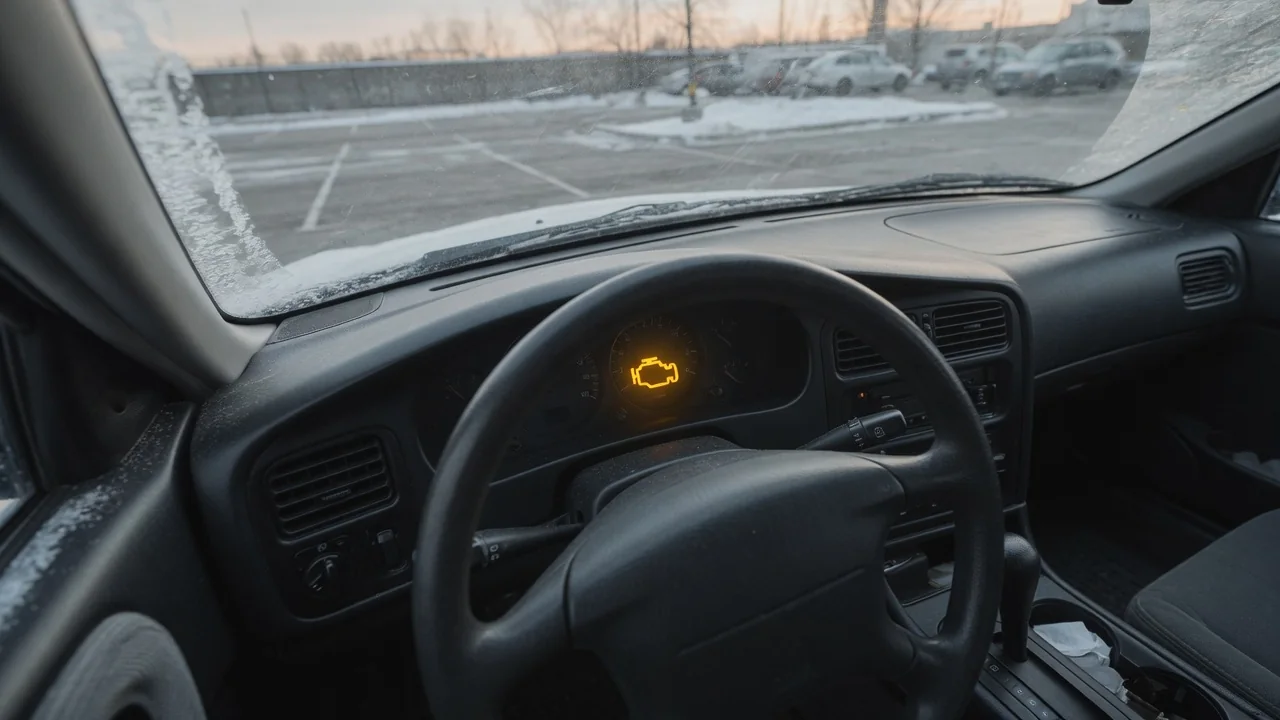
A check engine light and cold weather often show up together, but outdoor temperature is not a diagnosis by itself. A cold snap can expose warm-up, sensor, fuel-vapor, or electrical issues that stay hidden when the engine is already warm. Note when the light appeared, how the vehicle was parked overnight, and whether the warning returns on a cold start. That pattern is useful evidence, not proof the problem is harmless.
Why a Cold Snap Can Coincide With a Check Engine Light
The check engine light means the control module has stored a fault related to engine management or emissions, not that cold air itself tripped a switch. A check engine light in cold weather often appears because the same hardware is asked to warm the engine, meter fuel, and close vapor paths under conditions it barely sees in summer. Overnight parking in a freeze, a long soak, and a first-start warning are more informative than the fact that it is winter. Record the outside temperature and whether the light came on immediately or after a short drive.
Cold conditions can expose sluggish thermostat operation, implausible coolant temperature or intake-air readings, weak battery voltage during cranking, and marginal EVAP system seals that hold better when the fuel tank and lines are warmer. A check engine light on in cold weather that fades after several warm trips still deserves attention, because a winter-only pattern is a clue about when the monitor fails, not a guarantee the condition is harmless. Note whether the warning returns only on cold starts after the vehicle sat outside, or also after indoor parking.
Decide Whether the Symptoms Require an Immediate Stop
A flashing check engine light can indicate an active misfire that dumps unburned fuel into the exhaust and can overheat a catalytic converter. Pull over when it is safe and arrange assistance rather than continuing to drive. Severe shaking, stalling, substantial power loss, visible smoke, or a strong fuel odor are additional reasons to stop and seek professional help, even if the lamp is steady. Those symptoms describe a vehicle that may not remain controllable or that may be leaking fuel.
A steady check engine light with otherwise normal operation still calls for prompt code retrieval and assessment. Smooth running does not guarantee that continued driving is safe, because some emissions and sensor faults can worsen without obvious drivability change. Distinguish this symbol from oil-pressure, coolant-temperature, and charging warnings, which report different systems and require their own response. A red oil lamp, an overheating gauge or warning, or a charging-system indicator is not explained by a check engine light cold weather coincidence and should not be treated as the same issue.
Investigate Thermostat and Temperature-Sensor Clues
A thermostat that remains open can keep coolant circulating through the radiator so the engine never reaches the temperature the control module expects. Many vehicles monitor warm-up time; if coolant temperature stays too low for too long after a cold start, the module can set a diagnostic trouble code and turn the lamp on. Slow cabin heating and a gauge that never climbs into its usual range are clues that need context, not confirmation that the thermostat has failed. Air in the cooling system, a stuck blend door, or a misreading sender can produce similar comfort complaints.
Coolant-temperature and intake-air-temperature readings also shape cold-start fueling and idle strategy. An implausible cold reading on a warm engine, or a reading that never changes as the vehicle warms, can cause rich or lean operation and a check engine light on cold weather mornings even when thermostat operation is normal. Wiring corrosion, connector moisture after a thaw, and a sensor that has drifted can all produce those numbers. Professional diagnosis can compare live temperature data with actual warm-up behavior and inspect the circuit before anyone recommends a thermostat or sensor.
Check EVAP Clues and Cold-Start Voltage Symptoms
Temperature swings can shrink and expand plastic, rubber, and metal in the EVAP system, so a marginal hose, purge valve, or tank seal that holds in mild weather may leak after a freeze. Evaporative-monitor operation also depends on vehicle-specific conditions such as fuel level and soak time, which is why a check engine light on in cold weather may appear days after a leak began. On vehicles with a removable fuel cap, confirm it is seated as the owner's manual describes and look for a cracked or flattened gasket.
Slow cranking, a recent jump-start, or an electrical reset after a dead battery can point toward a battery or charging concern. Low battery voltage during a cold start can scramble sensor signals or leave incomplete self-tests on some vehicles. Those observations cannot identify a failed EVAP component or a failed battery, and a damaged cap seal is only a clue. Professional leak testing of the vapor system, plus battery and charging-system testing, is needed to separate a winter coincidence from a defect.
Save Diagnostic Evidence Before Clearing the Light
Retrieving stored and pending diagnostic trouble codes can narrow the investigation to a monitored circuit or emissions function without proving that a named part has failed. A code is evidence to interpret: it reports that a test failed, not that a thermostat, oxygen sensor, or purge valve must be replaced. Verify each code's meaning for the specific year, make, model, and engine, because manufacturer-dependent definitions can describe different tests even when the alphanumeric label looks familiar. Pending codes that have not yet matured into a lamp command are still worth recording, especially after a cold start.
Freeze-frame data, when available, captures operating conditions at the moment the fault was recorded, including coolant temperature, engine load, vehicle speed, and related sensor values. That snapshot can show whether the event happened on a cold start, during warm-up, or after the engine was already hot, which is more useful than guessing from outdoor temperature alone. Preserve those codes and notes rather than disconnecting the battery or using a scan tool simply to extinguish the light. Clearing the memory also erases pending results and can reset drive cycles, delaying the next chance to confirm whether the fault returns.
What It Means if the Light Goes Out When Weather Warms
The lamp may turn off after the relevant monitor completes enough successful checks, and those requirements depend on the vehicle and the fault. Completing drive cycles in milder weather can let a borderline EVAP leak, a now-warm thermostat, or a recovered battery voltage pass tests that failed after an overnight freeze. Warmer weather and an extinguished light do not prove the underlying problem has been repaired. The same condition can return on the next cold snap if a seal, sensor circuit, or charging weakness is still present.
Diagnostic information may remain available after the light goes out, including stored history and freeze-frame data, so a scan is still useful when winter symptoms keep repeating. Seek professional assessment if the check engine light in cold weather persists, returns with cold starts, or arrives with misfire, stalling, or fuel odor. Share when the lamp appeared, overnight parking conditions, outside temperature, whether it flashes, how the engine cranks and idles, cabin heat and gauge behavior, fuel-cap condition, and any recent jump-start. Those notes help a technician reproduce the enabling conditions instead of chasing a warm-engine snapshot.