Why Your Catalytic Converter Is Rattling and What to Do
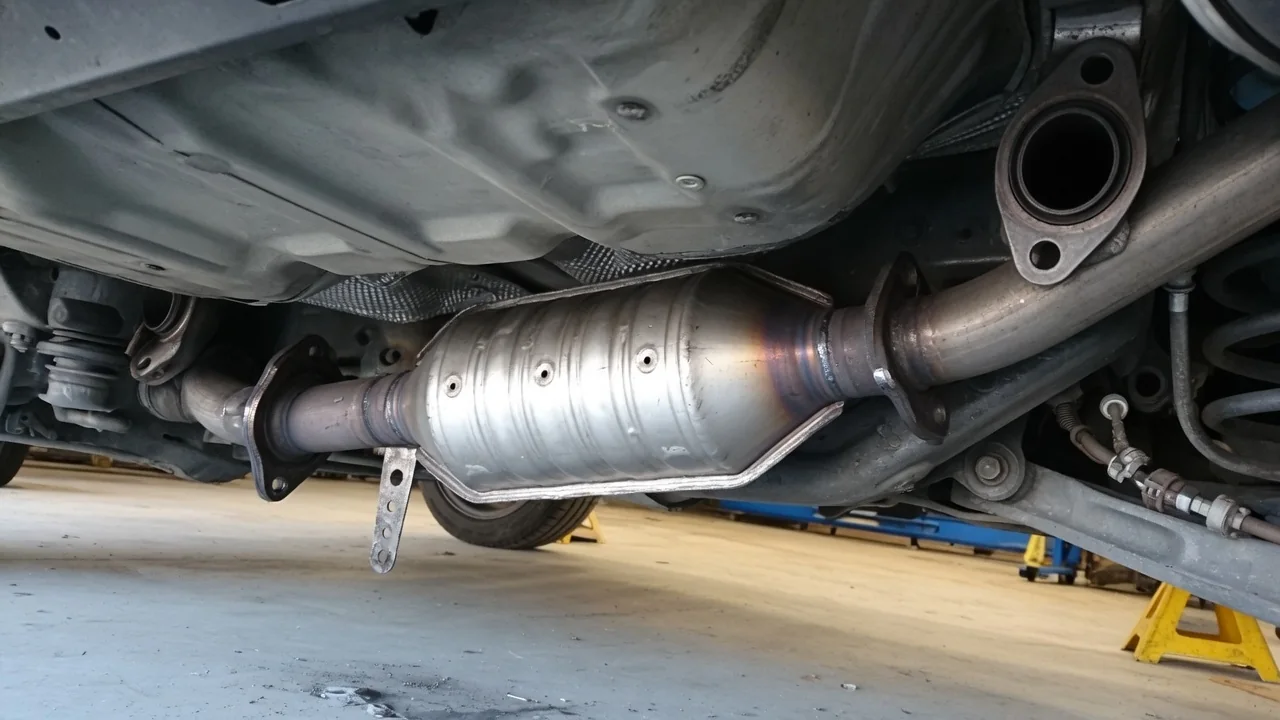
A rattling catalytic converter can come from a loose heat shield, a broken internal substrate, tired exhaust hangers, or nearby parts that shake with underbody vibration. Sound alone does not prove the converter is ruined. Knowing what a catalytic converter heat shield does, how shield noise differs from rattling in catalytic converter internals, and when to stop driving helps you choose inspection over guesswork.
What a Catalytic Converter Rattle Can Tell You
A catalytic converter rattle heard from under the car is a location clue, not a diagnosis. The noise may come from a heat shield for catalytic converter hardware that has loosened, from fragments of the internal substrate moving inside the can, from exhaust hangers that no longer hold the pipe steadily, or from an adjacent brace, heat wrap, or underbody panel. Because those parts sit close together, the ear often cannot tell which one is moving. Treating every rattling catalytic converter as a failed catalyst therefore jumps past several more common sources.
When the noise appears can narrow the search without naming the failed part. A buzz at idle that fades as engine speed rises often tracks with a light panel or shield, while a deeper knock over bumps may follow a sagging pipe or worn hanger. Acceleration can make either type louder because exhaust flow and engine torque both increase underbody vibration. Those patterns still do not prove the converter itself is damaged. Replacement based only on a catalytic converter rattling sound skips inspection of shields, supports, and nearby hardware that can produce the same tone.
What the Catalytic Converter Heat Shield Does
The catalytic converter heat shield intercepts radiant heat from the converter shell so the floor pan, wiring, fuel lines, and nearby plastics stay cooler than the exhaust itself. Catalytic converter heat shields may be stamped metal around the converter, a separate exhaust heat shield bolted to the pipe, or a body-mounted panel above the converter. Attachment can be welds, clamps, or fasteners at shield mounting points on the exhaust assembly or underbody, so a heat shield on catalytic converter hardware is not one universal part.
A loose or missing shield matters because the converter can run hot enough to scorch carpet, melt nearby insulation, or raise underbody temperatures that other parts were never meant to see continuously. Leaving the shield off to silence a rattle trades a noise complaint for unprotected heat. A missing panel can also let stones or debris strike the converter shell more easily. The appropriate response is to restore a heat shield for catalytic converter coverage that matches the vehicle design, not to discard the shield as a shortcut.
How Loose Mountings and Corrosion Create Shield Noise
Road salt, moisture, and heat cycle the thin metal of catalytic converter heat shields until fasteners rust, mounting holes elongate, and the shield itself warps. Once a clamp or clip no longer holds the panel tight, the shield can flutter against the converter body or slap a nearby floor brace. Bent edges from a parking-lot scrape create the same contact. Shield mounting points that have rusted through no longer locate the panel, so even a small amount of exhaust motion turns into a repeating metallic knock.
A light metallic buzz that starts and stops with engine vibration is a possible clue that a shield is loose rather than that the ceramic inside has broken. Pitch still cannot confirm the source, because a thin hanger, a heat wrap clip, or a body shield can sound similar. If you can see sagging or a displaced panel from a safe standing position beside the vehicle, note it for the shop. Do not crawl under an unsupported car. Underbody inspection belongs to a properly equipped facility that can lift the vehicle safely.
Why the Internal Substrate Can Break Apart
Inside the converter, a catalyst-coated internal substrate, often a ceramic honeycomb, presents a large surface to the exhaust stream. That structure can crack after an underbody impact, after catalyst overheating from a misfire or rich running condition, or after thermal shock from sudden cooling. Once pieces loosen, they can shift inside the shell and produce rattling in catalytic converter housing that follows engine speed more than road bumps. Overheating is an engine-management problem as much as a converter problem, so the rattle may be a late sign of a fault that started upstream.
Loose fragments can collect at the outlet and contribute to exhaust restriction, which may show up as sluggish acceleration or extra heat around the converter. A rattle does not establish a blockage, because fragments can move inside the shell without packing the outlet. Power loss, unusual underbody heat, or a check engine light still calls for diagnosis of both converter condition and possible engine faults. A stored code is evidence to interpret, not proof the catalyst has failed, and manufacturer-dependent codes need vehicle-specific confirmation before anyone orders a replacement.
Safe Observations and Professional Repair Options
Useful information for a shop is when the noise occurs during ordinary driving, whether a check engine light is on, whether power has changed, and whether the vehicle recently struck a curb, speed bump, or debris. Write those details down instead of trying to recreate the sound in a driveway. Do not tap the converter, touch hot exhaust parts, crawl beneath an unsupported vehicle, or deliberately rev the engine to force a rattle. Those actions add burn and crush risk without confirming whether the catalytic converter heat shield or the substrate is at fault.
A shop can inspect catalytic converter heat shields, exhaust hangers, and adjacent panels, then isolate the noise with the vehicle properly supported. When internal damage or exhaust restriction is suspected, technicians can use backpressure checks, temperature comparison, or scan data as the vehicle design requires, rather than replacing parts on sound alone. A loose shield is addressed by refastening or replacing it with hardware suited to that vehicle. Converter replacement is appropriate only after the unit itself is confirmed damaged, and any misfire, fuel, or ignition fault that could overheat a new catalyst should be corrected first.
When to Stop Driving With an Exhaust Rattle
A faint rattle alone cannot establish whether continued driving is safe, because the same sound can come from a loose shield or from a converter that is breaking up. Arrange prompt inspection and skip extra trips until the source is identified. If the vehicle loses substantial power, you see smoke, you smell a strong burning odor, an exhaust component is visibly glowing, or the check engine light is flashing, pull over safely, shut the engine off, and arrange professional help, since those signs can indicate catalyst overheating or unburned fuel entering the converter.
Stop and leave the vehicle if exhaust fumes enter the cabin, even if the odor seems mild or you notice only a headache or nausea. Carbon monoxide itself has no smell, so scent cannot tell you whether the air is safe. Get to a safe place, shut the engine off, and move away. After shutdown, do not park over dry grass, leaves, or other combustible material. The converter and nearby exhaust heat shield still hold substantial heat, and a displaced shield can leave that heat less contained.