Why Your Car Makes Noise in Reverse
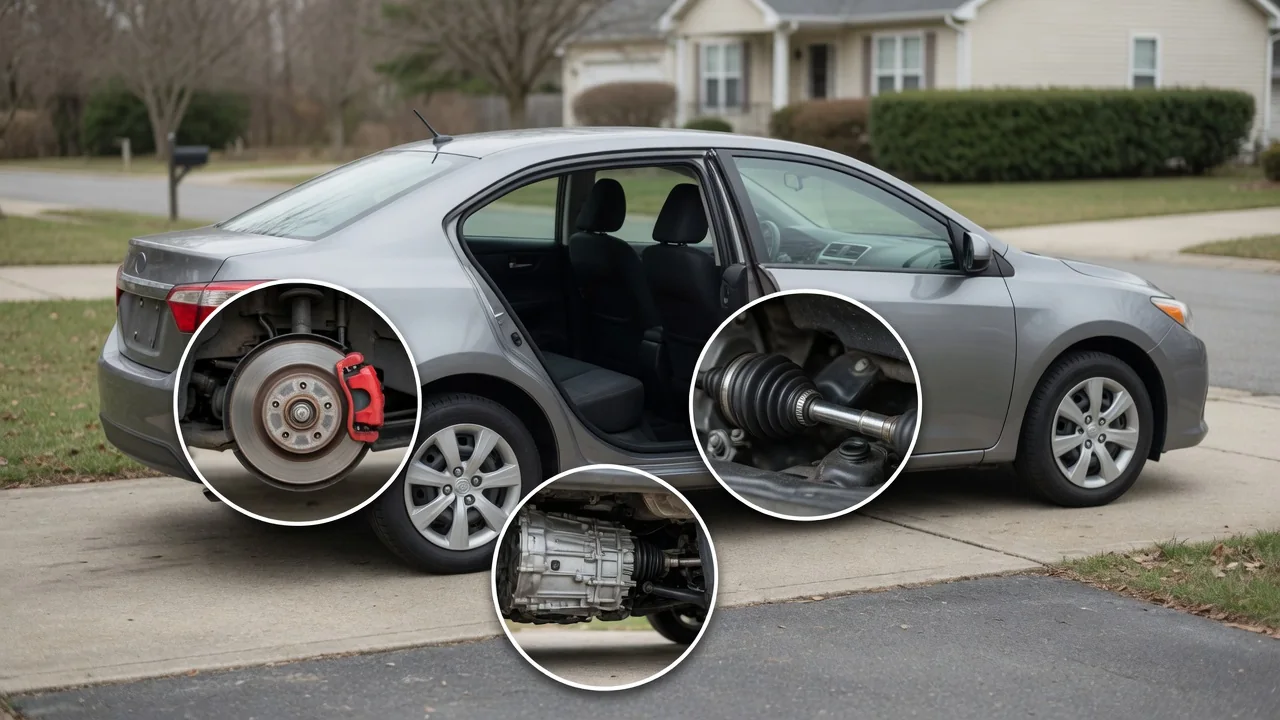
When a car makes noise in reverse, the sound often shows up only while backing or while reversing and turning. That pattern is useful because reverse loads the drivetrain, brakes, and steering differently than forward travel. A reverse gear whine, brake squeal, drivetrain clunk, or CV joint clicking can share the same cabin, so the first job is to notice when the noise starts, how it sounds, and what the vehicle is doing at that moment.
Notice Exactly When the Reverse Noise Starts
If the car makes noise when in reverse, first separate the moment reverse is selected from the moment the car starts moving. A sound at shifter or selector movement can point toward transmission engagement, while a sound that begins only after the wheels turn belongs to rotating parts. Describing the noise as a whine, clunk, squeal, click, or grind does not identify a failed part, but it organizes what a technician will try to reproduce. Note whether the event is a single hit or a repeating tone.
Drivers often first notice the problem when they reverse and the car makes a noise that never appears in forward travel. Pay attention during ordinary straight reversing, a normal parking turn, or light brake use, without forcing unusual maneuvers. The useful detail is whether the sound appears only with steering, only with the pedal, or whenever the vehicle rolls backward. Record if the noise is new, returns on every reverse, or arrives with vibration, a warning light, or odd vehicle behavior.
What a Whine While Reversing Can Suggest
Some transmissions produce an audible reverse gear whine as a design characteristic of how reverse is cut or loaded, but that is not true of every vehicle and is not proof a sound is harmless. If the car makes a whining noise when reversing and the tone rises and falls with vehicle speed, rotating drivetrain parts are a reasonable area of interest. Sound alone cannot establish whether the source is gears, a bearing, a pump, or something nearby that only becomes audible in reverse.
A new or worsening whine deserves more weight than a long-standing light tone that has not changed. Delayed engagement, slipping, vibration, or a visible leak alongside the sound are reasons to seek professional assessment rather than wait. Design-specific reverse behavior and any fluid inspection belong only after the vehicle and transmission are identified, because layouts and service needs differ. Until then, treat a reverse-only whine as a symptom to describe, not as a confirmed gear or fluid problem.
Clunks When Reverse Engages or the Car Starts Moving
Timing separates a drivetrain clunk at the instant reverse engages from clunks that repeat as the car starts moving. A single hit as load transfers can come from free play in joints, mounts, or couplings taking up slack. Repeated knocks while rolling can involve those same parts, or brake components shifting as rotation begins. None of those possibilities is a diagnosis; they are inspection starting points. Report whether the clunk is one event at engagement or several as speed builds.
Where the sound seems to sit inside the cabin is an uncertain clue, because vibration travels through the body and can mislead the ear. If a car making noise in reverse includes a forceful engagement, a pronounced jolt, delayed movement, or a recurring heavy clunk, arrange inspection promptly. Do not hunt the cause by cycling reverse repeatedly at home; extra gear changes add load without clarifying the source. A shop can inspect mounts, driveline play, and brake movement under controlled conditions.
Squealing or Scraping as the Brakes Apply
A squeal or scrape that starts as the brakes apply can direct inspection toward pads, rotors, and brake hardware without confirming which of those parts is at fault. Reverse travel can make light contact more noticeable because wheel speed is low and the cabin is quieter. Moisture and surface corrosion after parking can contribute to a brief brake squeal on the first reverse, but a noise that returns every time you back up should not be dismissed as harmless surface rust.
Brake hardware can shift slightly as the vehicle rolls backward, and contact near a rotating disc or drum can produce a squeal, scrape, or grinding noise during reverse. That still does not prove a pad, clip, or shield has failed. Persistent grinding, reduced braking, pulling to one side, or an abnormal pedal are different. Those signs mean stop using the vehicle and arrange assistance, because control is in question even if the original complaint was only a car making noise when reversing.
Clicking or Rubbing While Reversing and Turning
A car making noise when reversing and turning often raises CV joint clicking as a concern, especially if a rhythmic click follows wheel rotation during a turn. That pattern can warrant CV joint inspection, but the sound does not establish which joint or nearby component is responsible. Tire contact with a curb or liner, a loose shield, and steering or suspension parts can also rub or click when the wheels are steered. Treat the turn-related sound as a cluster of possibilities, not a named failed part.
From ordinary parking and driveway use, note steering direction, the approximate steering angle, and whether the noise repeats with wheel movement. Those observations help a technician decide where to look without you performing tight-circle tests, repeated full-lock turns, or under-vehicle checks. If the car makes noise when reversing only while steered, mention that clearly. Arrange inspection when the sound comes with steering resistance, vibration, or a binding feel, because those extras suggest more than a cosmetic click.
When to Stop Driving and What to Tell the Shop
Stop safely and arrange assistance if braking fades, steering feels impaired, grinding is severe, or the vehicle moves in an unpredictable way. Those are control problems, not noises to catalog later. The question of why the car makes a noise when you reverse still matters when none of that is present: a new or persistent reverse-only sound deserves a scheduled inspection even if the car still stops and steers normally. Reverse loads parts that may stay quiet in forward gear, so waiting for a louder failure is a poor plan.
Tell the shop the vehicle details, the sound type, and whether it happens at engagement or only once the car is moving. Include brake use, steering position, and any vibration, leak, warning light, or change in how reverse takes hold. Professional testing may include a controlled road test, brake and axle inspection, mount checks, or transmission diagnostics, chosen from those symptoms rather than from the noise in isolation. Recent reverse or brake work is worth mentioning, because hardware can be left loose or load take-up can change after that service.