Why Would a Car Battery Smoke? Causes and Safety Steps
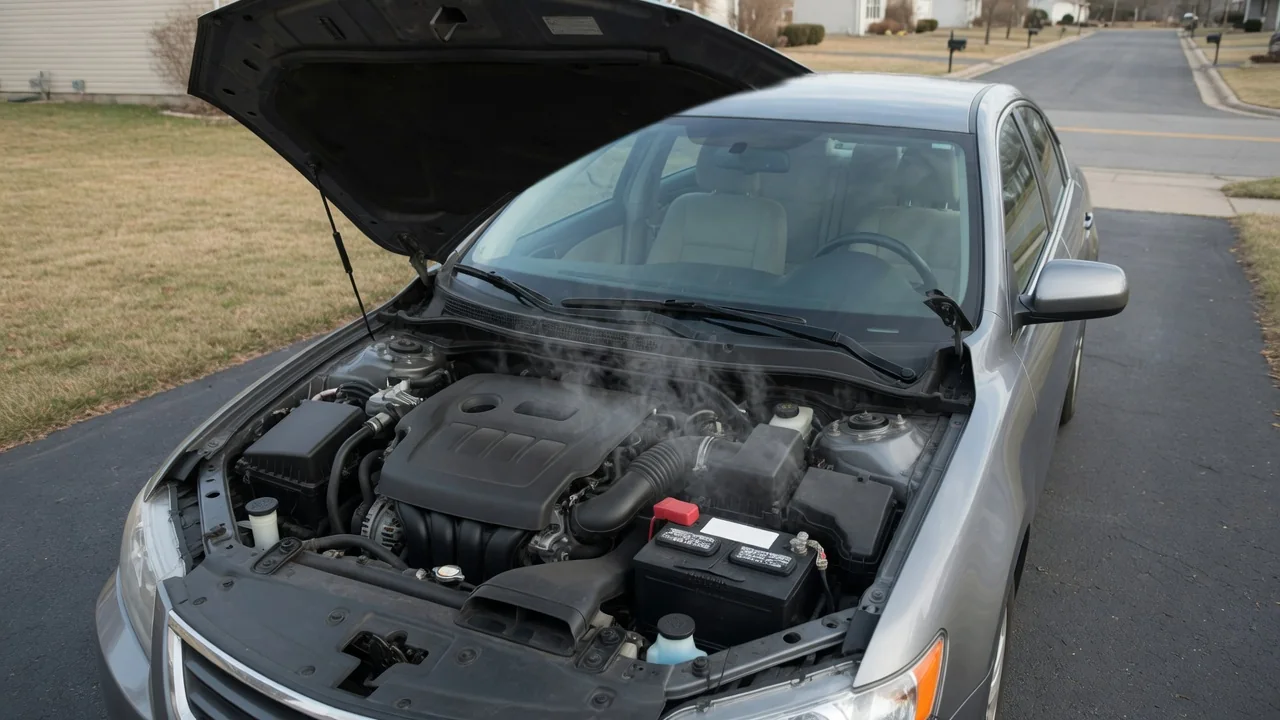
Smoke from a car battery is a warning that heat, gas, or burning insulation is already present, not a minor electrical quirk. Drivers often ask why a car battery would smoke, and the answer usually involves overcharging, an internal short circuit, a loose battery terminal, damaged battery cables, or a jump-start polarity mistake. Visible vapor can also come from battery venting. Immediate distance and professional assessment matter more than identifying the exact cause at the scene.
What to Do Immediately When a Battery Smokes
If smoke from a car battery appears while the vehicle is moving, pull over in a safe location and switch the engine off if that can be done without walking toward the smoke. Everyone should leave the vehicle and stand well away, keeping cigarettes, open flames, sparks, and curious bystanders at a distance. Battery overheating can release flammable hydrogen and corrosive electrolyte mist. The goal at this moment is distance and fire avoidance, not diagnosis. Do not linger beside the fender waiting to see whether the plume fades.
Do not open the hood to investigate active smoke, lean over the battery, touch cables, or try to disconnect terminals. Those actions can expose you to heat, acid, and an ignition source. Call emergency services if there are flames, heavy or increasing smoke, or any immediate danger. Once the immediate hazard has passed, arrange roadside assistance rather than attempting a roadside repair. Do not restart, jump-start, charge, or drive the vehicle again until a professional has assessed the battery, charging system, and nearby wiring.
What Smoke or Vapor Near the Battery Can Mean
This discussion concerns a conventional 12-volt automotive battery under the hood, not an electric-vehicle traction pack. Smoke involving an EV high-voltage battery is an emergency-response situation and should not be treated as a 12-volt charging complaint. Around a lead-acid battery, a visible plume may be vented electrolyte mist, water vapor from battery venting, or burning cable insulation. Appearance alone cannot identify the source. What causes a car battery to smoke in one case may be gassing from overcharge, while in another it is melting plastic on a damaged cable.
Hydrogen released by a lead-acid battery is invisible, so a visible plume does not reveal the full explosion hazard. Heat, case swelling, hissing, electrolyte leakage, and an unusual sulfurous odor are warning signs that the cell is distressed. None of those signs should be confirmed by walking closer, touching the case, or deliberately smelling the vent. Stay back and treat any combination of vapor, heat, and odor as an active chemical and fire risk. Residual heat and gassing can continue after shutdown, so leaving the area remains the safer choice.
How Overcharging and Internal Battery Damage Produce Heat
Excessive charging forces a lead-acid battery to convert surplus energy into heat and gas. As internal temperature rises, electrolyte can boil and the case can vent, producing mist that looks like smoke. Overcharging often traces to a charging-system regulation fault, such as a failed voltage regulator, or to an unsuitable or malfunctioning external charger left connected too long or at too high a setting. What would cause a car battery to smoke in this pattern still requires confirmation, because the same plume can appear from other electrical faults.
An internal short circuit or physical battery damage can also generate intense local heat. A damaged plate, a cracked case, or a cell that has collapsed internally can dump stored energy as heat even without an external charger attached. That heat can drive battery venting, melt nearby plastic, and ignite insulation. Smoking alone cannot establish whether the battery, the charging system, or an external charger caused the event. A technician has to separate those paths with voltage, current, and physical inspection rather than treating the plume as a completed diagnosis.
How Terminal Faults and External Shorts Cause Smoking
A loose battery terminal or corroded clamp raises resistance at the connection. Current trying to pass that poor joint turns into localized heat, which can scorch the post, melt the cable boot, and damage nearby insulation until it smokes. Vibration from driving can worsen a loose clamp, so the first sign may appear after a bumpy stretch rather than at startup. Heat at the terminal is not the same as a failing cell, yet the smoke still collects at the battery tray and can look identical from a few feet away.
Damaged battery cables and unintended contact between an energized conductor and chassis metal can create an external short circuit. A frayed positive cable that touches the body, a crushed insulation sleeve, or a tool left across the posts can dump current as heat and sparks. Smoke appearing at the battery may originate from a terminal, a cable, a fusible link, or a nearby electrical component rather than from the cells themselves. Connection inspection, cable handling, cleaning, and tightening belong to professional assessment after the hazard is controlled, not to a roadside experiment.
Why Smoking May Start During Charging or a Jump-Start
Reversed jump-start polarity, reversed charger leads, unsuitable charging equipment, or incorrect clamp placement can cause overheating, arcing, and electrical damage within seconds. Current forced the wrong way through the cells and the vehicle electronics produces heat at the posts and inside the battery. Charging or jump-starting an already damaged battery can trigger a hazardous event even when the case looked intact and the underlying damage was not obvious. A sulfurous smell, hissing, or sudden vapor during a jump means leave the scene rather than reaching in to rearrange clamps.
Active smoke is not the moment to remove jumper clamps, unplug a charger at the battery, or retry the procedure. Arcing at the clamp can ignite hydrogen that has already collected around the vents. From a safe distance, useful details to report from memory include whether the engine was running, whether a charger or jumper cables were still attached, which clamp was connected last if you remember, and when the smoke began relative to those steps. That history helps a technician reconstruct jump-start polarity errors or charger misuse without asking anyone to recreate the event.
What Professional Testing Must Establish Before Reuse
A professional inspection should check battery condition, charging-system operation, terminals, cables, and any heat-damaged surrounding components such as trays, covers, and nearby harnesses. Load testing, voltage-regulation checks, and a close look at insulation can show whether the cells overheated, the alternator overcharged, or a high-resistance connection cooked the cable. Replacing a damaged battery without that work can leave an underlying charging or wiring fault unresolved, so a new battery may overheat in the same way. Smoke is a symptom of energy turning into heat somewhere in that circuit, not a complete diagnosis of which part failed.
Event history and electrical testing help distinguish possible causes without treating symptoms as proof. A battery that smoked during a jump-start needs a different investigation path than one that smoked after a long highway run, yet both can produce similar vapor. The vehicle and battery should not return to service until the source of overheating has been corrected and remaining components are confirmed fit for use. Electrolyte leakage, a warped case, or charred cables are reasons for replacement of those parts, not for another attempt to charge the same assembly.