Why Won't My Car Start? Main Causes and What to Check First
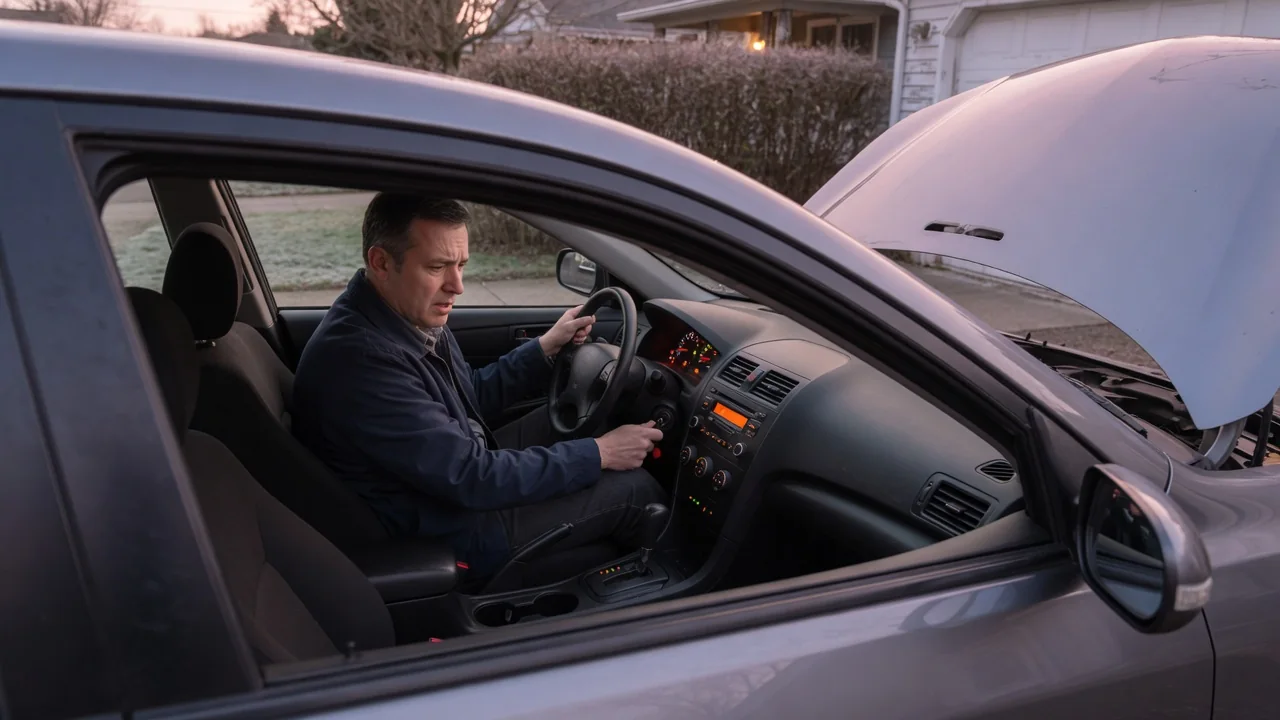
When your car is not starting, the cause usually follows a pattern. What happens in the seconds after you turn the key or press the start button reveals a lot. This guide covers the main causes, safe first checks and how to narrow down the problem before you pay for parts or a tow.
Read the symptom first: what the car does when you turn the key
Start by noticing which of three broad behaviors you get. In the first, nothing happens at all: no cranking, and perhaps no dash lights. In the second, you hear a single click or a rapid clicking, but the engine does not turn over. In the third, the engine cranks at normal speed but never catches and runs. That split between cranking and not cranking is the single most useful clue, because it separates electrical supply problems from fuel, spark and engine-side problems.
Watch the first few seconds closely. Note whether the dash lights come on brightly or look dim, whether the dome light fades as you try, whether any chimes sound, and whether a key or security light flashes. Listen to how fast the engine turns. Most no-starts trace back to five systems: the battery and its connections, the starter circuit, fuel delivery, ignition, and the anti-theft or key system. One symptom can have several causes, so the goal is to find the likely category, not to blame one part.
Battery, terminals and charging faults: the most common no-start causes
A drained or aging battery is the first suspect when the car is silent, the dash lights are dim, or the engine cranks slowly and with effort. Cold weather cuts a battery's available power and makes the engine harder to turn. A car left parked for weeks can drain slowly through normal standby loads. Lights left on, a string of short trips that never fully recharge the battery, and an alternator that is not charging properly can all leave too little reserve to start the engine.
Some warning signs are visible without tools: white or greenish corrosion on the terminals, clamps you can move by hand, or a swollen or leaking case, which you should not handle. A jump-start that works once tells you the battery was low but not why. Dim lights suggest low voltage, but they cannot tell a worn battery apart from a poor cable connection or a weak charging system. A battery load test and a charging system check answer that question.
Starter, ignition switch, and security system causes
A single loud click with bright dash lights points away from a flat battery and toward the starter motor, its solenoid or the wiring that feeds them. Total silence with a healthy battery can instead come from a failed ignition switch. It can also come from an interlock that tells the system the car is not safe to start. With an automatic, shifting firmly into park or trying neutral is a safe check. With a manual, press the clutch all the way to the floor.
Security systems can block starting on purpose. A flashing key or security light, a message that the key was not detected, or a fob with a weak battery can all mean the immobilizer has not recognized the key's transponder. A starter that works only after several tries needs attention now, because on-and-off starter problems usually get worse until the starter stops working completely. Confirming a starter or interlock fault takes electrical testing and often work under the vehicle, so that step belongs with a technician.
Fuel, spark and engine-side reasons the engine cranks but will not start
When the engine cranks normally but never fires, the electrical supply is usually doing its job, and the engine is missing fuel, spark or compression. On the fuel side, start with the obvious: a tank that is empty or a gauge that reads wrong. Many cars run the fuel pump for a moment when the key is switched on, and if you no longer hear that brief hum, the pump or its circuit may be at fault. A clogged filter or fuel that went stale during long storage is also possible.
Ignition-side causes include worn spark plugs, failed coils and a faulty crankshaft or camshaft position sensor, which the engine computer needs to time the spark and fuel injection. These faults often store codes that a scan tool can read. Interpret any code for your specific make and model, because some meanings vary by manufacturer. A failed timing belt or chain, a flooded engine or internal damage can also prevent starting. Long, repeated cranking can drain the battery and add a second problem.
What to do right now: a safe first-steps checklist
Begin with simple checks in order. Confirm the transmission is fully in park or neutral. Switch off the headlights, climate control and radio so the battery can send all its power to the starter. If the steering wheel feels locked, turn it gently while turning the key. Try a spare key if you have one, since that quickly shows whether the problem is the key or the car. Keep each attempt to a few seconds and pause between tries to protect the starter and battery.
While you try, watch the dash and interior lights and listen for a click, cranking or the fuel pump hum. Then note exactly what happened so you can tell roadside assistance or a shop. If you are on a road, turn on the hazard lights and stay clear of traffic. Do not work in the engine bay of a hot car or one that is not securely parked. A jump-start makes sense when the signs point to a weak battery, but follow your owner's manual, because wrong connections can damage electronics.
What you can fix yourself versus when to call a professional
Some fixes are within an owner's reach: replacing a key fob battery, adding fuel to an empty tank, cleaning light terminal corrosion while wearing eye protection and gloves, or replacing a battery by following the manual. Starter replacement, fuel pump diagnosis, ignition testing, immobilizer programming, and anything involving timing parts or possible internal engine damage belong in a shop. A proper diagnosis usually includes a battery and charging load test, a starter draw test, a fuel pressure check and a scan for stored codes.
Don't replace parts based on guesses. A new battery will not fix a failing starter, and a new starter will not help if the battery cannot hold a charge. Either way, you spend money and the car still won't start. When you call a technician or roadside service, describe what you saw and heard: whether the dash lit up, whether you got a click or cranking and how fast, whether a security light flashed, and how long the car had been parked.
Match your symptom to the right in-depth guide
Use the symptom to choose where to look next. Silence with no dash lights usually leads to battery and connection topics. A single click with bright lights points toward the starter circuit, while rapid clicking usually means the battery is too weak to keep the starter engaged. A slow, labored crank belongs with battery, cable and charging guides. A flashing security light or a key-not-detected message sends you to immobilizer and key fob guides.
Normal cranking without firing points to fuel and ignition guides, including fuel pump, sensor and spark topics. An engine that starts and then immediately stalls may point to the security system or to fuel delivery, so check whether a key light flashes when it dies. Starting that works only some of the time can come from a worn starter, loose connections or a failing ignition switch. Whatever the pattern, checking whether the engine cranks is the fastest way to narrow the cause before you spend money on parts or a tow.