Why Winter Driving Is Dangerous: Hazards, Facts, and Common Myths
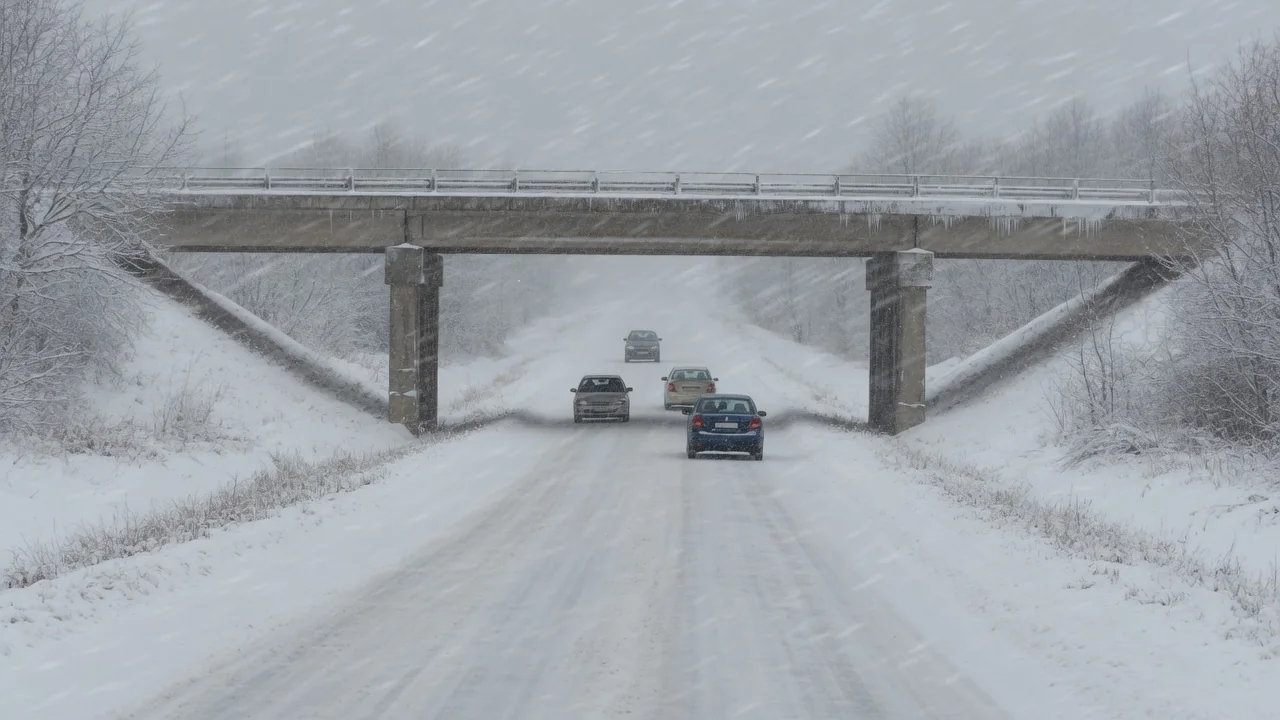
Winter driving conditions change how a vehicle grips, stops, and stays visible. Snow, ice, slush, freezing rain, and blowing snow can make winter driving dangerous even on familiar routes. The dangers of winter driving are not a single hazard but a mix of reduced traction, hidden ice, and limited sight. Facts about winter driving often get mixed with quiz slogans and accident statistics that need careful reading rather than simple slogans.
How Winter Conditions Create Driving Risk
Snow, ice, slush, and freezing precipitation can strip away the tire contact that dry pavement usually provides. Packed snow and freezing rain sit between the rubber and the road, so the same steering, throttle, or brake input can produce less response than a driver expects. Limited traction means the vehicle may not accelerate, turn, or slow in the way the controls suggest. That unpredictability is a core feature of winter driving road conditions, because a surface that looked manageable a few minutes earlier can already be changing under the tires.
When grip is reduced, stopping distance can increase because the tires need more space to convert speed into friction. Steering and acceleration are constrained by the same limit: the tire can only use the traction that remains. Winter driving conditions also vary along a single trip as pavement temperature, precipitation type, and road treatment change from one stretch to the next. A treated arterial may sit beside an untreated ramp, or a wet-looking surface may hide ice. Seasonal uncertainty comes from those winter-specific hazards, not from a single, uniform winter road.
Black Ice and Locations Where Icing Can Be Easy to Miss
Black ice is a thin, transparent layer of ice through which the pavement remains visible, so the road can look merely damp or dark rather than obviously frozen. Drivers often miss it because there is little texture or color change to mark the ice. Bridge decks and overpasses can freeze while nearby roadway remains unfrozen because those structures lose heat from the top and from the underside and sides, so they cool faster than pavement sitting on earth. That is why icing on elevated spans can appear earlier and linger longer than ice on the approach.
Shaded pavement can retain ice after sunlit lanes have begun to thaw, because the surface stays colder where buildings, trees, or terrain block warming. Melted snow and runoff can also refreeze when pavement temperatures fall, leaving a slick film in low spots or where water crosses the travel path. Questions about which three locations are the most dangerous during winter driving often cite bridge decks, overpasses, and shaded stretches as places where ice is easy to miss. Those sites illustrate high-risk icing, not a universal ranking for every road.
Visibility Loss and What a Winter Storm Warning Means
Falling snow, blowing snow, and spray from other vehicles can hide lane markings, traffic, and roadside features used to judge position and speed. In whiteout conditions, visual reference points can disappear, so the horizon, the lane edge, and nearby vehicles may no longer be distinct. Visible pavement alone does not establish safe traction, because a road that can still be seen may still be icy or slushy. Winter storm warning driving conditions often combine this visibility loss with reduced grip, so a view of asphalt is not proof that the surface will hold.
A winter storm warning signals that significant winter weather is expected or already occurring within a defined area and time. Criteria vary by location, so the same headline does not mean identical snowfall, ice, or wind everywhere it is posted. The warning also does not describe every road segment: one highway may be drifting while another is only wet, and hazardous winter driving conditions can exist outside a warning area. Treating the product as a map of every lane would overstate what the forecast can show and understate ice or blowing snow that forms locally.
Winter Driving Facts and True-or-False Misconceptions
A common misconception is that a road that looks wet must be free of ice. Black ice and a thin glaze can share the dark sheen of meltwater, so appearance is not a reliable ice test. Another overstatement is that all-wheel drive removes winter limits. Extra driven wheels can help a vehicle start moving, but they do not increase the tire friction available for braking or cornering. Road treatment also does not guarantee bare pavement or uniform traction throughout a trip, because plowing and chemicals can leave slush, untreated patches, and refreeze.
Safety quizzes often ask which of the following about winter driving is not true, or regarding winter driving all of the following are true except. Those prompts cannot be answered without the actual statements; inventing a single exception would misstate the test. Compared with typical summer travel, winter driving is dangerous because traction and visibility are less reliable, stopping distance can grow, and surfaces can change quickly. The difference is the environment around the vehicle, not a different set of vehicle controls.
What Winter Safety Quiz Slogans Leave Unexplained
Courses sometimes teach that your best ally in winter weather driving is a quality such as time, attention, or sound judgment. The intended answer depends on the course and the choices offered, so the slogan is not a universal fact about winter driving. Time matters because reduced traction and longer stopping distance leave less margin when a surface changes. Attention matters because black ice, blowing snow, and sudden slush are easy to miss. Sound judgment matters because a winter storm warning and a clear-looking lane still leave the driver interpreting incomplete information.
Questions that begin with three key elements to safe winter driving are using a teaching device, not a universal formula. Awareness of winter driving conditions, vehicle readiness, and driver judgment can serve as illustrative themes because each collides with the same physical limits. Traction caps how hard a vehicle can brake, turn, or accelerate, and visibility caps how soon a hazard can be recognized. Those constraints explain why winter driving dangers persist even when a slogan sounds complete: the environment can exceed what grip and sight can support.
What Winter Crash Statistics Can and Cannot Show
Winter driving accident statistics are easy to misread because the labels do not all mean the same thing. A crash during winter months is not the same as a crash recorded on snowy or icy roads, and neither is automatically the same as a weather-related crash. A winter driving accident can involve speed, visibility, road condition, and other circumstances at once, so occurrence in winter does not establish weather as the sole cause. Winter driving accidents statistics therefore describe how events were classified, not a single mechanical story for every collision.
Geography, reporting period, crash severity, and reporting definitions all change what a table can show. Canadian winter driving accident statistics are especially sensitive to scope: a provincial dataset does not automatically describe the whole country, and a national summary of winter driving statistics in Canada may hide local climate and traffic mix. Without a clearly identified jurisdiction and dataset, those figures cannot be treated as a uniform national fact. Crash counts also do not establish an individual driver's probability of crashing, because they do not capture exposure, route, or the specific winter driving conditions that person will meet.