Why Should Car Lifting Points Be Identified Before Jacking?
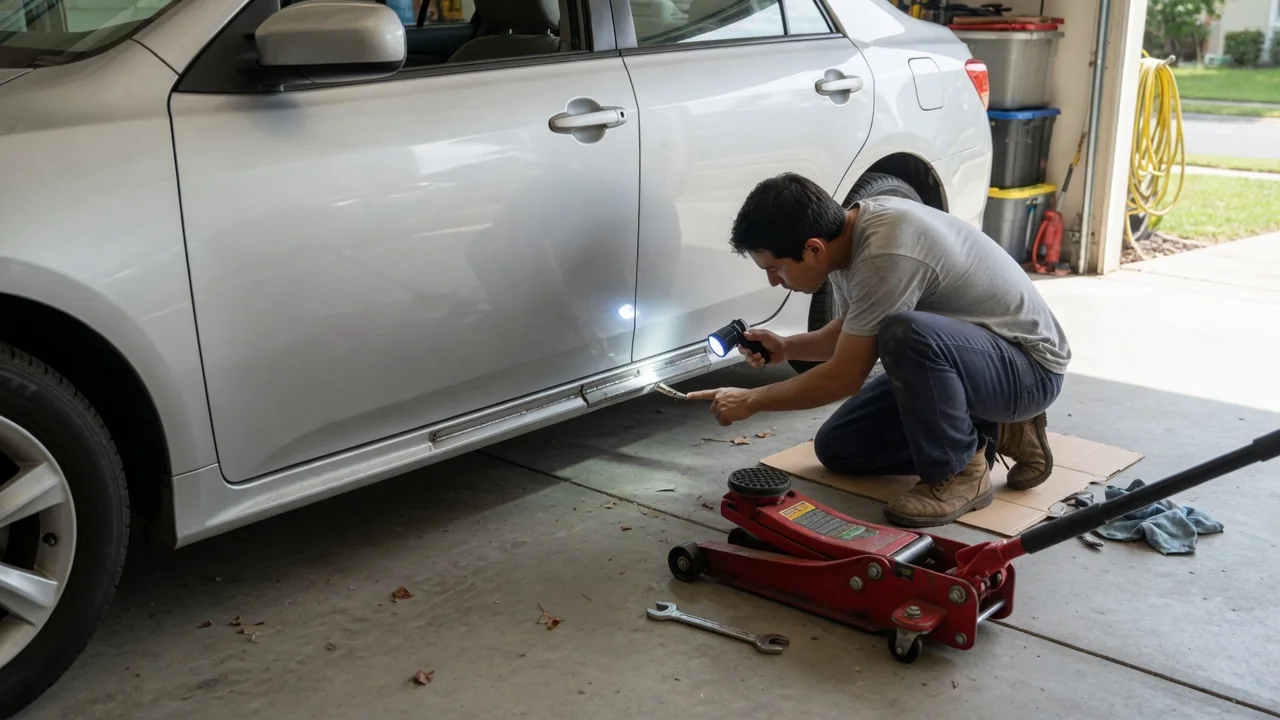
Why should car lifting points be identified before jacking? Because a vehicle's weight is only meant to be carried at a few reinforced locations. Placing a jack anywhere else can crush body panels, damage components underneath, or let the car slip. Knowing the specified support locations first protects both the vehicle and the person working around it.
Find vehicle guide
The owner's manual is the most reliable starting place, because it usually includes a diagram showing where the manufacturer intends the vehicle to be raised and supported. These illustrations often appear in the section covering flat tire changes. They typically mark positions just behind the front wheels and just ahead of the rear wheels, along with any central points suited to a larger jack. Checking the diagram before reaching for the jack removes guesswork about which parts of the underside are actually structural.
The vehicle itself often carries physical clues that confirm what the manual shows. Many unibody cars have small notches, arrows, or stamped triangles along the rocker panel that indicate where the reinforced pinch weld sits. Trucks and body-on-frame SUVs are generally supported on the frame rails or under specified axle locations instead. Because layouts differ between makes, body styles, and even trim levels with side skirts or underbody covers, the markings on one vehicle should never be assumed to apply to another.
Match equipment
Identifying the lifting point is only half of the task, since the jack must also suit that location. The scissor jack supplied with many cars has a slotted head shaped to straddle the pinch weld seam, so it bears on the reinforced area rather than the thin flange. A hydraulic floor jack has a flat or cupped saddle, which can fold that same seam unless a slotted rubber pad or adapter spreads the load properly. The contact shape matters as much as the position.
Capacity and reach deserve the same attention. A jack and stands should be rated for more than the load they will carry, and the rating is normally printed on a label on the tool. Low sports cars may need a low-profile jack to reach the point without scraping bodywork, while tall trucks may need more lift height than a compact jack provides. Some electric vehicles call for specific pads or pucks that fit into receivers in the underbody, so the correct adapter depends on the vehicle.
Avoid unsafe surfaces
Much of what is visible under a car looks sturdy but was never designed to carry its weight. The floor pan is thin sheet metal that dents easily, and the oil pan, transmission case, and exhaust can crack or bend under a jack saddle. Suspension arms, tie rods, and plastic undertrays are also poor choices unless the manufacturer specifically lists them. On electric and hybrid vehicles, the battery enclosure occupies much of the underside, and lifting against it risks expensive and potentially hazardous damage.
The ground beneath the jack is just as important as the metal above it. Soft soil, gravel, hot asphalt, and sloped driveways allow a jack to sink, tilt, or roll, which can shift the load off the lifting point. Firm, level concrete gives the most stable footing. Heavy corrosion is another warning sign, because a rusted pinch weld or frame section may collapse even though it is the correct location. Flaking metal, holes, or soft spots there mean the point should not be trusted.
Everyday Use and Observations
Most drivers meet this subject at the roadside with a flat tire, when time pressure makes shortcuts tempting. Knowing where the lifting points are ahead of time, and confirming the spare tire tools are present, makes that moment far calmer. As the car rises, the jack head should stay seated squarely and the jack should remain vertical. Creaking, a leaning jack, or metal visibly deforming are signs to lower the vehicle and reposition before going any further.
Evidence of past mistakes is easy to spot once you know what to look for. Bent or flattened pinch welds, cracked rocker panel covers, scraped undercoating, and dented floor sections often show that a jack was placed incorrectly at some point. Beyond the cosmetic harm, crushed seams can lose their protective coating and begin to rust. A quick look along the sills when buying a used car, or after a tire shop visit, can reveal how carefully the vehicle has been lifted.
Limits and Next Steps
Correct lifting points do not make a jack a safe support on its own. A jack is a lifting device, and hydraulic seals or mechanical screws can fail without warning. Any work that puts part of the body under the vehicle calls for rated jack stands placed at the support locations the manufacturer specifies, with the wheels still on the ground chocked. The roadside jack in the trunk is intended for brief wheel changes only, not for extended repairs or working underneath the car.
When the manual is missing, the markings are hidden, or the underside is rusted or modified, it is better to pause than to guess. The manufacturer's service information or a dealership can confirm the proper locations for the exact model. Vehicles with air suspension may also require a jacking mode to be selected first, which varies by maker. If the right equipment or a firm, level surface is not available, a professional shop with a proper lift or a roadside assistance service is the sensible next step.