Why Is Water Leaking Under My Car?
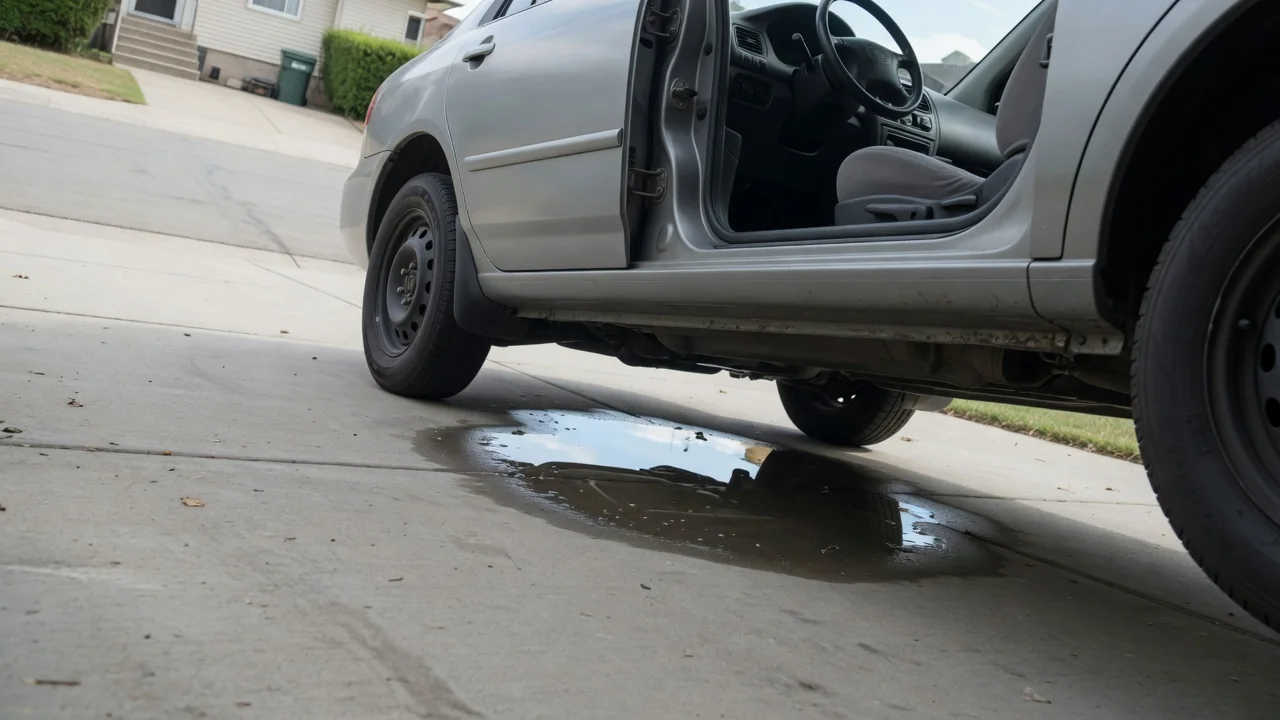
Finding a clear puddle under your vehicle can be unsettling, but when a car is leaking water, the cause is often routine. The air conditioning, exhaust condensation and leftover rain all leave drips behind. Clear liquid isn't always plain water, though, and some leaks point to cooling-system trouble. Noting what the drip looks like, where it lands and when it appears helps you decide whether it's normal or needs attention.
Common Reasons Water Drips From a Car
The most common reason water drips from under a car is AC condensation. The air conditioning pulls moisture out of the cabin air and sends it outside through a drain, so a small, clear puddle after a warm drive is usually expected. Vehicles with combustion engines also produce exhaust condensation, which can drip from the tailpipe or collect at low points in the exhaust. Rain and car-wash water can also hide in body seams, cowl areas and underbody panels, then trickle out long after the outside of the car looks dry.
A watery look alone can't tell you what fluid is leaking. Coolant diluted with water, or pale washer fluid, can look like plain water on dark pavement. The surrounding clues are more useful. Did you just run the AC or defroster? Did it rain, or did you recently wash the car? Also note where the puddle sits, when it appears and whether any dashboard warning is lit. Several of these observations together point to the next step. A puddle by itself can't prove that any specific part has failed.
What the Puddle’s Location Can Tell You
Look at the drip from beside the car while it's safely parked on level ground, with the engine off and the parking brake set. There's no need to crawl underneath or reach near hot exhaust parts, belts or cooling fans. Keep in mind that underbody panels, splash shields and a sloped driveway can carry liquid away from where it starts. Water leaking under the car may land well forward, well behind, or off to one side of the spot where it actually escapes.
Water in front of the car, under the engine, near the middle, or on the passenger or driver side can be normal or a problem, because the location of drains and other parts varies by vehicle. Water leaking from the rear usually traces back to the exhaust. Drips near the front may involve the AC drain, the washer system or the cooling system. Each time the puddle appears, photograph it and note where it sits relative to the wheels. That record helps a technician trace a recurring leak faster and more accurately.
Passenger-Side Water After Using the AC
When the air conditioning runs, warm, humid cabin air passes over the cold AC evaporator. Moisture condenses on its fins, much like water beading on a cold glass. That water collects in a housing and leaves the car through an evaporator drain. On many vehicles this drain exits near the firewall, which is why a passenger-side drip is so familiar. Placement differs from car to car, however, and some models drain closer to the center or toward the driver side.
Humid weather and long stretches of AC use can produce a surprisingly large puddle. Many defrost settings also run the AC compressor, which explains why water can appear when the heater is on to clear the windshield. Dripping for a while after you park is typically leftover drainage. Wet cabin carpet, a musty smell or water on the passenger floor suggests the drain may be blocked or disconnected. Leave diagnosing and clearing the drain to a professional rather than probing it yourself, since nearby wiring and underbody parts can be damaged.
Why Water Appears After Parking or Near the Exhaust
A car leaking water while parked is often just finishing what started during the drive. Leftover AC condensation keeps draining for some time after shutdown. Rain or car-wash water trapped in door bottoms, sunroof channels, cowl panels or underbody trays can also seep out slowly. Before worrying, consider the context: how long you drove, whether the climate control was on, whether it rained and whether the car was recently washed. A puddle that fits those conditions and dries up without coming back is usually harmless.
Burning fuel produces water vapor. When that vapor meets a cool exhaust system, it condenses, so droplets from the tailpipe after a short drive are common on gasoline and diesel vehicles. Fully electric models, such as the Tesla Model 3 or Model Y, have no exhaust, so water under them more likely comes from climate-control drainage or trapped rain. Get the car checked for recurring unexplained wetness, coolant loss, or thick exhaust vapor that continues after the engine warms up. Tailpipe droplets alone don't mean the engine has an internal fault.
Safe Clues for Identifying Clear Fluid
Clear, odorless liquid that dries without leaving residue is consistent with water, but that doesn't confirm where it came from. A faint tint, a slick film, crusty residue after drying, or a sweet or chemical smell you happen to notice can suggest coolant or washer fluid instead. Don't rely on color alone, because coolant and washer fluid formulas vary and dilution can wash out their color. Note whether the dripping follows use of the windshield washers and whether the spray has weakened. Either could point to a washer reservoir or hose.
If the coolant reservoir is see-through and easy to reach, you can check its level by eye. Do this only when the vehicle is fully cool, and follow the owner's manual. Never open a hot cooling system, because pressurized coolant can cause severe burns. Compare the level against the marked range over several days. Don't touch, taste or deliberately sniff an unidentified fluid, and keep children and pets away from it, since coolant can be toxic. Also tell a technician about any sweet smell inside the cabin or greasy fog on the windows when the heater runs.
Large Puddles and Warning Signs That Need Attention
A lot of water leaking from a car isn't automatically serious. Humidity, how long the AC ran, the slope of the ground and how the liquid pools all affect how big a puddle looks. A large wet patch after a muggy commute may be completely normal. The real warning signs are rising engine temperature, a temperature warning light, steam from under the hood or a falling coolant level. Any of these calls for prompt action, as does a dripping hose under the car or wetness that keeps coming back.
If the engine overheats, pull over when it's safe, turn the vehicle off and call for help. Don't open the cooling system. Book a professional inspection for ongoing unexplained dripping, fluid levels that keep dropping, wet carpet, or a leak that comes with problems in how the car runs. Depending on what you've observed, a technician may trace the fluid to its source, check the AC drain, pressure-test the cooling system or inspect the washer parts. Whether you drive a Subaru, a BMW or any other make, a check specific to your vehicle will explain the puddle.