Why Is the Tire Pressure Light Flashing? TPMS Faults Explained
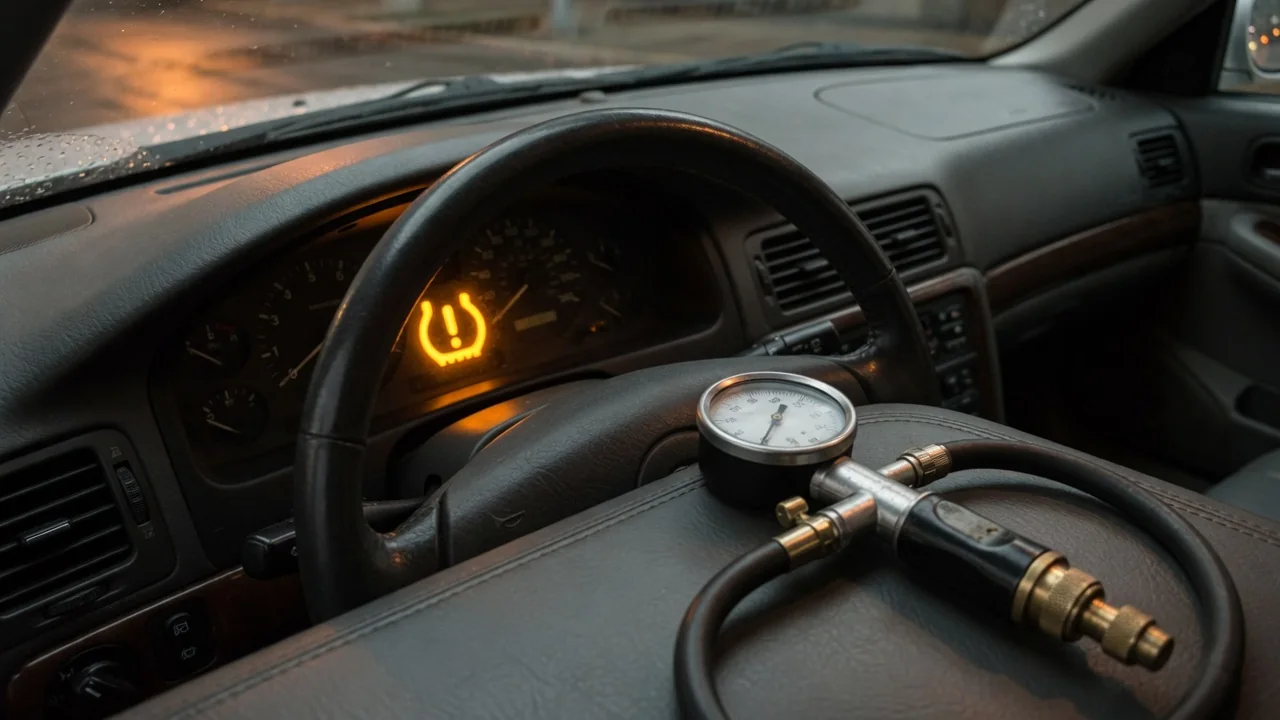
A blinking TPMS light usually points to a problem with the tire pressure monitoring system itself rather than a simple low tire. That still doesn't prove your tires are properly inflated. Here's how to tell the warning patterns apart, check your tires safely, understand the likely causes, and give a technician the information needed to find the fault.
What a Flashing Tire Pressure Light Means
In many vehicles, a flashing tire pressure light is the TPMS malfunction indicator. It means the system has found a problem with its own ability to monitor the tires. A steady light, by contrast, generally means one or more tires has dropped below the pressure threshold. Some manufacturers have the malfunction warning flash for a while after startup and then stay lit, so the two warnings can look similar at a glance. The owner's manual describes the exact sequence for your vehicle, so check it there instead of assuming.
A system fault and an underinflated tire can happen at the same time. The warning pattern tells you about the monitoring system's status, not how much air is in your tires, so a flashing light can appear alongside a tire that really is low. While the malfunction is active, the system may not be able to warn you about pressure loss at all, or may only warn for some wheels. The light also doesn't identify which component failed, whether that's a sensor, the receiver, or something else.
Check Tire Pressure and Driving Symptoms First
When the light starts flashing, pull over somewhere safe before checking anything, and don't scroll through dashboard menus or pressure screens while driving. Once parked, measure each tire with a reliable gauge, ideally when the tires are cold, meaning before driving or after the vehicle has sat for a few hours. Compare the readings to the door-jamb tire placard or the owner's manual, not to the maximum pressure molded into the sidewall. Many vehicles specify different front and rear pressures, so check each axle against its own figure.
Look over each tire for bulges, cuts, embedded objects, or a sidewall that looks pinched or collapsed. A visibly flat tire, obvious damage, a strong pull to one side, or new vibration is a reason to stop driving and arrange assistance instead of continuing to a shop. A tire can look normal and still be badly underinflated. When the system has a fault, the dashboard pressure readings may also be wrong or missing, so treat your hand gauge as the reference and don't rely on how the tire looks.
Why the TPMS May Stop Receiving Reliable Information
Most flashing-light faults come down to the system not getting reliable data. On vehicles with direct TPMS, a battery-powered sensor in each wheel sends pressure readings to a receiver. Sensor batteries are generally sealed inside the unit and run down over time, and a weak one may transmit on and off before stopping completely. A sensor can also be damaged by corrosion, an impact, or careless tire mounting. A wheel installed without a sensor, such as an aftermarket or winter set, leaves the system with a missing signal.
Recent tire or wheel work is worth considering, since new sensors or rotated wheels may need sensor registration or a TPMS relearn before the system recognizes them. That doesn't mean the service caused the fault, only that it's a useful lead. Radio interference, a failing receiver, or a wiring problem can also disrupt sensor communication, and only testing can identify them. Indirect TPMS works differently. It estimates pressure loss from wheel-speed information, so there are no sensor batteries in the wheels. Find out which system your vehicle uses before anyone talks about replacing sensors.
Toyota's Flashing-Then-Steady Warning Pattern
Many Toyota owner's manuals describe a specific malfunction pattern: the tire pressure warning light flashes for about one minute after startup and then stays on. That sequence separates a system problem from a plain low-pressure warning, which normally comes on steady. Details vary across models and model years, so confirm the behavior in the manual for your vehicle. Note whether the pattern repeats every time you start the car and whether the instrument cluster or multi-information display shows a related message, since both details help narrow down the problem.
Even when the pattern matches, it only tells you there's a monitoring problem. It doesn't prove a sensor battery is dead, and it doesn't confirm your tire pressures are correct, so you still need to check them with a gauge. Toyota's initialization and sensor registration procedures differ by model. Depending on the vehicle, the process may use a dashboard menu, a dedicated button, or a scan tool. Whether the spare tire is monitored also varies. Treat any single Toyota reset sequence you find as specific to one model, not universal.
What to Record Before Scheduling Service
Before booking an appointment, write down the cold pressure you measured at each tire. Also note how long the light flashes, whether it stays on afterward, and any dashboard messages. Record whether the warning shows up on every startup or only sometimes, and whether cold weather or certain driving conditions seem to trigger it. Recent tire replacement, a wheel swap, a puncture repair, or time spent on the spare is also useful context, since each can change which sensors the vehicle expects to hear from.
If a tire was low, adding air to the placard pressure may clear a pressure warning, but it won't fix an ongoing malfunction indication. That needs separate attention. Initialization and relearn procedures exist, but they're specific to each vehicle and meant to follow correct inflation or sensor changes, not to hide a fault. Resetting the system over and over while the malfunction warning keeps coming back wastes time and can leave you driving without reliable low-pressure alerts. A warning that keeps returning means the system needs proper testing.
How a Technician Finds and Confirms the TPMS Fault
A technician usually starts by reading TPMS fault codes with a scan tool. Next they check whether each sensor responds, often with a TPMS activation tool. On systems that use registration, they also confirm that the sensor IDs stored in the vehicle match the sensors actually installed. Any codes have to be interpreted using the manufacturer's information for that vehicle, because definitions vary. A code or warning pattern points to an area to test. It doesn't prove that a particular part has failed.
Testing shows whether the vehicle needs sensor service or replacement, registration of the existing sensors, calibration of an indirect system, or a closer look at the receiver, the wiring, or another related fault. After the repair, three things confirm the fix: correct measured pressures at every monitored tire, completion of the verification or relearn procedure the manufacturer specifies, and one or more startups with no malfunction warning. If the flashing comes back, the diagnosis isn't finished, and the technician should go back over the test results.