Why Is My Check Engine Light On? Common Reasons and What to Do
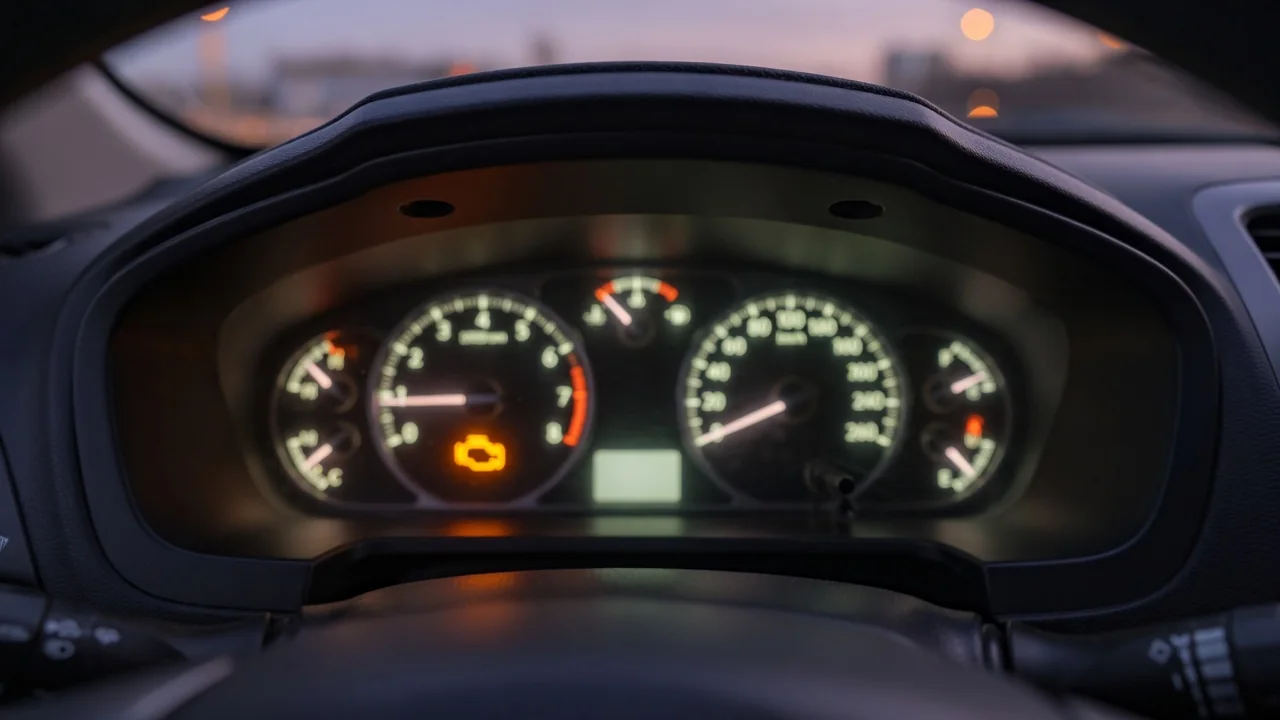
When the check engine light is on, the first question is usually how worried you should be. The answer depends on what the onboard diagnostic system recorded, how the light behaves and how the car is driving. Below are the most frequent triggers, the signs that make a warning urgent, the simple checks worth doing yourself and the point where professional testing becomes the smarter move.
What the Check Engine Light Is Telling You
The light is controlled by the onboard diagnostic system. That system constantly compares sensor readings against expected values for the engine, fuel delivery, ignition and emissions controls. When a reading falls outside its acceptable range under specific conditions, the computer stores a fault and turns on the lamp. So the warning covers a broad family of possible problems, not one failed part. It is also separate from the oil pressure, battery charging and coolant temperature warnings, which report immediate mechanical or electrical conditions. Maintenance reminders are different again, since they simply track mileage or time.
How the light behaves matters. A lamp that stays on means the computer has confirmed a fault across repeated checks. A lamp that comes on briefly and then goes out may reflect an intermittent condition that later passed its self-test. A flashing lamp is the most serious pattern and usually points to a problem happening right now. In every case, treat the light as a prompt to gather information. The stored OBD-II diagnostic code tells you which monitor or circuit tripped, not the exact component that needs replacing.
The Most Common Causes Behind a Check Engine Light
Some of the most frequent triggers are also the least serious. A fuel cap that is loose, cracked or missing lets fuel vapor escape. The evaporative emissions system is designed to detect that kind of leak, along with small leaks in hoses, valves and the charcoal canister. Oxygen sensor and air-fuel ratio sensor faults are also common. These sensors guide fuel trim, the constant adjustments that keep the air-fuel mixture balanced. A slow or failed sensor can raise fuel use and emissions and stall readiness monitors, often without any change you can feel from the driver's seat.
An engine misfire deserves more attention. Worn spark plugs, failing ignition coils or aging plug wires can keep a cylinder from firing, which sends unburned fuel into the exhaust. Air metering problems throw off the mixture in a similar way. Examples include a contaminated mass airflow sensor or a vacuum leak that lets in unmeasured air. A thermostat stuck open or a faulty coolant temperature sensor can keep the engine from reaching its expected operating temperature. Catalytic converter efficiency codes often follow long-ignored misfires or sensor problems, but that code alone does not prove the converter has failed.
Why the Light Came On Now: Recent Events That Often Trigger It
Timing often offers the best clue. If the light came on a day or two after filling up, the cap may not have clicked fully tight. Topping off past the automatic shutoff can also push liquid fuel into parts of the system meant only for vapor. Sharp weather swings can expose a marginal seal or sensor. A weak battery, a recently replaced battery or a jump start can set low-voltage codes or reset readiness monitors. As a result, a light may appear, go out or come back while the system relearns and reruns its self-tests.
Recent work is another frequent source. An unplugged connector after a repair, an aftermarket accessory tapped into the wiring or a harness chewed by rodents while the car sat unused can all set codes soon afterward. Driving conditions matter too. Short trips, long periods of idling, towing and other heavy loads can push a borderline component past limits it met in ordinary use. Before the code is read, write down what changed in the days before the light appeared, including fuel stops, repairs, weather and unusual trips. That history helps narrow the diagnosis.
Steady Light vs. Flashing Light: How Urgent Is It?
A steady light usually means a stored fault that should be diagnosed soon. You can generally drive carefully to a shop as long as the engine runs smoothly and sounds normal. A flashing check engine light is different. It typically signals an active misfire severe enough that unburned fuel can overheat and damage the catalytic converter. The safe response is to ease off the accelerator and avoid hard acceleration, towing and steep climbs. Then stop driving as soon as you can pull over safely, instead of pushing on to your destination.
Other symptoms can raise the urgency even when the lamp is steady. Watch for a rough idle, a noticeable loss of power, knocking or grinding noises, a fuel smell, visible smoke, a rising temperature gauge or a second dashboard warning coming on at the same time. Any of these suggests the problem may be getting worse. A light that came on and later went off has not necessarily fixed itself. The computer typically keeps a history record of the fault, and the cause may come back under the same conditions.
Safe First Steps You Can Take Yourself
Start with the fuel cap. Make sure it is present, undamaged and seated correctly, then tighten it until it clicks. If a loose cap was the cause, the light may go out on its own after several drive cycles, once the system rechecks for leaks. With the engine off and cool, a quick look under the hood can reveal a disconnected vacuum hose, an unplugged sensor connector, chewed wiring or fluid on the ground. Keep this check visual. Don't take parts apart or reach around a hot or running engine.
Next, have the code read with an inexpensive OBD-II scanner, or ask whether a local parts store offers code reading. Record the exact code and the freeze frame data, which shows the conditions when the fault was set. Also note whether the code is pending, confirmed or permanent. A pending code usually means the fault has been detected but not yet confirmed. Check the code's meaning for your specific make, model and year, because manufacturer-specific codes differ between brands. Don't clear the code first, since erasing it wipes the freeze frame data and resets the readiness monitors.
When to Stop Driving and Get Professional Testing
A code points to a circuit or monitor, not to a confirmed failed part. An oxygen sensor code, for example, might come from a wiring fault, an exhaust leak or a fuel mixture problem that the sensor is reporting correctly. Replacing parts based on the code alone often wastes money and leaves the light on. A proper diagnosis typically includes reviewing live sensor data, testing components and wiring, and smoke testing the intake or evaporative system for leaks. After the repair, a good shop also confirms that the fault stays gone and the monitors complete.
Some situations call for a tow instead of a drive to the shop. These include a flashing light, a severe misfire with shaking or stumbling, a temperature gauge heading toward hot, an oil pressure warning, or a strong fuel or burning smell. In any of these cases, stop the car and arrange transport. Even when the car seems to run fine, an illuminated light usually means it will fail an emissions inspection where one is required. Incomplete readiness monitors can cause trouble as well. Getting a diagnosis promptly keeps a small fault from turning into a bigger repair.