Why Is My Car Smoking? Exhaust Smoke Colors Explained
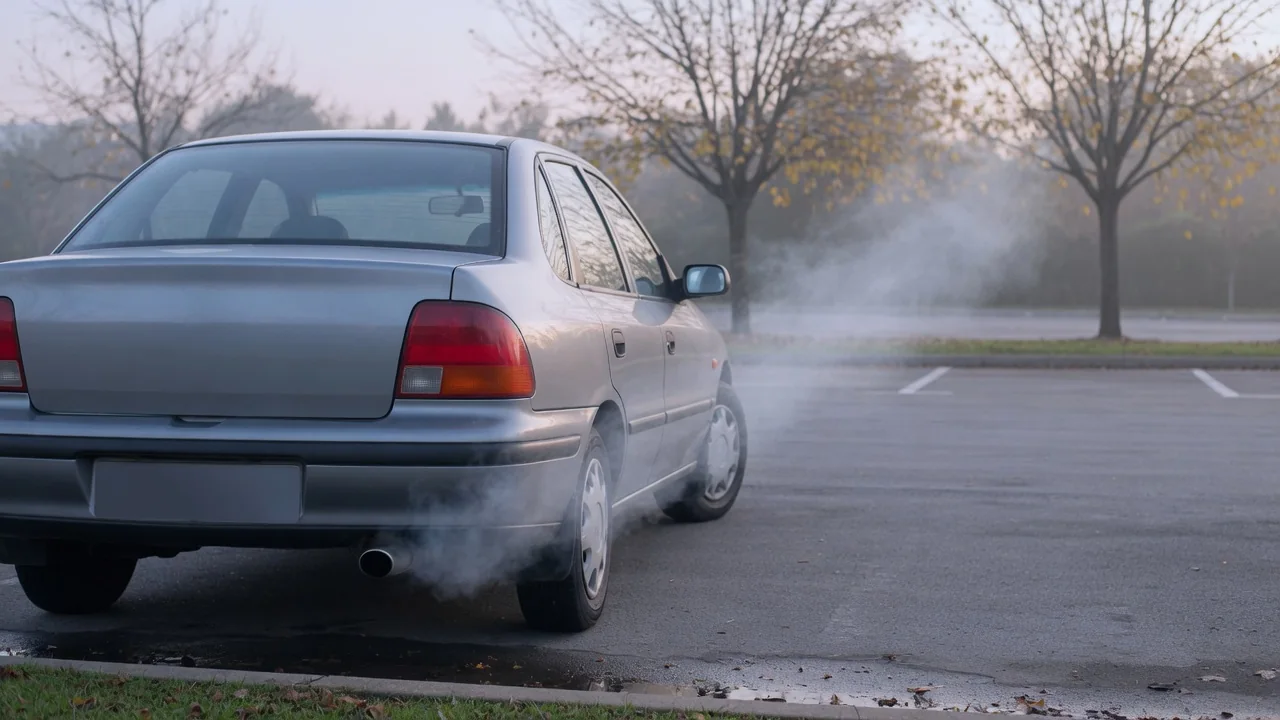
When a car starts smoking, the first useful question is where the plume is coming from and what it looks like. Smoke from the exhaust, tailpipe vapor, or a cloud around the engine or wheels can mean different things. Exhaust smoke color, idle timing, rain, oil consumption, and coolant loss help explain why a car is emitting smoke, though color alone does not prove a failed part.
Locate the Smoke and Check for Urgent Warning Signs
Smoke coming from a car is not always exhaust smoke. A plume at the tailpipe, haze in the engine bay, or vapor near a wheel each points toward a different system. From a safe distance, note the location, whether the cloud is brief or persistent, and any dashboard warnings, rough idle, or loss of power. Exhaust smoke raises combustion or fluid-consumption questions, while under-hood or wheel-area smoke can indicate overheating or a leak onto a hot surface.
Pull over safely, shut the engine off, and arrange assistance if engine temperature climbs, an oil-pressure warning appears, the smoke is heavy and persistent, or power drops severely. If fire is suspected, move away and contact emergency services rather than opening the hood. After that check, this overview stays with car exhaust pipe smoke: why a car smokes from the tailpipe, what exhaust smoke colors can mean, and how those clues help a shop decide what to test.
What Exhaust Smoke Colors Can Suggest
Car smoke color is a clue, not a diagnosis. White, blue, black, and gray exhaust can each suggest a different process, but they need supporting observations first. Thin white vapor is often condensation in cool air. Persistent white smoke can warrant coolant-related testing after warm-up. Blue exhaust can indicate burning oil. Black smoke can indicate incomplete combustion from a rich fuel mixture or restricted air. Lighting, weather, engine temperature, and fuel type all change how the plume looks.
Gray smoke has several possible explanations and does not identify a failed component. Oil burning, incomplete combustion, lighting, and humidity can make exhaust look gray rather than distinctly blue or black. Types of car smoke overlap, so smoke color meaning depends on timing, smell, fluid levels, and how the engine is running. Color alone cannot establish repair needs or whether continued driving is safe when smoke is coming out of the exhaust.
White Exhaust Vapor in Cold Weather or Rain
Water in exhaust can become visible as white vapor in cool or humid air, including rainy weather. That tailpipe vapor is often condensation clearing as the engine warms, which is why a car can look as if it smokes after a cold start. Rainwater hitting hot exterior parts can also produce steam, so smoke when it rains is not automatically exhaust smoke. Establish the source first: a cloud at the tailpipe differs from steam around the manifold, converter housing, or underbody.
If white smoke continues after warm-up, or appears with coolant loss, rough running, or overheating, professional evaluation is warranted. White exhaust is not proof of a head-gasket failure; coolant can leave through several paths, and condensation can still look dramatic. Check coolant only with the engine cool and only as the owner's manual describes. Never open a hot cooling system. Note reservoir drop, a climbing temperature gauge, and any change in exhaust odor, because those details help a shop choose cooling-system tests.
Black or Gray Smoke and Changes at Idle
Black exhaust smoke can appear when the engine burns more fuel than available air can support, leaving soot from incomplete combustion. Excess fueling, restricted airflow, or a rich mixture at idle can all contribute without pointing to one failed part. Gray smoke is harder to read because oil burning and combustion problems can look similar. Smoke at startup, idle, or ordinary acceleration is useful timing, because idling smoke may reveal a different condition than a puff only under load.
Rough idle, reduced power, warning lights, and increased fuel use can guide testing when a car is emitting smoke from the exhaust. A rich mixture may show as black soot, a fuel smell, and a lumpy idle together, while overlapping gray exhaust still needs fluid-level and combustion checks. Do not prolong idle, repeatedly rev the engine, or try to reproduce heavy smoke; those habits can worsen an unstable condition. Note when the smoke appears during ordinary driving and how the engine behaves at that moment.
Blue Smoke, Burning Oil, and a Falling Oil Level
Blue or blue-gray exhaust can suggest oil is entering combustion and burning with the fuel. Detailed diagnosis belongs in a separate blue-smoke discussion; treat the color as a reason to check oil consumption, not proof of a particular seal or ring failure. A low oil level alone does not explain exhaust smoke. Oil can leak externally without reaching the tailpipe, or it can be consumed internally. A car will not necessarily smoke just because it needs oil; smoke appears only if oil reaches combustion.
Check oil only under the conditions in the owner's manual, using the specified oil and avoiding overfilling, which can itself contribute to burning oil. Recording how fast the level falls and whether blue smoke appears at startup, idle, or after sitting overnight helps a shop investigate oil consumption. Adding oil keeps the engine from running dry, but it does not repair the path into combustion. An oil-pressure warning is more urgent: pull over safely, shut the engine off, and arrange assistance rather than continuing.
Smoke After an Additive and the Limits of Stop-Smoke Products
Smoke appearing after an oil or fuel additive establishes timing, not proof that the product caused it. A cleaner such as Seafoam can make a car smoke while deposits or residual product burn off, but the same window can also reveal an unrelated oil, fuel, or coolant issue already developing. Keep the product name, amount used, how it was applied, and when the exhaust changed, then stop adding further treatments until a technician reviews that history. Stacking products makes the source harder to isolate.
Stop-smoke products and similar oil additives are sometimes used to reduce visible burning oil, but they cannot be assumed to repair worn components, coolant intrusion, or fueling faults. Thickening oil may change exhaust appearance without correcting the path into combustion. Check the vehicle manufacturer's guidance before using any additive, and do not assume a stop-smoke treatment is suitable or will last. Stopping car smoke still depends on the actual cause; treating the plume as cosmetic can delay diagnosis.
How to Address Exhaust Smoke and Arrange Diagnosis
Stopping persistent exhaust smoke requires identifying and correcting its cause; there is no single remedy for every smoke color. Condensation vapor needs no repair, while persistent white, blue, black, or gray exhaust each points toward different tests. Bring the shop a concise record: smoke source and color, weather, engine temperature, timing, warning lights, and oil or coolant changes. That history answers why a car smokes from the exhaust more usefully than a photo of a plume, because timing and supporting symptoms narrow the search.
Professional testing may include interpreting stored fault codes, inspecting fuel and air controls, cooling-system testing, or engine-condition checks when symptoms indicate those paths. Codes and visible smoke guide investigation; they do not independently prove a particular part needs replacement, and manufacturer-dependent codes still require vehicle-specific confirmation. What causes a car engine to smoke from the tailpipe is often a mix of combustion, oil, or coolant findings. Heavy persistent smoke, overheating, an oil-pressure warning, or severe power loss still calls for stopping safely and arranging assistance.