Why Is My Car Smoking After an Oil Change?
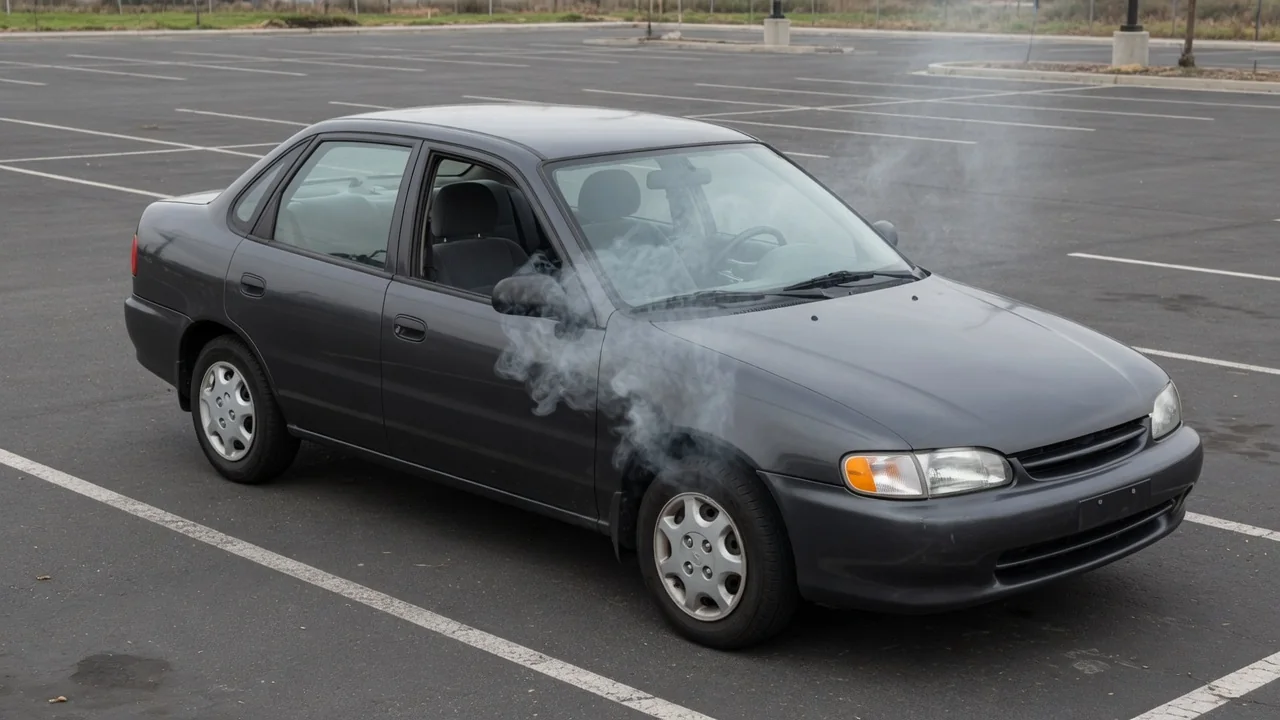
Car smoke after oil change is often leftover service mess rather than sudden engine failure, but it still deserves attention. Oil spilled during filling or filter work can burn on hot metal, an overfill can change how oil behaves in the engine, and a loose filter or drain plug can feed fresh oil onto hot parts. Brief residue smoke may fade; persistent smoke, a burning oil smell, or dashboard warnings mean you should stop and have the work checked.
Where the Smoke Appears Helps Guide the Next Step
Smoke that starts immediately after an oil change is a reason to review the service work, not a reason to assume the shop created every possible engine problem. Filling, filter replacement, and drain-plug work all happen around hot parts and sealed oil passages. From a safe distance, note whether haze is rising from the engine compartment or leaving the tailpipe. Engine-bay smoke often points toward spilled engine oil or an external leak contacting heat, while tailpipe smoke more often involves oil reaching the intake or combustion path.
Smoke color, a burning oil smell, and the place the haze appears can narrow the next check, yet none of those observations confirms a failed part. Light white vapor from the tailpipe after a cold start can be condensed moisture and may disappear as the exhaust warms. Persistent smoke, especially with an oil pressure warning or other new dashboard messages, is different and needs attention. Manufacturer-dependent fault displays still require vehicle-specific confirmation; a warning is evidence to interpret, not proof that a particular component has failed.
Spilled Oil Can Smoke on Hot Engine and Exhaust Surfaces
During an oil change, spilled engine oil can drip onto the exhaust manifold, catalytic converter heat shields, or other hot surfaces as the engine is filled or the filter is removed. Once the engine is started, that residue can vaporize and produce visible smoke plus a distinct burning oil smell. The smell is often strongest in the engine bay or just after shutdown. Because the oil is already on the outside of the engine, this kind of smoke does not by itself mean oil is being burned inside the cylinders.
A thinning trail of smoke that fades as the engine bay dries is consistent with leftover residue, yet that pattern does not rule out an active leak still wetting the same hot metal. There is no single burn-off time that applies to every car, because duration depends on how much oil was spilled, where it landed, and how hot the surface stays in traffic or after a long idle. Persistent, increasing, or returning smoke should not be treated as something to drive through until it disappears. Have the area inspected instead of burning it off.
Overfilling and Oil Specification Errors Need Verification
Engine oil overfill can contribute to oil being drawn into the intake or burned during combustion on some engines, which may appear as tailpipe smoke rather than haze in the engine bay. Excess volume can raise crankcase pressure or let oil reach places it should not, though the path depends on engine design. Check the level with the owner's manual procedure, including the specified engine state and waiting conditions after shutdown. A reading on a hot, unlevel car, or too soon after filling, can look high or low while the true quantity remains unknown.
Oil viscosity and manufacturer oil specification should be compared with the service invoice and the vehicle's required grade and approval. A shop may have used a viscosity that is close but not listed, or a fill quantity that does not match after a complete drain. Smoke after the oil change cannot by itself prove the wrong oil was installed, because residue, leaks, and overfill can produce similar haze. If the recorded product or quantity does not match the requirement, a professional should drain, refill, and confirm the level rather than continuing to drive.
A Filter or Drain Plug Leak Can Keep Supplying Fresh Oil
A loose oil filter, a poorly sealed gasket or O-ring, or an oil drain plug leak can keep releasing fresh oil after the car leaves the bay. Filter threads started crooked, a disturbed crush washer, or a plug that was not fully seated can all compromise the seal once the engine is running. From a parked position, look for new spots under the vehicle or drips near the filter or pan without crawling underneath or reaching into a hot engine compartment. Fresh oil on the pavement after service is a practical clue that the leak remains active.
An oil filter leak or drain-plug weep may smoke if oil runs onto an exhaust pipe, manifold, or heat shield, while a slower drip may only leave spots and never produce a visible plume. That difference is why the absence of smoke does not prove the filter or plug is sealed. Puddle location also cannot reliably identify the leaking component, because oil travels along the pan, subframe, and splash shields before it drops. The service provider should inspect the source, including filter seating and drain-plug condition, rather than treating a stain on the ground as a complete diagnosis.
Warning Signs That Mean Stop Driving
Pull over when it is safe and shut the engine off if an oil pressure warning appears, the temperature climbs, smoke becomes heavy, or a substantial leak is visible under the car. Those conditions can leave internal parts without enough lubrication, or they can put oil onto exhaust heat in a way that is no longer thin residue. New knocking, pronounced rough running, or a sudden loss of power are also reasons to stop and arrange assistance rather than continuing at highway speed. Do not restart repeatedly to see whether the warning clears.
A calm dashboard does not prove the oil level is correct and does not exclude an oil filter leak or drain-plug drip that has not yet triggered a sensor. Many vehicles warn only after pressure has already fallen, and a slowly falling level may never light a lamp during a short trip. If fire is suspected, occupants should leave the vehicle, move away, call emergency services, and keep the hood closed so extra air does not feed flames. When continued operation is unsafe, arrange towing instead of driving to the shop.
What to Record Before Contacting the Service Shop
Before you call the shop, write down when the smoke began relative to the oil change, whether it came from the engine bay or the tailpipe, and whether it faded, held steady, or grew. Note any oil pressure warning, temperature change, knocking, or shift in how the engine runs. Photos taken from a safe position of pavement spots, the filter area if it is visible without reaching in, and the exhaust plume can help the technician see what you saw. Keep the invoice with the listed oil specification and quantity as the baseline for the fill.
Ask the shop to verify the oil level, the manufacturer oil specification actually used, the sealing of the filter and drain plug, and whether residue remains on manifolds or heat shields. Those checks separate a one-time spill from an ongoing oil filter leak or an engine oil overfill that still needs correction. If tailpipe smoke continues after those service details are confirmed, the next step may be engine or intake-system testing, because oil can reach combustion through more than one path. Leave the cause open until that work is done rather than naming a failed part from smoke alone.