Why Is My Car Leaking Oil? Common Leak Sources and How to Pinpoint Them
A dark spot on the driveway or a faint burning smell after a drive usually points to an oil leak, but the drip rarely lands directly under its source. Oil travels along engine surfaces, gets pushed by airflow, and collects at low points before it falls. Work through it in order: confirm the fluid is oil, then trace it to the highest wet point. That makes the eventual repair far more likely to last.
How to Confirm the Puddle Is Engine Oil and Not Another Fluid
Engine oil on pavement looks amber when fairly fresh and dark brown to black once it has been in service. It feels slick, evaporates slowly, and used oil often smells burnt. Coolant tends to be brightly colored with a sweet odor, transmission fluid is often reddish, and brake fluid is thin and nearly clear to yellowish. Power steering fluid varies by system, so compare it with the reservoir contents. Plain water that dries without residue, dripping near the firewall after running the air conditioning, is almost always condensation.
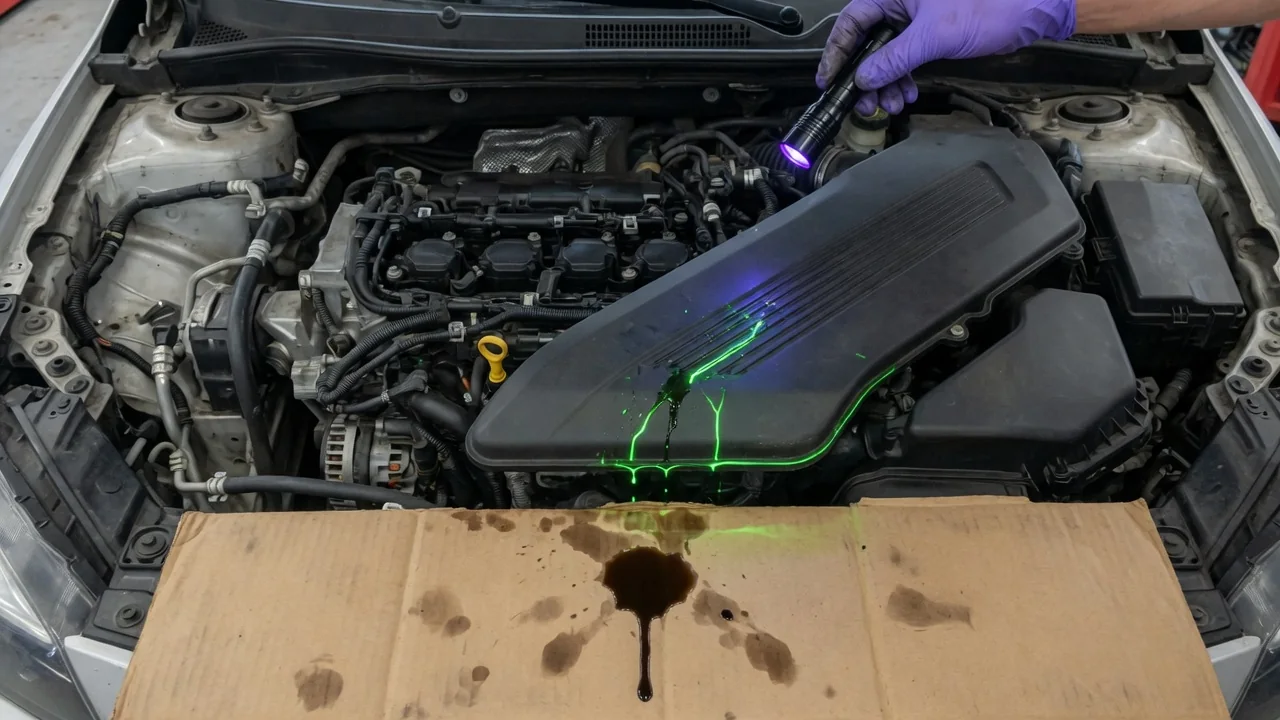
To gather better evidence, slide a clean piece of cardboard under the engine overnight and note whether the spots fall toward the front, center, or rear of the engine bay. Then check the dipstick on level ground with the engine off, looking at both the level and the oil's condition. A steadily dropping level alongside fresh drips tells you much more than a single spot. A few drops after an oil change may simply be spillage working its way off, while a recurring puddle means oil is actually escaping.
The Most Common Places Engine Oil Leaks Start
The valve cover gasket is one of the most frequent culprits. It sits at the top of the engine, where constant heat cycles harden and shrink rubber or cork over time. Oil then seeps down the sides of the cylinder head and sometimes onto the exhaust manifold. At the bottom, the oil pan gasket and drain plug are common sources. Because the pan is the lowest point, drips there fall almost straight down. A drain plug that was overtightened, has stripped threads, or is missing its crush washer can weep steadily.
If a leak appears right after service, check the oil filter first. A loose filter can leak badly, and so can one installed over an old gasket stuck to the mounting surface. Front and rear crankshaft seals, camshaft seals, and timing cover gaskets are harder to see because they hide behind pulleys, covers, or the transmission. A clogged PCV valve or breather also deserves attention. When crankcase pressure builds, oil can be pushed past seals that are otherwise sound, so the wet spot may not be the root cause.
Leaks That Show Up When Parked Versus While Driving
Many leaks seem to happen only after parking. Oil that seeped out while driving clings to the engine, then slowly drains to low points and drips once the car sits and cools. Other leaks occur only while the engine is running and oil is under pressure. An oil pressure sensor, filter housing, or oil cooler line may seep while the engine runs, yet the driveway stays nearly dry because airflow carries the oil away. In those cases, look for an oily film on the engine and underbody instead of relying on the ground.
Oil on top of or around the engine offers clues too. Fresh leaks look wet and shiny, while older seepage traps dust and turns into a thick, grimy crust. A puddle near the front wheels points to a different area than one centered below the bellhousing. Keep in mind, though, that air moving under the car at speed pushes oil rearward from its true source. Leaks also often look worse after highway trips, since heat thins the oil and widens the gaps in worn gaskets.
Warning Signs: Smoke, Burning Smells, Heavy Leaks, and Oil Reaching the Cabin
A burning oil smell or thin bluish-white smoke drifting from under the hood usually means oil is dripping onto the exhaust manifold or other hot parts. Deal with it promptly, because it can damage components and, in some conditions, create a fire risk. Fumes can also reach the cabin through the ventilation intake near the base of the windshield. Note when the smell appears, whether at idle, in traffic, or after hard driving, since that timing helps a technician link it to heat and pressure.
A heavy leak shows itself through a puddle that grows quickly, a dipstick reading that drops noticeably between checks, or an oil pressure warning light. Stop driving if that light comes on, the level falls below the minimum mark, or there is a lot of smoke. Have the car inspected instead of topping up again and again, because running low can starve bearings and cause serious engine damage. Smell and smoke only prove oil is reaching hot parts. They do not tell you which gasket or seal has failed.
Using UV Dye and Cleaning to Pinpoint the Exact Leak Location
Fluorescent oil dye takes the guesswork out of stubborn leaks. It goes into the crankcase, mixes with the oil, and travels everywhere the oil does. Where oil escapes, the dye glows brightly under a UV lamp, especially through yellow-tinted glasses in dim light. The usual approach is to degrease the engine, add dye following the product's directions, drive normally for a while, then inspect. Use a dye made for engine oil, since coolant and air-conditioning dyes are formulated for different systems.
Cleaning is valuable even without dye. Old residue makes every surface look wet, but on a clean engine fresh traces stand out. Because oil runs downward, the highest wet point is usually closest to the source. Inspect with the engine off and cool, and never reach near belts or pulleys while it is running. If you need to look underneath, support the car on proper jack stands or a lift, never a jack alone. Keep degreaser and water spray away from sensitive electrical connectors.
Repair Options and When to Bring In a Professional
The right fix depends entirely on where the oil is escaping. Replacing a drain plug washer or reseating an oil filter is minor work, and a valve cover gasket is usually a moderate job. Rear main seals and timing cover seals are another matter, often requiring removal of the transmission or front engine components. Repair cost varies widely by vehicle, labor access, and region, so an accurate estimate only comes after the source is confirmed. Guessing can mean paying for the wrong job.
A good technician confirms the leak before quoting, typically by cleaning the area, using dye, checking crankcase pressure, and inspecting the PCV system. This matters because replacing a gasket without dealing with excess pressure or a warped sealing surface often brings the leak right back. Professional diagnosis makes the most sense when the source hides behind the transmission or timing components, when several areas look wet, or when an oil pressure warning has appeared. Careful diagnosis turns a vague drip into a targeted repair that lasts.