Why Is My Car Leaking Oil? Causes, Severity, and What to Do
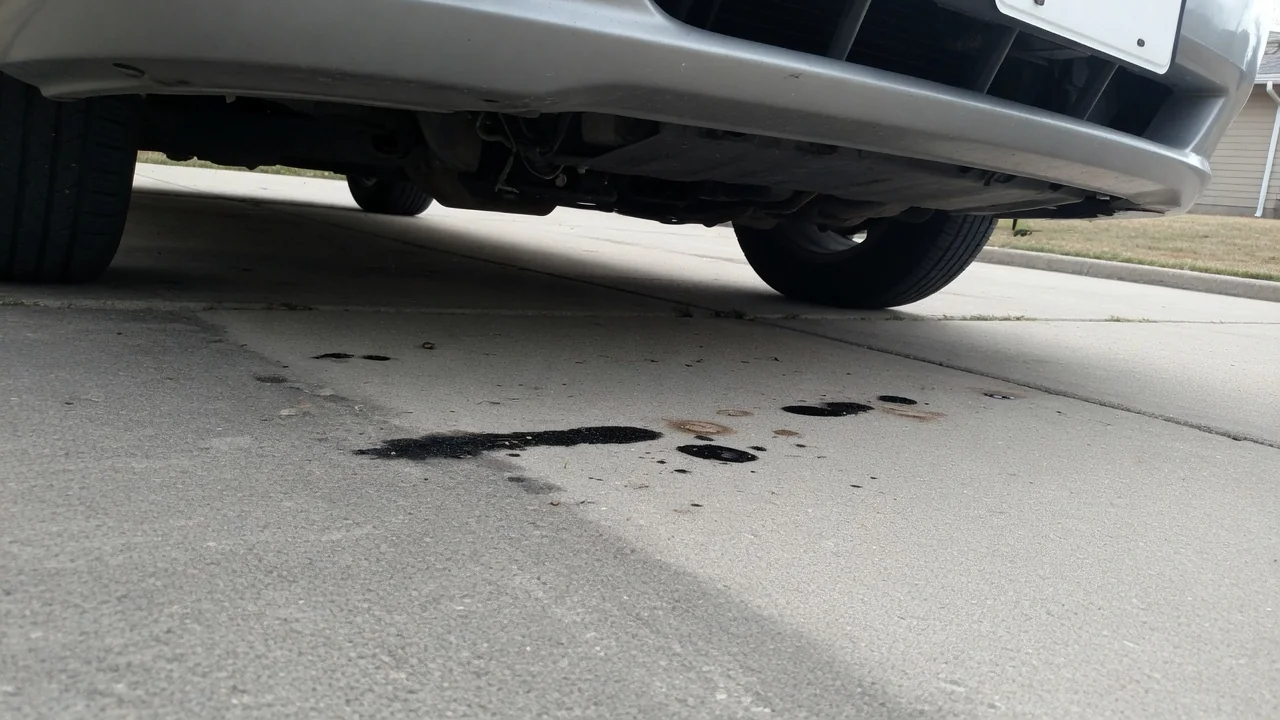
Finding a dark stain where you park often raises the same concern: what does it mean when your car is leaking oil? Engine oil leaking from a car can be a slow seep or a sudden drip, and a driveway mark is only a starting clue. This guide covers common sources, severity, driving decisions, and immediate steps.
What Oil Spots Beneath Your Car Can Tell You
A car leaking oil on the driveway does not, by itself, prove engine oil is escaping containment. Coolant, transmission fluid, power steering fluid, and condensation can leave similar marks, and color, sheen, and location only narrow the possibilities. Fresh stains that reappear where the car parks are stronger evidence than one old mark. Check the engine oil level using the owner's manual procedure and treat the spot as a reason to inspect, not a finished diagnosis.
What it means when your car is leaking oil is that lubricant is leaving the closed circuit through a gasket, seal, housing, or damaged surface rather than being burned inside the engine. Oil leaking from the bottom of the car is a common sign of that escape, but oil can cling to parts or burn off before it hits pavement. Internal consumption or a misread dipstick can mimic a leak. Suspected external drips still need a measured response.
Common Leak Sources and Why Oil Collects Under the Engine
Where oil would be leaking from a car depends on that vehicle's layout. Engine gaskets and engine seals can weep at a valve cover, oil pan rail, timing cover, or crankshaft as they age or get nicked. The oil pan, drain plug, oil filter, and oil filter housing are frequent drip points after service or housing damage. None of those is a universal cause. Oil under the engine often shows where gravity carried it, not which part first allowed it out.
Engine oil leaking under a car often collects at the lowest wet point because oil runs along the block, pan, and crossmembers before it drips. Airflow can smear that trail rearward, so a stain behind the engine bay does not prove a rear seal failed. Underbody shields can catch oil, hide the origin, and later dump a larger drop, so a driveway look rarely identifies the failed part. A loose drain plug or mis-seated filter can produce the same underside wetness as a worn sealing surface.
A Sudden Leak or Oil Loss After an Underbody Impact
Why a car is leaking oil all of a sudden is not something timing alone can answer. A new failure can drip quickly, but oil that sat on the pan or a shield can reach the ground after a long drive or a steep parking angle. Recent oil service matters because a drain plug, crush washer, or oil filter housing that was not fully seated can leak after the first heat cycle. Residual oil spilled during a change can look like a fresh leak until the area is cleaned.
If you hit the bottom of the car and it is now leaking oil, underbody damage is a plausible explanation, but the fluid still has to be identified. A struck oil pan or drain plug can release engine oil; another damaged line can release a different fluid that looks similar on pavement. Active dripping, an oil pressure warning, or new knocking after an impact are reasons to stop safely, shut the engine off, and arrange roadside assistance rather than keep driving.
Small Leaks, No Puddle, and an Apparently Normal Oil Level
A car leaking a small amount of oil may never leave a puddle. Mist and seepage can stay on the block, oil pan, and underbody shields, so a car leaking oil but not on the ground can still lose lubricant. When that oil reaches a hot exhaust manifold or catalytic converter, a burning oil smell or light smoke can appear even though the pavement looks clean. Those symptoms need prompt attention; they show oil is reaching hot surfaces, not which gasket failed.
It is still possible for a car to leak oil when the oil level looks fine, especially if the loss is slow or the last reading was taken on a slope, at the wrong temperature, or before oil drained back. An apparently normal engine oil level does not rule out leakage; it only means remaining oil still sits within the marks at that moment. Record parking-spot photos and readings under the conditions the owner's manual specifies. One isolated stain cannot establish a reliable loss rate.
How Serious an Oil Leak Is and When to Stop Driving
Is a car leaking oil bad? Continued loss can starve bearings of film strength, and oil on a hot exhaust component can ignite. That is why leaking oil is bad for the car even when the drip looks minor at first. Severity depends on rate, remaining level, and whether oil is reaching heat sources. A slow seep still needs assessment because it can worsen after heat cycles, and there is no universal mileage that remains safe while oil is escaping.
Can you drive a car if it is leaking oil? An oil pressure warning while the engine is running is a stop-driving signal: pull over safely and shut the engine off, even if the measured oil level still looks acceptable. Rapid dripping, a growing puddle, smoke, abnormal engine noise, or a level below the permitted range also warrant leaving the engine off and seeking assistance. A minor suspected seep still needs inspection; topping up restores volume but does not prove driving is safe.
Safe Steps to Take When You Notice an Oil Leak
If your car is leaking oil, park on level ground, switch the engine off, and follow the owner's manual for any cooling period before you check the engine oil level. Use the specified dipstick or electronic procedure; some electronic checks have operating requirements that apply only when it is already safe to run the engine. Do not restart solely to obtain a reading if an oil pressure warning, smoke, loud knocking, or a rapidly growing puddle is present. Keep the engine off and arrange help.
Observe from outside the vehicle. Photograph visible spots under the engine and around the parking place, and note recent service or any underbody impact, without touching hot components or crawling underneath a vehicle supported only by its tires. If the manual allows a top-up and no stop-driving warnings are present, add only the specified oil and avoid overfilling. Arrange inspection or towing according to the warning signs rather than assuming a small stain can wait.
What a Shop Needs to Locate the Leak
A useful oil leak diagnosis starts with when the leak was noticed, photos of the parking spot, engine oil level observations, any oil pressure warning, burning oil smell, smoke, and recent service or impact history. That context helps a technician distinguish oil leaking from the bottom after a drain-plug or filter issue from a long-running gasket seep or from underbody damage. Note whether the drip appeared suddenly, whether the oil level dropped, and whether the stain repeats.
Professional inspection often requires safe lifting, access behind underbody shields, cleaning old residue, and watching for fresh oil so the origin can be traced. When the source remains unclear, a technician may add an appropriate leak-detection dye or use other vehicle-specific methods rather than replacing parts by guesswork. The repair should address the confirmed source, then include a follow-up check for new wetness. Replacing a part only because oil dripped there can miss a leak higher on the engine that ran downward.