Why Is My Car Leaking Oil After an Oil Change?
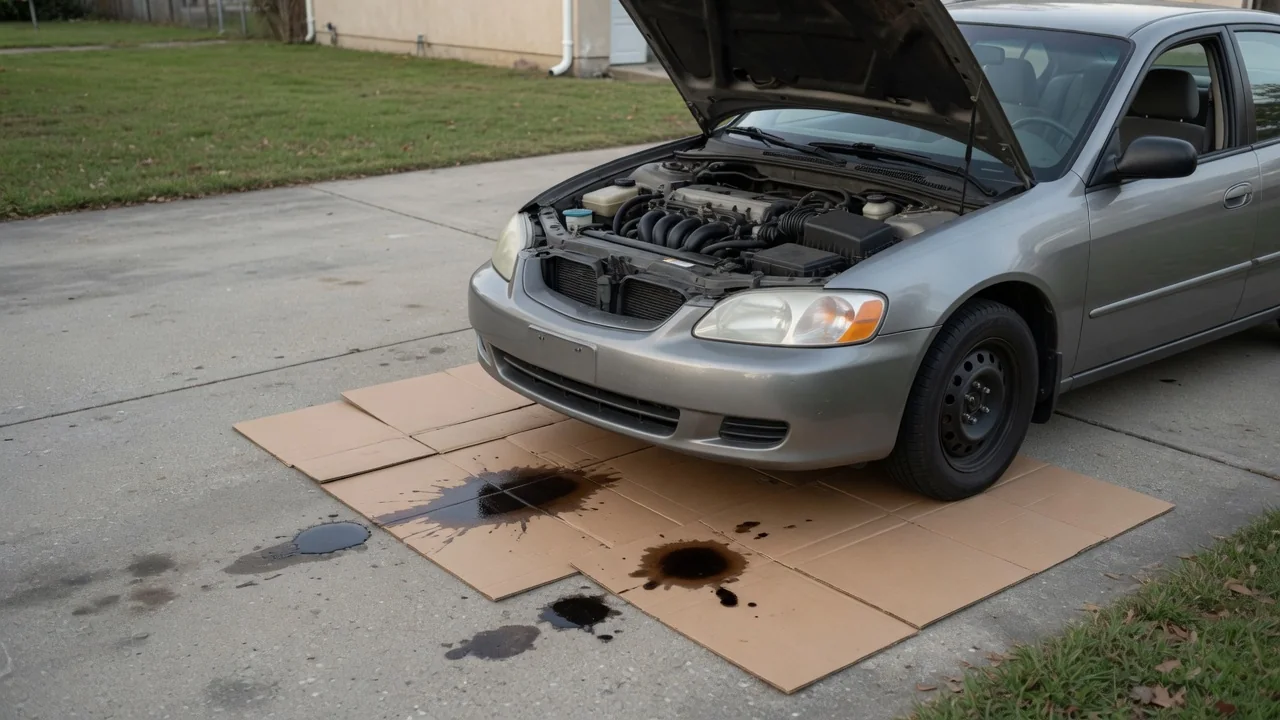
Finding oil leaking from a car after an oil change can be confusing because the timing does not prove what failed. Fresh drips may be leftover from filling, a sealing issue at a part that was just serviced, or an older leak that only became obvious once the underbody was cleaned. Distinguishing residue from a real leak, and knowing when to shut the engine down, keeps a small service problem from becoming engine damage.
Why Oil Can Appear Under the Car After Service
When a car is leaking oil after an oil change, the fresh service is a clue, not a diagnosis. Spilled engine oil from filling or filter work can drip later. A sealing problem at a component that was opened, such as the oil filter, drain plug, or oil filler cap area, can also start right after the job. An existing leak may have been hidden by old residue and only noticed after the underbody was wiped clean. Timing alone cannot separate those possibilities.
The wet spot on the pavement also may not sit directly under the failing seal. Engine oil can run along the block, oil pan, or subframe before it drops. An underbody splash shield can catch that oil and release it farther back, so a stain near a wheel or the transmission area can still originate at the filter or drain plug. Start by considering those serviced points, then follow the wet trail on cool, accessible surfaces rather than assuming the ground mark is the source.
Warning Signs That Mean Shut Off the Engine
If the oil pressure warning light comes on while the engine is running after oil change service, pull over as soon as it is safe and shut the engine off. That lamp is reporting low oil pressure, not merely a low dipstick reading, and continuing to drive can starve bearings of lubrication. Arrange a tow rather than limping the remaining distance. Rapid oil loss, a puddle that grows while the car sits, new knocking, or substantial smoke from the engine bay are also reasons to stop immediately and get help.
A normal engine oil level on the dipstick does not prove oil pressure is adequate, because pressure depends on pump output, oil remaining in the galleries, and whether oil is escaping faster than the pump can supply it. Conversely, oil can still leave the crankcase after service without the warning light coming on yet, especially if the leak is modest. Treat the light as an immediate stop condition, and treat a growing leak as a reason to stop even if the lamp stays dark.
Recognizing Spilled Oil and Continuing Leakage
Spilled engine oil can account for drips when oil is leaking from a car after oil change work, especially around the filler neck, valve cover, or filter housing. Oil that ran down during filling or filter removal can cling to the engine, then drip after the car is driven or parked. When that film reaches a hot exhaust manifold or pipe, it can produce a burning odor or a brief wisp of smoke. That residue can look like an active leak until the surfaces are cleaned and watched.
Harmless leftover oil and a continuing leak can look similar at first, so smell, a little smoke, the size of one spot, or how long it has been since the service cannot confirm that the problem will simply burn off. After the shop or owner wipes the area and documents that cleanup, new spots, recurring wetness on the same surfaces, or a falling engine oil level are stronger signs that oil is still escaping. Those findings support a closer inspection instead of waiting for an assumed burn-off window.
Filter and Drain Plug Problems the Shop Should Inspect
A shop that just changed the oil should inspect the drain plug and filter first when drips appear right after service. A plug that was not fully seated, threads that were damaged during removal or installation, or a drain plug sealing washer that is missing, reused when it should not be, or crushed unevenly can let oil weep or stream from the pan. Those faults can appear only after the engine is hot and oil thins, so a dry check immediately after the job may miss them.
Spin-on filters can leak when an old oil filter seal stays on the engine and the new filter is installed over it, creating a double-gasketed oil filter that cannot crush evenly. A nicked, folded, or dry filter seal on the replacement can fail in the same way. Cartridge filters depend on the housing O-ring sitting fully in its groove and not pinching as the cap is tightened. Identifying which of those conditions is present requires a professional inspection and the correct installation method. Do not crawl under an unsupported vehicle or keep tightening fittings blindly.
Safe Checks You Can Make With the Engine Off
With the engine off and the car parked on level ground, check the engine oil level using the procedure in the owner's manual, including electronic measurement if the vehicle uses that method instead of a dipstick. A low reading after a recent fill supports the idea that oil has left the engine, while a reading in range still allows an external leak that has not yet dropped the level much. An overfilled reading needs correction and investigation, but extra oil on the stick does not by itself explain a puddle on the ground.
Photograph the spots, then place a clean sheet of cardboard under a safely parked vehicle without reaching underneath, and note when fresh drops appear. After the engine has cooled, look from above at accessible areas around the oil filler cap, valve cover, and filter housing for spilled oil or a cap that is not fully seated. Do not touch hot parts or climb under the car on a jack or ramps unless the vehicle is properly supported by someone qualified to do that work. Those notes help the shop separate residue from a live leak.
What to Tell the Oil Change Shop
Bring the shop a clear timeline: when the first spots appeared, what the engine oil level has done since the fill, whether the oil pressure warning light came on, and whether you noticed odors or smoke. Note whether fresh drops return after parking on a clean surface. Ask them to inspect the serviced sealing points, confirm the oil level, clean the area, and then recheck for a leak so leftover oil is not mistaken for a new failure.
If the drain plug, oil filter seal, filler cap, and related hardware check out, persistent oil leaking from the car after the oil change may be an existing engine leak that the service did not cause. Tracing that path still belongs to a technician who can follow oil from higher components down through the underbody splash shield. If oil is actively being lost or warning symptoms are present, arrange transport. A short remaining drive to the shop does not make it safe to keep running the engine.