Why Is My Car Engine Shaking? Mounts, Misfires and More
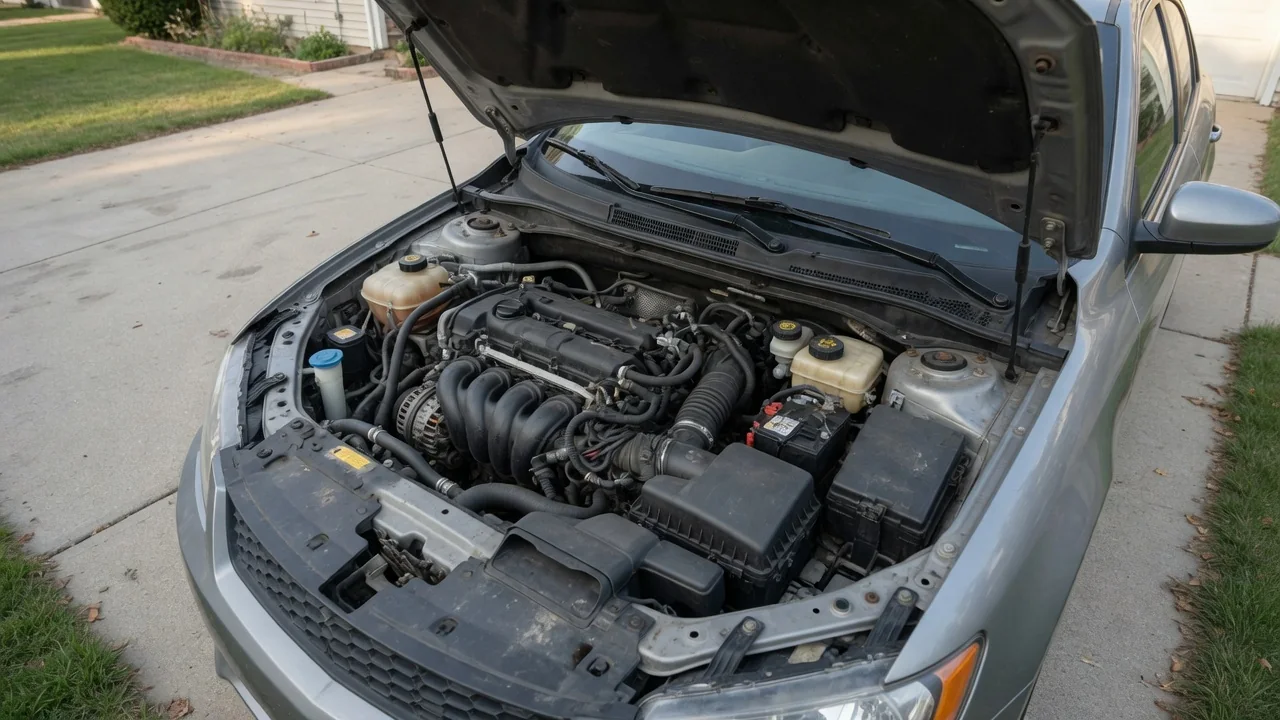
When a car engine is shaking, the motion usually starts at the powerplant rather than the whole chassis. A car motor shaking can come from uneven combustion, tired engine mounts, rotating imbalance, or other engine problems that send vibration through the supports. Noting whether the shaking car engine appears at idle, under load, or after warmup helps separate engine-origin feel from unrelated chassis vibration.
Identify When the Engine Shaking Happens
Uneven engine operation produces torque pulses that engine mounts are meant to isolate. When combustion is irregular or those supports cannot contain the motion, vibration reaches the body and the driver feels engine shaking in the car even while parked. The same car shaking engine sensation can travel into the steering wheel, seat, or floor, so perceived location alone does not confirm the source. Keep the investigation focused on engine-origin shaking; cabin feel can be misleading about which assembly is moving.
Record whether my car engine is shaking at startup, continues as a rough idle, appears during ordinary acceleration, or shows up only after the engine warms. A motor shaking in a car that eases as temperature rises suggests a different path than shaking that grows with load. Why is my car engine shaking at a stop light is a different observation from vibration that only appears while rolling. Stationary cabin shake still does not by itself prove the engine is the failed part, only that the powerplant may be transmitting motion.
Recognize Symptoms That Require Stopping
A flashing check engine light with shaking can indicate an active misfire capable of sending unburned fuel into the catalytic converter and overheating it. If the car is shaking from engine roughness along with major power loss, overheating, an oil-pressure warning, smoke, or a strong fuel smell, pull over when it is safe and shut the engine off. Those signs do not identify a single failed part, but they are reasons to stop using the engine until it can be assessed rather than continuing to drive.
Call for roadside assistance when severe shaking or warning indicators persist. Mild vibration is not a promise that the trip remains appropriate, because some engine problems worsen without a sudden change in feel. Why is my car motor shaking with no lamp still matters: the absence of a check engine light does not establish that the engine is operating normally. Sensors may not have set a code yet, or a monitor may be incomplete. Treat ongoing engine shaking that moves the car as a diagnostic issue, not only as a comfort annoyance.
How Engine Mounts Can Transmit Shaking
Engine mounts support the engine and limit how much vibration reaches the vehicle body. Rubber, hydraulic, and some electronically controlled mounts all serve that isolation job, though construction varies by vehicle. When a mount is damaged, collapsed, or deteriorated, the engine can move farther than intended, which is one answer to why the car engine shaking feels so strong at idle. Ordinary load changes can then produce a clunk as the powerplant shifts on the remaining supports and transmits more motion into the cabin.
Vibration during ordinary idle and clunks during gentle throttle or gear engagement are useful observations to report. They are not proof of mount failure. Visual sag, torn rubber, or leaking fluid still need professional assessment of mount condition and actual engine movement. Do not pry on mounts, lift against a running engine, or attempt brake-torque tests to confirm a fault. A technician can inspect the supports with the vehicle secured and compare movement with the design for that engine, which is safer than reaching near belts on a running motor.
How Misfires and Uneven Combustion Cause Shaking
Irregular cylinder contribution creates uneven engine torque, a frequent reason a car engine is shaking. A cylinder that fires late, weakly, or not at all leaves a gap in the power pulses, so engine balance suffers and idle shake is obvious. Ignition faults, fuel-delivery problems, unmetered air from a vacuum leak, and compression loss can each produce that uneven combustion. Why my car engine is shaking at a steady idle often traces to that uneven torque rather than to road inputs, and diagnosis is required.
Rough idle, hesitation, reduced power, or unstable engine speed often accompany misfire-related shaking. A stored misfire code identifies a detected condition and an investigation path; it does not establish which part needs replacement. Manufacturer-dependent codes still require vehicle-specific confirmation. Scan data and cylinder-contribution information help explain why is my car engine vibrating and shaking without jumping to a parts list. The engine in car shaking can involve more than one cylinder or an intermittent fault that appears only when the mixture or ignition event is already marginal.
Other Engine Faults That Can Create Vibration
Accessory-drive faults, pulley or damper problems, and rotating-component imbalance can contribute to engine vibration even when combustion is even. Those sources often change with engine speed more than with gear selection and may grow when an air-conditioning compressor or other accessory cycles on during ordinary use. Noise plus that speed dependence helps a technician decide whether the accessory drive deserves attention. A pattern in which engine shaking rises with rpm but stays similar in park can point toward a rotating assembly rather than a mount that mainly complains at idle.
Mechanical timing issues and internal engine problems remain possible when symptoms and testing support them. Vibration intensity alone does not diagnose bent parts or failed bearings, and deliberately running to high rpm to feel the shake is not a useful test. Engine problems that leave a car shaking can include unusual mechanical noise or a sudden change after recent work. Those clues belong in the shop history, because internal damage is confirmed by testing, not by how violent the idle feels.
Gather Useful Details for Professional Diagnosis
Record onset, operating temperature, warning lights, recent work, and conditions already noticed during ordinary use, including whether the engine shaking depends on idle, load, or accessory demand. Limit owner observations to a safely parked vehicle. Keep hands and clothing away from belts, fans, and hot components even after shutdown, because residual heat and unexpected movement remain hazards. Those notes help a technician recreate the complaint without asking anyone to probe a running motor.
If codes have already been retrieved, preserve the exact codes and available freeze-frame information rather than clearing them. Check the vehicle-specific meaning of any manufacturer-dependent code before interpreting it. As symptoms warrant, a technician may use scan data, cylinder-contribution checks, intake-leak testing, fuel-system checks, compression testing, and mount inspection. That sequence addresses why is my engine shaking my car and why car engine is shaking as testable conditions, without treating any single result as proof that a part has failed.