Why Is My Car Battery Overheating? Causes and Symptoms
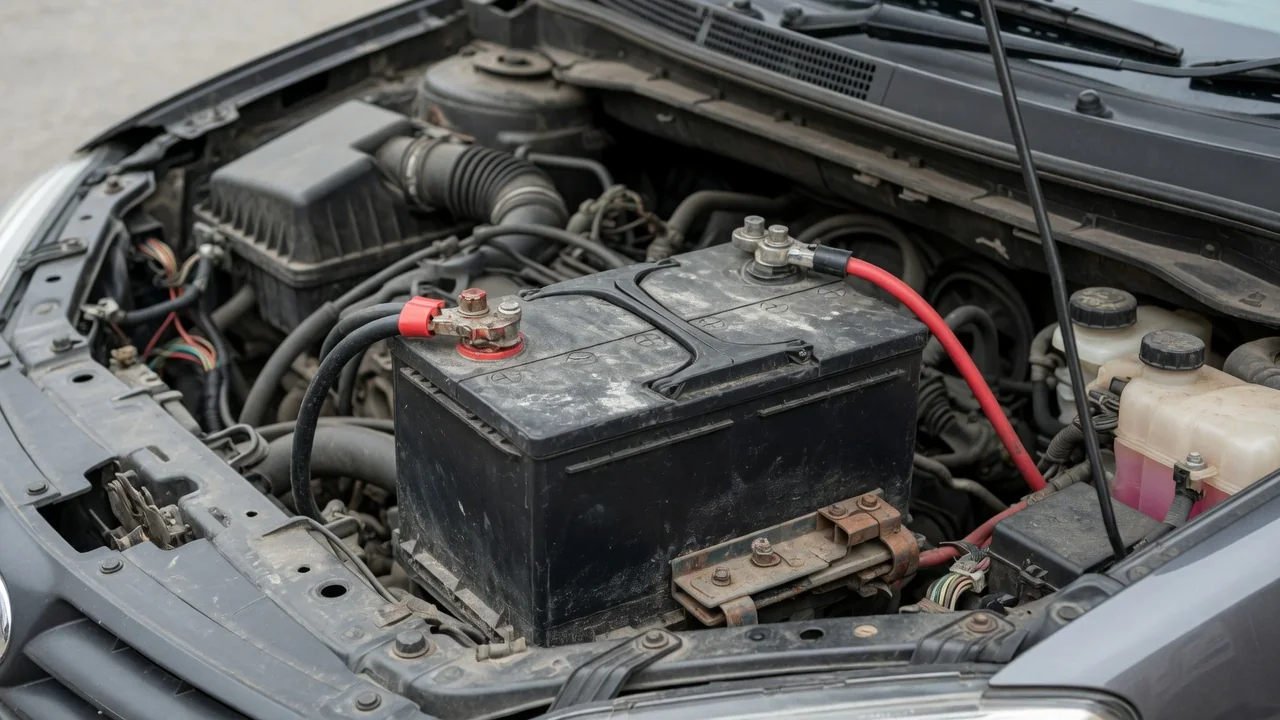
A 12V car battery can warm during charging and from underhood heat, but an overheating car battery is a different concern. Excessive heat, a distorted case, or charging warnings signal a car battery overheating problem that needs context rather than a guess at one failed part. Drivers often ask why a car battery is overheating after a drive, while parked, or during external charging. The answers involve the charging system and safe handling.
Why Heat Around a Car Battery Needs Context
The phrase battery overheating car usually refers to the vehicle's 12V battery and the charging system that replenishes it, not the high-voltage pack on a hybrid or electric vehicle. Engine-bay temperatures and normal charging can raise battery temperature without indicating a fault. That background warmth is why a slightly warm case after a highway run is not automatically a crisis. Excessive heat, a warped case, or electrolyte leakage is different: those signs mean the battery and charging path deserve attention.
Touch is a poor thermometer for a suspect 12V battery. Skin cannot tell safe operating warmth from a dangerous overheating car battery, and leaning in to check by hand risks contact with acid, heat, or vented gas. Observe from a distance: case shape, moisture, vapor, and when the heat appears. Warmth after a long drive can include retained underhood heat. Heat during plug-in charging points at the charger or battery response. Heat while parked with the engine off is another pattern, because it is less likely to be ordinary charging warmth.
Warning Signs of an Overheating Battery
Car battery overheating symptoms often show up as physical change before anyone has a meter on the car. Battery swelling, a bulged or twisted case, wet residue, hissing, or visible vapor are warnings to treat the area as hazardous and stay back. Electrolyte leakage can corrode nearby metal and is not something to wipe up as a housekeeping chore. A sulfur-like odor can accompany a battery fault, but it is not a test to perform. Never walk in to sniff the battery; odor may be faint, mixed with exhaust, or absent even when gas is venting.
Hard starting, dim or flickering lamps, unstable accessories, and a charging or battery warning lamp can travel with an overheating event, yet they do not prove the battery is the heat source. Those electrical irregularities can also come from a weak battery, a slipping belt, or a charging-control issue that has not yet cooked the case. Dangerous gas release and internal damage can occur without an obvious smell, so a quiet, odorless engine bay is not clearance. If the case looks compromised, treat the battery as unsafe.
How Charging-System Faults Can Overheat a Battery
Among the common causes of car battery overheating is overcharging, which forces current into a lead-acid 12V battery after it can no longer store that energy usefully. The unused energy becomes heat and can drive gassing inside the cells. The alternator, voltage regulator, wiring, and voltage-sensing path are supposed to keep charging within a window suited to the battery and operating conditions. A failed regulator, a sense wire that reports the wrong voltage, or a control module that commands a high charge can all raise battery temperature. Those roles overlap, so the hot case does not name the failed piece.
An alternator-related charging fault is a hypothesis until tested against the vehicle's charging specifications. A hot battery by itself does not identify a bad alternator, a regulator, a fuse, or a wiring drop. External chargers add another path: an incorrect mode, a stuck high-current setting, or a faulty charger can overheat a battery that was otherwise healthy. Charging needs also depend on battery type and the vehicle maker's instructions, so a setting that suited one unit may be wrong for another. Stop using a charger that produced heat, then have the battery and charging hardware evaluated.
Battery Damage, Connection Problems, and Underhood Heat
An internal short circuit or other cell damage can generate heat inside the battery even when charging voltage looks ordinary. That is one of the car battery overheating causes that a glance cannot confirm: a case may look intact while plates or separators have failed, or a swollen case may have more than one contributing factor. Loose, corroded, or damaged connections create a different heat pattern. High terminal resistance turns the clamp, post, or cable into a local heater, sometimes melting plastic or discoloring metal at the joint while the rest of the battery is less affected.
High ambient temperatures and retained engine heat can raise battery temperature without proving a charging-system failure. A battery sitting beside an exhaust component, behind a tight undertray, or after a long idle in traffic can feel hotter than one in a cooler location. That underhood heat still matters because heat shortens battery life and can worsen an existing fault. Recent installation work, a battery that does not match the vehicle's specification, and known age or prior deep discharge are diagnostic context. They do not, by themselves, establish why heat appeared on this particular day.
What to Do When a Battery Appears Dangerously Hot
If the vehicle is moving and a car battery overheating problem becomes obvious, pull over in a safe place and switch the engine off when that can be done without creating a traffic hazard. Do not restart when swelling, leakage, hissing, or vapor is present. Keep passengers and bystanders away from the engine bay. Avoid smoking, open flame, sparks, and any action that could ignite hydrogen-rich gas. Do not touch the battery, lean over it, or try to judge temperature by hand. Stay back while deciding who to call.
Do not disconnect terminals, jump-start, open vents, remove the battery, or try to cool a hot or damaged unit with water or a wet cloth. Those steps can spark, spill electrolyte, or put you over a case that may already be venting. If heat appeared during external charging, stop the charger only through a safely accessible remote power control, such as a wall switch, if it can be reached without handling clamps near the battery. Arrange roadside assistance for a suspected damaged battery. If smoke, fire, or immediate danger develops, retreat and contact emergency services.
What a Technician Needs to Check
Before a technician arrives, note when the heat showed, whether a charging lamp or other warning appeared, and any recent battery or charging-system work. Record only what you already saw from a safe distance: case shape, wetness, vapor, and whether the event was after driving, during charging, or while parked. That timeline helps separate underhood soak from an overcharge event. Professional diagnosis may include battery condition testing and charging-system measurements interpreted against vehicle-specific specifications, because charging targets vary with battery type, temperature, and control strategy. Those numbers belong in a shop procedure, not a roadside guess.
Inspection should cover terminal and cable damage, connection tightness, corrosion, and evidence of high resistance heating at the posts. Voltage-sensing faults and charging-control problems can keep the system in a high-output state even when a single rest-voltage reading looks unremarkable. One meter snapshot cannot establish the cause or declare the battery safe, particularly on vehicles whose charging voltage changes with load, temperature, and control software. A fault code is evidence to interpret, not proof a part has failed. Return the vehicle to use only after the heat source and any resulting battery damage have both been identified and addressed.