Why Is My Car AC Blowing Hot or Warm Air Instead of Cold?
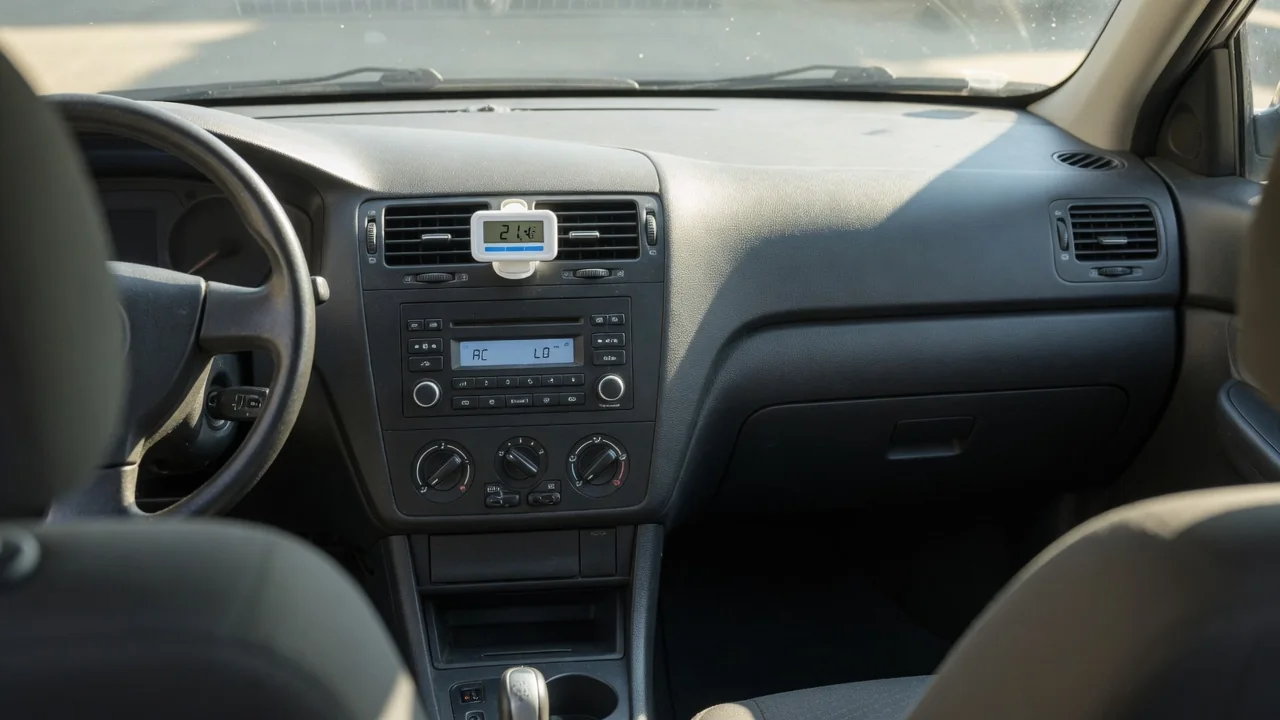
When your car's AC runs and air moves through the vents but never gets cold, the cause can be in several places: the temperature controls, the refrigerant charge, the compressor and its controls, condenser airflow, or the wiring that connects them. Working through these areas in order helps you describe the problem clearly. It also helps you avoid paying for parts, or a recharge, that don't fix the real fault.
Confirm That the AC Blows Air but Does Not Cool
First, confirm exactly what is happening. If air flows strongly from the vents but stays warm, the fault is in cooling or temperature control. If little or no air comes out at any fan speed, the likely suspects are the blower motor, its controls, or a blocked cabin air path, and that needs a separate diagnosis. Keeping these two symptoms apart stops a shop from chasing refrigerant when the real issue is airflow, or testing the blower when the system simply isn't making cold air.
Park safely outdoors with the engine running. Select AC, set the temperature to its coldest setting, open the dashboard vents, and use recirculation if your owner's manual recommends it. A car that has been sitting in the sun needs a few minutes to push out trapped heat, so don't judge it right away. Note the outside temperature, whether the problem started suddenly or faded gradually, and whether cooling ever comes back while driving. These details guide the diagnosis, but none of them identifies a failed part by itself.
Hot Air Can Point to Temperature Settings or a Blend Door Fault
Hot air, as opposed to lukewarm air, sometimes has nothing to do with refrigerant. The HVAC system mixes air that passes over the cold evaporator with air that passes through the heater core, and a blend door controls that mix. If the door or its actuator sticks toward the heat side, the AC can be cooling normally while engine heat still reaches the cabin. Check the selected temperature and any separate passenger or rear zone settings first. A multi-zone system can send heat to one side while the other feels cool.
Several clues point toward the blend door. Air may stay hot no matter how you adjust the temperature, the driver and passenger vents may feel clearly different, or you may hear repeated clicking behind the dashboard. Each of these suggests an actuator or door problem, but none proves it. A technician can check the commanded door position, how the actuator responds, and the climate control inputs. Door layouts vary widely between vehicles and reaching them can mean major dashboard work, so leave this to the shop.
Low Refrigerant Requires a Leak and Charge Assessment
Refrigerant carries heat out of the cabin. When the charge is too low, cooling drops and the air may feel barely cooler than outside. Many systems also stop the compressor from engaging when refrigerant is too low, to protect it from damage. Refrigerant circulates in a sealed loop and isn't used up like fuel, so a low charge means it escaped somewhere. The cause could be a leaking seal, hose, condenser, or other component. It could also be an earlier service that left the system incorrectly filled.
Warm vent air can't tell you how much refrigerant is in the system. A single gauge reading can't either, because pressures change with temperature, engine speed, and the condition of the components. A proper assessment starts with identifying the refrigerant type. The technician then tests for leaks, recovers whatever refrigerant remains, and recharges to the vehicle's specified amount. Refrigerant handling comes with legal and safety requirements. Adding more without finding the leak usually just delays the next warm-air complaint.
Compressor Operation Depends on Mechanical and Electronic Controls
The compressor pressurizes the refrigerant and keeps it moving through the system. If it fails mechanically, or never gets the command to run, cooling stops. Designs vary a lot. Many belt-driven compressors use a clutch that visibly engages, and some make an audible click. Others have no traditional clutch and use different internal controls, and hybrids and electric vehicles often use an electrically driven compressor. Because of this variety, listening for a click when you press the AC button isn't a reliable test on every car.
On cars that have a clutch, a clutch that stays still doesn't prove the compressor has failed. The system may be holding it off on purpose because a pressure sensor is reporting abnormal readings or the refrigerant charge is low. A fuse, relay, wire, or module fault can also block the signal. A technician compares what the control module is commanding with the power actually reaching the compressor, reviews sensor data and stored codes, and checks system pressures. Bypassing these safeguards risks damage and injury near moving belts.
Condenser Airflow and Electrical Faults Can Prevent Cooling
The condenser usually sits in front of the radiator and releases the heat the refrigerant carried out of the cabin. It needs steady airflow, which comes from vehicle speed on the road and from the cooling fan when the car is moving slowly. If debris blocks the condenser or the fan doesn't run when it should, pressure rises, cooling fades, and the system may shut the compressor off. A useful thing to report is whether the air turns warm mainly at idle or in traffic and cools off again during normal driving.
With the engine off and the key removed, you can look through the front grille for obvious blockages such as leaves, plastic bags, or packed-in insects. Electric cooling fans can start unexpectedly even after shutdown, so keep your hands and any tools clear of the fan. Beyond that quick look, the electrical side includes fuses, relays where fitted, wiring, sensors, and control modules, all of which vary by vehicle. A blown fuse means there's a fault to track down, not a part to keep replacing, and bridging circuits can damage modules or cause a fire.
When to Stop Using the AC and What to Tell the Shop
Book a professional diagnosis if cooling is still missing after you've confirmed the cabin settings. This matters most when the problem comes back after a refrigerant service, because that pattern often means a leak was never fixed. Turn the AC off if a new grinding or squealing noise appears when it runs, since continued use could make a compressor or belt problem worse. Smoke, a burning smell, or an engine temperature warning is more urgent. Pull over where it's safe, shut the engine off, and call for help.
Go to the shop with a clear description of the problem. Include when it started, whether it came on suddenly or gradually, the weather at the time, and whether it changes between idling and highway driving. Mention how each vent behaves, any noises or dashboard warnings, and any recent AC work or front-end collision repairs. A good diagnosis combines vent temperature readings, a refrigerant check, airflow checks, and electrical testing before anyone recommends parts. Be wary of any promise that a recharge alone will fix it.