Why Is a Car's Owner Manual Useful During a Roadside Stop?
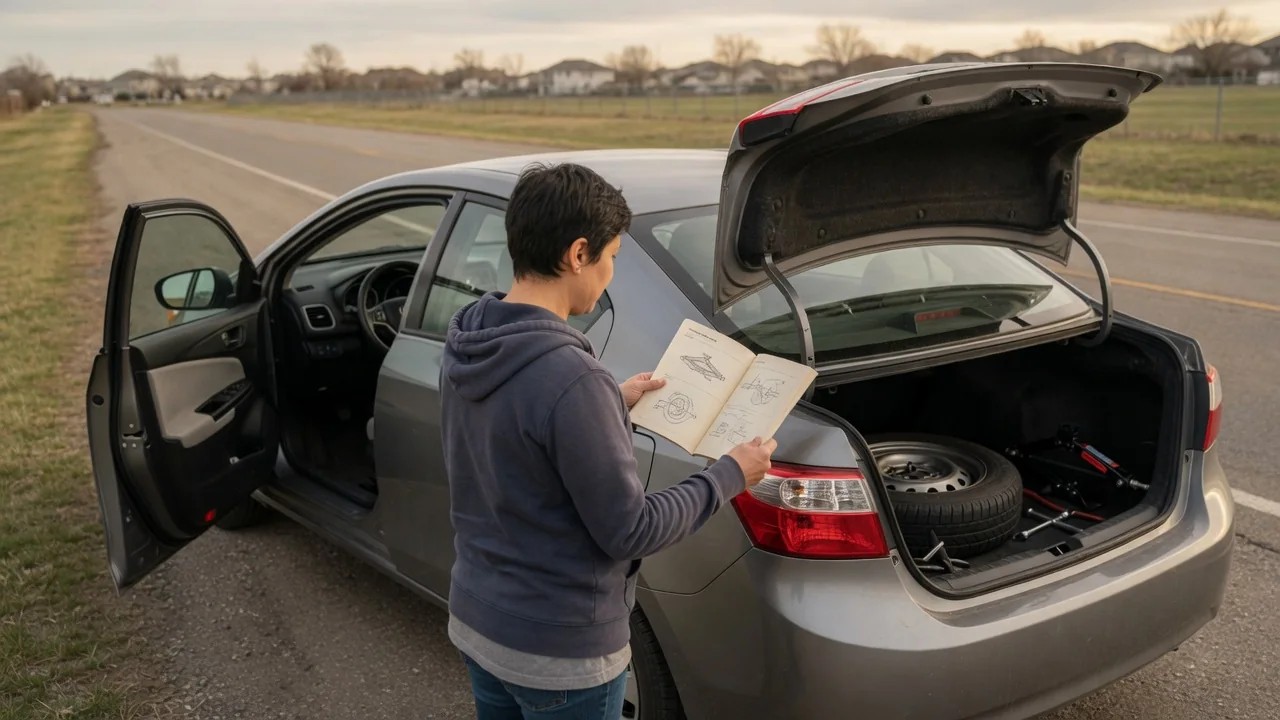
A warning light appears, the engine feels different, or an officer asks you to switch on a light you have never used. In those moments, the booklet in the glovebox earns its place. Understanding why a car's owner manual is useful during a roadside stop comes down to two things: it shows where controls are located and explains what the dashboard warnings mean for your particular vehicle.
Find relevant section
Most manuals are organized so a stressed driver can reach the right page quickly. The index at the back lists items alphabetically, so looking up terms such as hazard flashers, hood release, or tire pressure usually points to a page number faster than paging through chapters. Many manuals also open with a pictorial overview of the dashboard, with each switch and gauge numbered and cross-referenced, which helps when you can see a button but do not know its name.
Warning lights normally have their own chapter, often titled instruments or indicators, where each symbol is drawn beside a short explanation. Matching the shape and color on your instrument cluster to the picture is more reliable than guessing, because symbols can look similar while meaning different things. Layout varies by manufacturer and model year, and some vehicles keep the full manual in the infotainment screen or a phone app, with only a quick-reference guide printed on paper.
Follow vehicle-specific steps
Once you find the page, the value lies in instructions written for your exact vehicle. The hood release might be a lever by the driver's footwell on one car and somewhere quite different on another, and the secondary safety catch under the hood edge differs as well. The same applies to the jack, spare tire or sealant kit, tow hook, and fuel door release, whose storage locations and operating methods are described and illustrated for that model.
Warning explanations work the same way. A manual typically separates lights that mean stop as soon as it is safe, such as those commonly associated with oil pressure or engine temperature, from lights that mean have the vehicle checked soon. It may also describe what a flashing light signifies compared with a steady one. Because manufacturers assign meanings and recommended actions differently, the wording in your own manual should guide what you do, not memory of a previous car.
Call help
The manual also helps you recognize when the right step is a phone call. If the guidance for a warning says not to continue driving, or the problem involves brakes, steering, overheating, or a smell of fuel, arranging assistance is safer than experimenting at the roadside. Many manuals or the accompanying warranty booklet list a roadside assistance number for the brand, though whether coverage applies depends on the vehicle's age and the program terms.
When you do call, the manual makes the conversation more useful. You can tell the dispatcher the name of the warning light as printed, whether it is red or amber, and any message shown on the display. Towing sections explain details that matter to the tow operator, such as whether the vehicle should be carried on a flatbed and where the approved tow eye attaches. These requirements differ notably among front-, rear-, and all-wheel-drive, hybrid, and electric vehicles.
Everyday Use and Observations
A manual is far easier to use at the roadside if you have opened it before. Spending a few minutes in the driveway locating the hazard switch, interior lights, headlight and fog light controls, and window and mirror switches means you can respond smoothly if an officer asks you to turn something on or off during a traffic stop. Keeping registration and insurance papers beside the manual in the glovebox also means nothing has to be hunted for.
Everyday observations give the manual context. When you start the car, most warning lights illuminate briefly as a bulb check and then go out; knowing that normal pattern helps you notice a light that stays on. Familiar gauge positions, the usual sound of the engine, and how the brake pedal feels are all reference points. If something changes, describing it alongside the manual's explanation gives a technician a clearer starting point than a vague report that a light came on.
Limits and Next Steps
A manual explains what a warning means in general terms, but it cannot diagnose the cause. A check engine light, for example, can be triggered by many different conditions, and even a stored fault code read with a scan tool is evidence to interpret, not proof that a particular part has failed. Some codes are manufacturer-specific, so their meaning has to be confirmed for the exact vehicle before any conclusion is drawn or parts are replaced.
Roadside conditions set their own limits too. Instructions for changing a tire or jump-starting assume a level, firm surface well clear of traffic, and if that is not available, waiting for help in a safe place is the better choice. After the stop, the sensible next steps are to have the fault properly inspected, note what happened and when, and replace a missing manual; manufacturers often offer digital versions, though availability varies by brand and model year.