Why Does Tint Look Purple as It Ages?
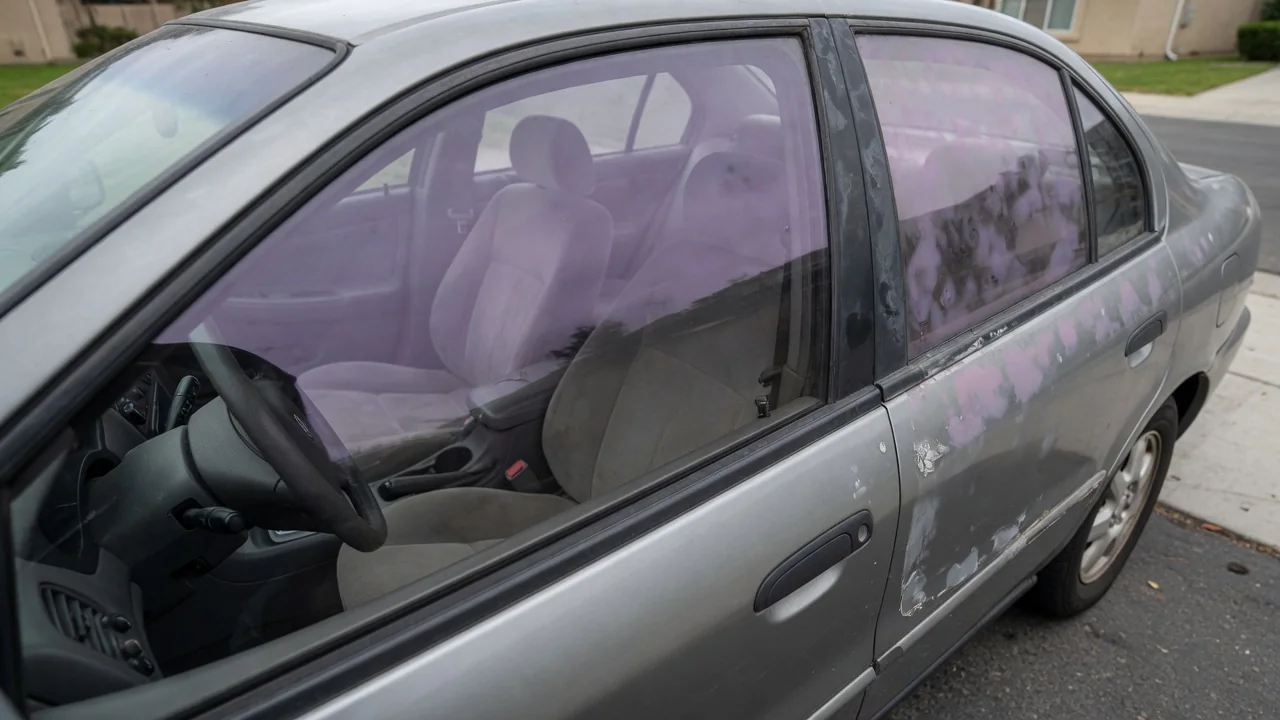
Drivers who wonder why does tint look purple as it ages are usually looking at a dyed window film whose color chemistry has broken down. Sunlight, heat, and time change both the dye and the adhesive that bonds the film to the glass. Understanding how that process works makes it easier to judge whether the film is merely unattractive or has become a real problem.
Aging signs
Many dyed films get their neutral charcoal shade from a blend of several dyes rather than one black pigment. Those dyes do not fade at the same rate under ultraviolet exposure. The yellow component tends to give up first, and once it weakens, the remaining red and blue tones dominate. The result is the familiar purple or violet cast, which often shows up first on the rear window or whichever side of the vehicle faces the sun most often.
Color shift is rarely the only symptom. The adhesive layer also ages, and as it loses its grip, small bubbles, hazy patches, or lifted edges can appear near defroster lines and window seals. Some films turn lighter overall, so the glass looks washed out as well as discolored. How quickly this happens depends on film construction, climate, and parking habits, so two vehicles of the same age can look very different.
Visibility
A purple tone by itself may only change how the glass looks from outside, but the degradation behind it can affect what the driver sees. Faded dye often leaves the film uneven, with darker and lighter zones that distort contrast. Adhesive failure adds a milky haze or clusters of bubbles that scatter light. Looking through the rear window at night, headlights from following traffic may bloom or smear instead of appearing as crisp points.
Low sun and wet weather tend to make the problem more obvious. Glare catches every bubble and wrinkle, and the rearview mirror can show a blurred or rippled image. Side windows matter as well, because distortion near the mirrors can make it harder to judge an adjacent vehicle. The severity varies with how the glass is curved and how the film was installed, so a careful look from the driver's seat in different lighting is worthwhile.
Replacement
Once the dye has shifted, the color cannot be restored. No cleaner, polish, or coating will bring the original shade back, because the change has occurred inside the film itself. The practical remedy is removing the old film and installing new material. Removal also deals with degraded adhesive, which otherwise leaves a sticky, cloudy residue that attracts dust and makes the glass difficult to clean.
Rear windows deserve particular care because the defroster grid and any embedded antenna elements sit on the inside surface, exactly where the film is bonded. Aggressive scraping can damage those conductive lines, which is one reason many owners leave removal to a tint shop. When choosing new film, constructions that rely on pigments, carbon, or ceramic particles rather than dye alone are generally considered more color stable, though product quality and warranty terms differ between manufacturers.
Everyday Use and Observations
Daily habits influence how fast the purple cast develops. A vehicle parked outdoors in strong sun all day exposes its film to far more ultraviolet light and heat than one kept in a garage. Owners often notice that the side facing an open driveway fades before the side sheltered by a building. Comparing a frequently shaded window with an exposed one on the same car is a simple way to see how far the film has changed.
Cleaning practices also play a role. Harsh glass cleaners and abrasive cloths can be hard on the film surface and its edges, so installers commonly recommend mild products and soft towels. Rolling a window down repeatedly can reveal peeling at the top edge where the film meets the seal. Cabin comfort offers another clue, since a film that has faded significantly may let more heat and brightness through than it once did.
Limits and Next Steps
Color alone does not reveal everything about a film's condition. Some factory privacy glass is tinted within the glass itself and will not turn purple, so discoloration points to an aftermarket film applied to the interior surface. A slight hue shift on an otherwise smooth, clear film may be purely cosmetic, while bubbling and haze suggest the adhesive is failing. Light transmission can only be confirmed with a meter, not by eye.
A sensible next step is having a reputable tint shop inspect the glass and explain the options for the specific vehicle. Window tint regulations differ by state, so any replacement should be checked against local limits for each window position. If a warranty was issued with the original installation, the paperwork may cover fading or adhesive failure. Addressing the film before it obstructs the view keeps the decision about appearance rather than safety.