Why Does Regen Stop Increasing on a Long Descent?
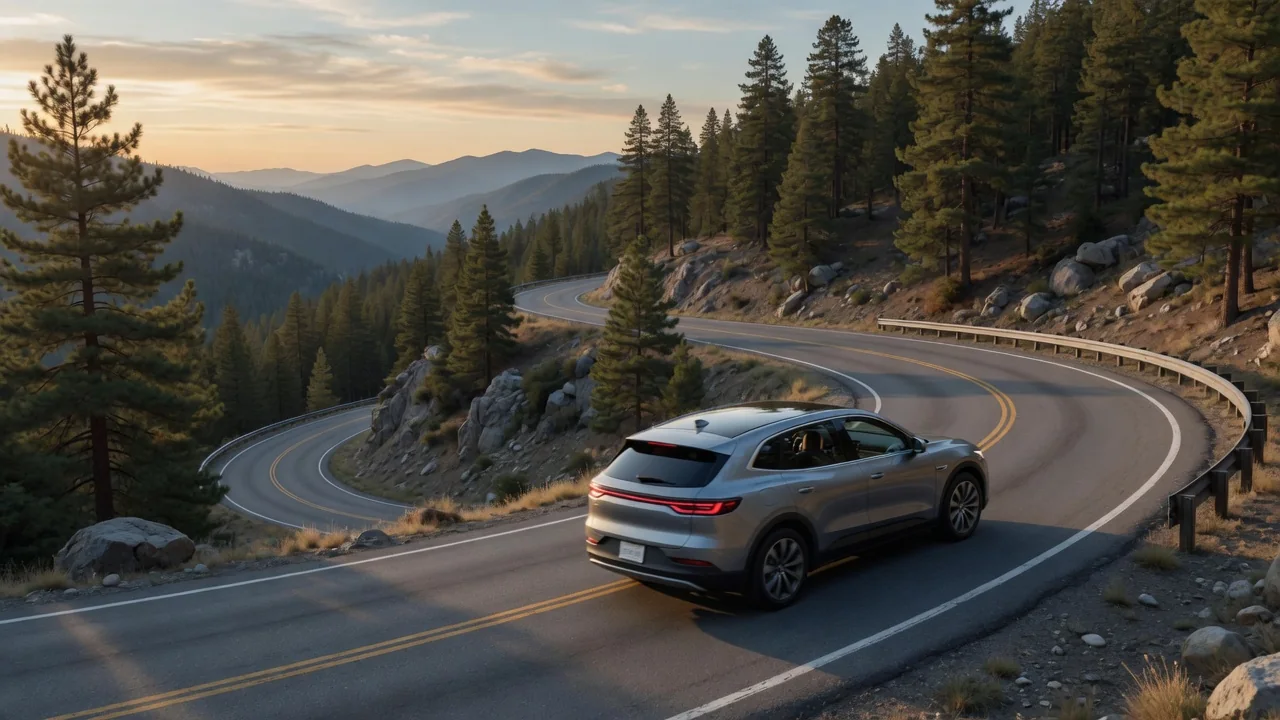
On a long downhill grade, many drivers of electric and hybrid vehicles notice that regenerative braking reaches a point where it will not get any stronger, and sometimes it fades. This is not usually a fault. Regen is a controlled charging process. The vehicle limits it based on how much power the battery can safely accept, how hot the components are getting, and how the brake system shares the work. These three factors explain most regen limits on a long downhill.
Battery acceptance
Regenerative braking runs the electric motor as a generator. It converts the vehicle's motion into electrical energy that flows back into the traction battery. That energy has to go somewhere, so the strength of regen is ultimately capped by how much charging power the battery can take at that moment. The battery management system continuously calculates a charge power limit. The motor controller is not allowed to exceed that limit, no matter how hard gravity is pushing the car downhill.
State of charge is the biggest variable. Lithium-ion cells accept charge most readily in the middle of their range, and the allowed charging power typically tapers as the pack approaches full. On a long descent the battery is being charged continuously, so state of charge climbs steadily, and the permitted regen power drops as it rises. If the descent started with a nearly full battery, there may be little or no room for regen at all, and the car may limit it from the very beginning. In general terms, this rising charge level is the most common reason regen stops increasing partway down a grade.
There is also a ceiling unrelated to charge level. The motor, inverter, and high-voltage wiring have maximum power ratings, and regen power rises with both braking force and speed. On a steep grade at higher speed, the available energy can exceed what the system is designed to handle. When that happens, regen holds at its maximum instead of continuing to climb. How these limits are set varies by vehicle, and manufacturers generally do not publish them in detail.
Heat
Charging a battery generates heat, and a long descent can mean many minutes of sustained charging at high power. Battery packs operate within a temperature window. The management system reduces allowed charging power when cell temperature moves toward the upper end of that window. Cooling systems can remove some of this heat, but on a long enough descent the vehicle may still reduce regen to protect the cells from accelerated wear. Cold matters too. A cold battery also accepts less charging power, so regen can be limited at the top of a winter mountain pass before the pack has warmed up.
The battery is not the only component that warms up. During regeneration, the electric motor and the inverter that converts the motor's output into direct current for the battery both lose a portion of the energy as heat. These parts have their own temperature protections. When they approach their limits, the control system can derate output, which reduces available regen even if the battery could still take more charge. Thermal behavior depends on cooling design, ambient temperature, load, and speed. As a result, the point at which heat begins to limit regen differs from vehicle to vehicle and from one situation to the next.
Friction brakes
Most electrified vehicles use blended braking. The brake control system decides how much of the requested deceleration comes from regen and how much comes from the conventional hydraulic brakes. When regen is limited for any of the reasons above, the system shifts more of the load to the friction brakes so the car still slows as the driver expects. In vehicles with this kind of blending, the brake pedal may feel much the same while the split between the two systems changes in the background.
This handoff matters on long grades because friction brakes turn motion into heat in the pads and rotors. Sustained use can raise brake temperatures to the point where braking effectiveness falls, a condition commonly called brake fade. Regen normally spares the friction brakes on descents. When regen tapers off, the brakes take on a duty they would otherwise rarely see. Some hybrid systems can also use the gasoline engine as an additional load to help slow the vehicle, but whether and how that happens depends on the specific design. The owner's manual is the reliable source for how a particular model manages braking on grades.
Practical implications and limits
When you know a long descent is coming, the most useful habit is to avoid starting it with a full battery. Some vehicles let the driver set a lower charging target, and arriving at a pass with spare capacity leaves room for regen to keep working longer. Many cars also show a visual cue, such as a shortened regen bar or a message, when regeneration is limited. That cue tells you the friction brakes are about to do more of the work. Your vehicle may offer a lower gear setting, a stronger regen mode, or a low-speed hill descent function. If it does, the manual explains when each is intended to be used.
Speed is the other lever. Because the braking power needed rises with speed, holding a moderate pace on a steep grade keeps demand lower. This helps the system stay within its limits and reduces how much heat the friction brakes must absorb once regen is reduced. Firm, intermittent braking is generally easier on the brakes than long periods of light dragging followed by hard stops.
It also helps to know what regen limits do not mean. A plateau or drop in regen on a long downhill is usually the vehicle protecting the battery and power electronics, not a malfunction. Some signs do call for an inspection: regen that is unavailable in mild conditions, warning lights, unusual brake noise, or a pedal that feels different from normal. Each manufacturer sets its own exact thresholds for charge level, temperature, and power. General explanations can describe the mechanisms, but they cannot predict precisely when a given car will limit regen.