Why Does Fuel Spray Pattern Matter? Atomization, Mixing and Faults
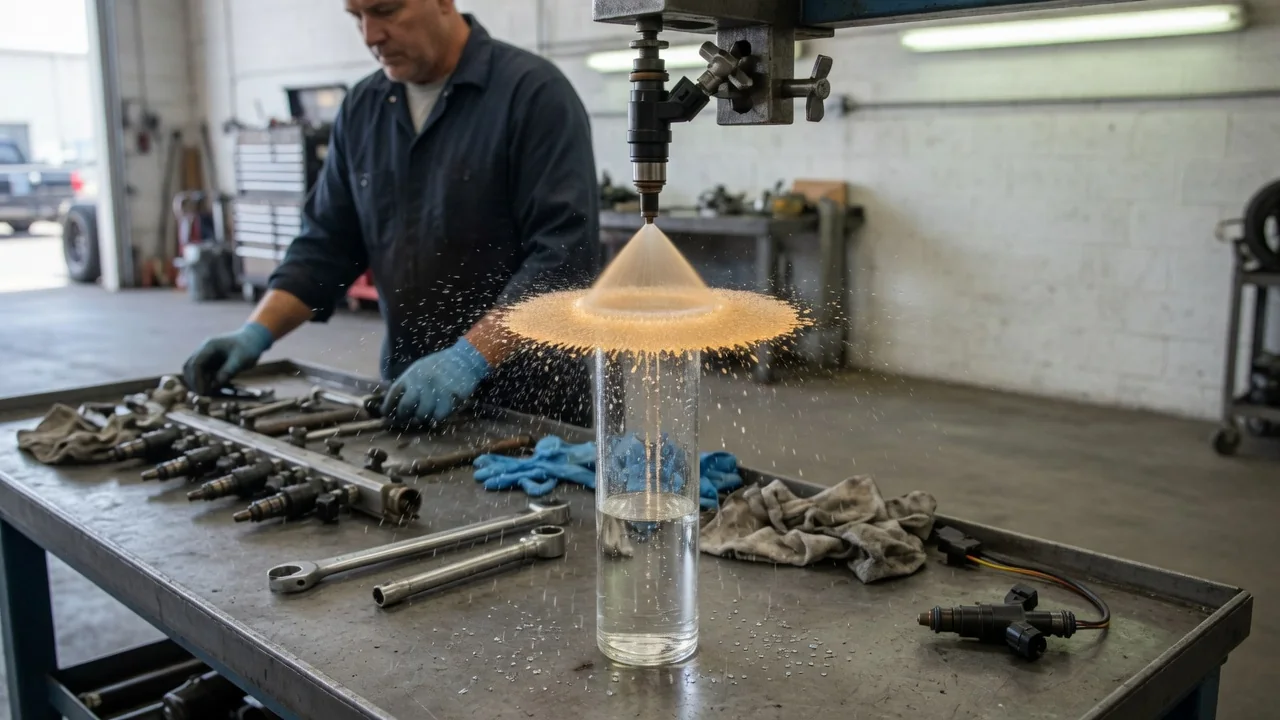
A fuel injector does more than deliver the right amount of fuel. It also controls how that fuel enters the engine: the shape of the spray, the size of the droplets and where they land. That fuel injector spray pattern affects how quickly fuel turns into vapor, how evenly it mixes with air and how cleanly it burns. This article explains why fuel spray pattern matters, covering atomization, mixing inside the cylinder and the faults that disturb a healthy spray.
Atomization: Turning Liquid Fuel Into a Fine Mist
Gasoline and diesel do not burn as liquids. Combustion happens when fuel vapor mixes with oxygen, so liquid fuel must evaporate before it can contribute to a clean burn. Atomization is the first step in that process. As fuel is forced under pressure through the small openings at the injector tip, the stream breaks apart into droplets. The finer those droplets are, the more surface area the same quantity of fuel exposes to the surrounding air, and the faster it can absorb heat and evaporate.
Spray pattern describes the result of that breakup: the overall shape of the spray, the angle of the cone or the direction of individual plumes, and how consistently droplets are distributed across it. Injector designs differ, from single-stream or cone sprays to multi-hole nozzles that split fuel into several targeted jets. What they share is a purpose. Each design is intended to produce droplets small enough to vaporize in the time available and to place them where the engine's airflow can carry and mix them.
Time matters here. In a port-injected gasoline engine, fuel is typically sprayed into the intake port toward the back of the intake valve, where warm metal and incoming air help it evaporate before it enters the cylinder. In a direct-injection engine, fuel is sprayed straight into the combustion chamber, leaving far less time for evaporation. That is one reason direct-injection systems operate at much higher fuel pressures: higher pressure generally helps produce finer atomization.
Cylinder Mixing: Getting Fuel and Air Together Evenly
Fine droplets are only useful if they end up evenly mixed with the air in the cylinder. Engines are designed so that intake air enters with organized motion, commonly described as swirl or tumble, and the spray is aimed to work with that motion. When the spray and airflow cooperate, fuel vapor spreads through the charge and the flame front can travel through a mixture with a fairly consistent air-fuel ratio, which supports smooth, complete combustion.
Spray targeting also determines what the fuel touches. Ideally, fuel stays airborne long enough to vaporize. When a spray hits a cool surface such as a cylinder wall, piston crown or port wall, part of it can form a liquid film. This wall wetting evaporates slowly and may not burn completely, which contributes to unburned hydrocarbons and, especially in direct-injection engines, soot. Fuel that reaches the cylinder walls can also wash past the piston rings and dilute engine oil. These effects are typically most noticeable during cold starts and warm-up, when surfaces are coolest.
Some direct-injection strategies aim not for a uniform mixture throughout the cylinder but for a richer pocket near the spark plug surrounded by leaner mixture. That approach depends even more on precise spray shape and timing, because the fuel must arrive in the right place at the right moment for reliable ignition. Whether a given engine uses such a strategy is design-specific, but in every case the spray pattern is part of how the mixture is meant to form.
Faults That Disturb the Spray Pattern
A common cause of a degraded spray pattern is deposit buildup at the injector tip. Fuel residues, varnish and carbon can partly block nozzle openings or change their edges. Instead of a fine, even mist, the injector may produce a narrower spray, a lopsided pattern or solid streams of liquid. Direct injectors sit in the combustion chamber and are exposed to heat and combustion byproducts, while port injectors can accumulate deposits when residual engine heat after shutdown bakes fuel left near the tip.
Other faults are mechanical or electrical. An injector that does not seal fully can drip or dribble fuel after it should have closed, producing large droplets that atomize poorly. A sticking valve, worn internal parts or a weak electrical signal can change opening behavior and alter both quantity and pattern. Low or unstable fuel pressure, whether from the supply pump, regulator or a restricted filter, also affects spray quality because atomization depends on the pressure driving fuel through the nozzle.
Symptoms of a poor spray pattern overlap with many other problems. They can include rough idle, misfires, hesitation, hard starting, increased fuel consumption, higher emissions, smoke from diesel engines and fuel trim corrections that point to a lean or rich condition. Because one faulty injector affects only its own cylinder, the problem may show up as a misfire or roughness concentrated in a single cylinder rather than a uniform change across the engine.
Practical Implications and Limits
For owners, the main lesson is that injector condition involves more than delivery volume. An injector can flow close to the right amount of fuel and still perform poorly if that fuel arrives as streams instead of mist. However, spray pattern cannot be judged from the driver's seat or by looking at the engine. Confirming it usually requires removing the injector and testing it on dedicated equipment, which some repair shops offer, or relying on indirect evidence such as misfire data, fuel trims and cylinder-by-cylinder comparisons from a scan tool.
This also limits what a diagnosis can conclude. Rough running or a lean code may come from vacuum leaks, ignition faults, sensor problems, low compression or fuel supply issues, so blaming the injectors first can waste money. A structured approach that rules out simpler causes and follows the procedure in the service manual for the specific engine is generally more reliable than replacing parts based on symptoms alone.
Prevention and cleaning have limits too. Fuel with detergent additives and fuel system cleaners may help control or reduce light deposits, but they cannot repair worn seals, damaged nozzles or electrical faults. Professional cleaning can restore some injectors, while others need replacement. Service intervals, cleaning methods and whether injectors should be replaced individually or as a set vary by vehicle and injector type, so the manufacturer's guidance remains the best reference for any particular engine.