Why Does Exhaust Condensation Drip From a Tailpipe?
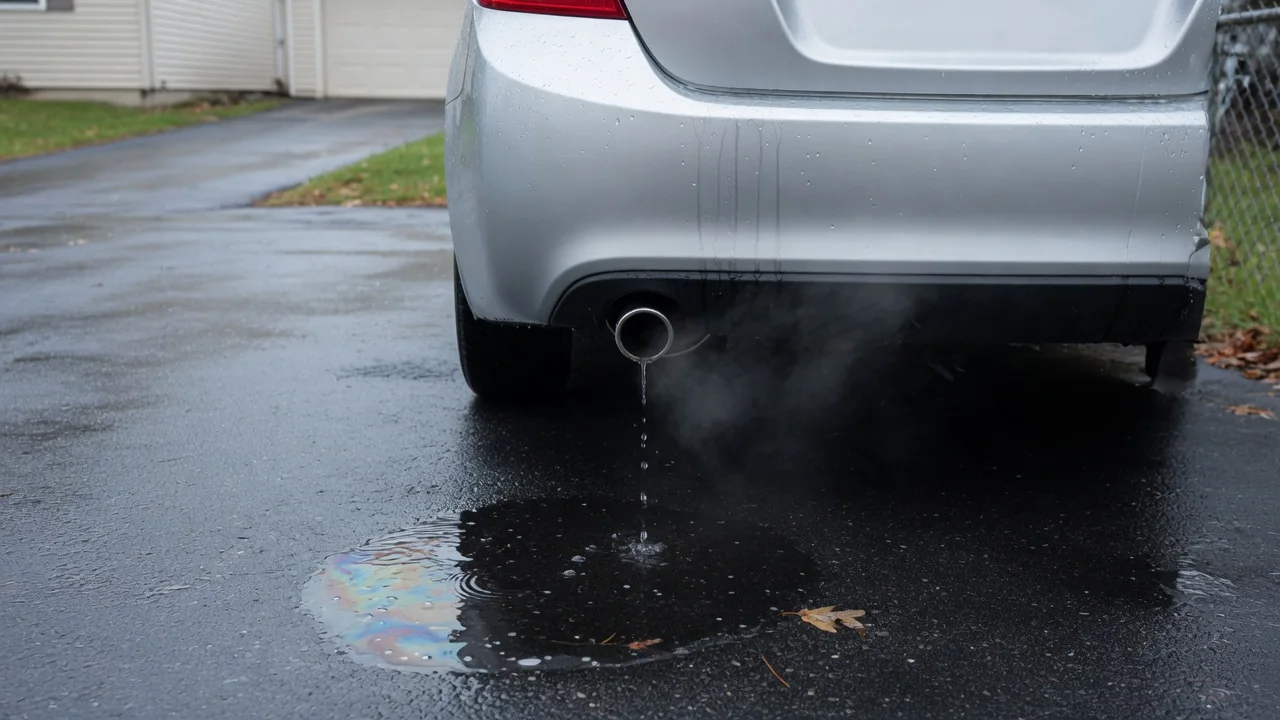
Water dripping from the back of a car on a cool morning often prompts the question: why does exhaust condensation drip from a tailpipe? In most cases the answer is ordinary chemistry and temperature. Burning fuel creates water vapor, and a cold exhaust system turns that vapor back into liquid until the pipes warm up enough to carry it out as gas.
Combustion byproduct
Gasoline and diesel are hydrocarbons, meaning their molecules are built from hydrogen and carbon. When that fuel burns with oxygen inside the cylinders, the carbon ends up mostly as carbon dioxide and the hydrogen bonds with oxygen to form water. That water leaves the combustion chamber as very hot, invisible vapor mixed into the exhaust stream. A properly running engine therefore produces a steady supply of moisture every second it operates, whether or not any of it is ever seen at the tailpipe.
The catalytic converter adds a little more. As it cleans up leftover unburned fuel and carbon monoxide, it converts them into additional carbon dioxide and water vapor. How much moisture a given vehicle produces depends on engine size, the fuel being burned, and how hard the engine is working, so a large truck idling in a driveway may leave a more noticeable wet spot than a small commuter car. In either case the liquid is typically clear and thin, like plain water.
Cold exhaust
Vapor only becomes visible liquid when it meets a surface cool enough to condense it. After a vehicle sits overnight, the pipes, catalytic converter, resonator, and muffler are all at outside air temperature. Hot, moisture-laden gas hits those cold metal walls and behaves much like breath on a chilly window, forming droplets. The water runs to low points in the system, pools inside the muffler, and gets pushed toward the outlet by the flow of exhaust gas, where it drips or spits out.
Warmup changes the picture gradually. Heat travels from the engine rearward, so the front of the system dries out first while the muffler and tailpipe, farthest from the engine, stay cool the longest. Once the metal is hot enough, vapor passes straight through and the dripping stops. Vehicles with long exhaust runs or large mufflers generally take longer to reach that point. Some mufflers also include a small drain hole at the lowest spot, so drips may appear beneath the muffler rather than at the tip.
Warning signs
Normal condensation is clear, light, and temporary. It appears after a cold start, may come with a thin white wisp of vapor in cool air, and fades as the system reaches operating temperature. The pattern deserves a closer look when it does not follow that script. Thick white clouds that continue after a long drive, a sweet smell from the exhaust, or a coolant reservoir that keeps dropping can suggest coolant is entering the combustion chambers, though those clues need testing before anyone draws conclusions.
Color and texture offer further hints. Bluish smoke points toward oil being burned, while heavy black smoke suggests too much fuel in the mixture. Slightly sooty drips are less alarming, because condensation commonly rinses carbon deposits from inside the pipe and leaves dark spots on the ground. An engine temperature gauge that climbs, rough running at startup, or a warning light alongside unusual exhaust output raises the concern level. Any stored fault code is one piece of evidence to interpret, not a verdict on a specific part.
Everyday Use and Observations
Driving habits strongly influence how much water an exhaust system holds. Repeated short trips, such as a few minutes to a store and back, shut the engine off before the muffler ever gets hot enough to dry out. Moisture then sits inside, mixes with acidic combustion residue, and encourages corrosion from the inside outward. That is why mufflers on lightly used cars can rust through even when the exterior looks clean. A longer drive now and then gives the system time to evaporate what has collected.
Owners often notice a small puddle beneath the tailpipe after idling in the driveway, or a spurt of water when pulling away from a stop as pooled liquid is blown out by rising gas flow. Cold or humid weather makes the effect more pronounced, and hybrids whose engines cycle on and off may drip for longer because the exhaust warms slowly. Water appearing under the front passenger area instead usually comes from the air conditioning drain, which is a separate and equally ordinary source.
Limits and Next Steps
Watching the tailpipe has limits. Looking at a drip cannot confirm whether it is pure condensation or contains coolant, and the amount of water alone says little about engine health. More useful is tracking the pattern over several days: whether the dripping stops once the vehicle is fully warm, whether the coolant level in the reservoir holds steady when checked with the engine cold, and whether the temperature gauge behaves normally. Consistent, short-lived moisture with stable fluid levels fits the expected behavior of a healthy engine.
When vapor persists after warmup, fluid levels fall without an obvious leak, or the engine runs poorly, a professional inspection is the sensible next step. A shop can pressure test the cooling system, check for combustion gases in the coolant, and examine the exhaust for corrosion or leaks. Exhaust layouts, drain provisions, and warmup behavior differ between vehicles, so vehicle-specific service information matters. Because exhaust components get extremely hot and the fumes are hazardous, close observation should happen outdoors and never in a closed garage.