Why Does Car AC Condense Water? Cold Coil, Humid Air and Drain Explained
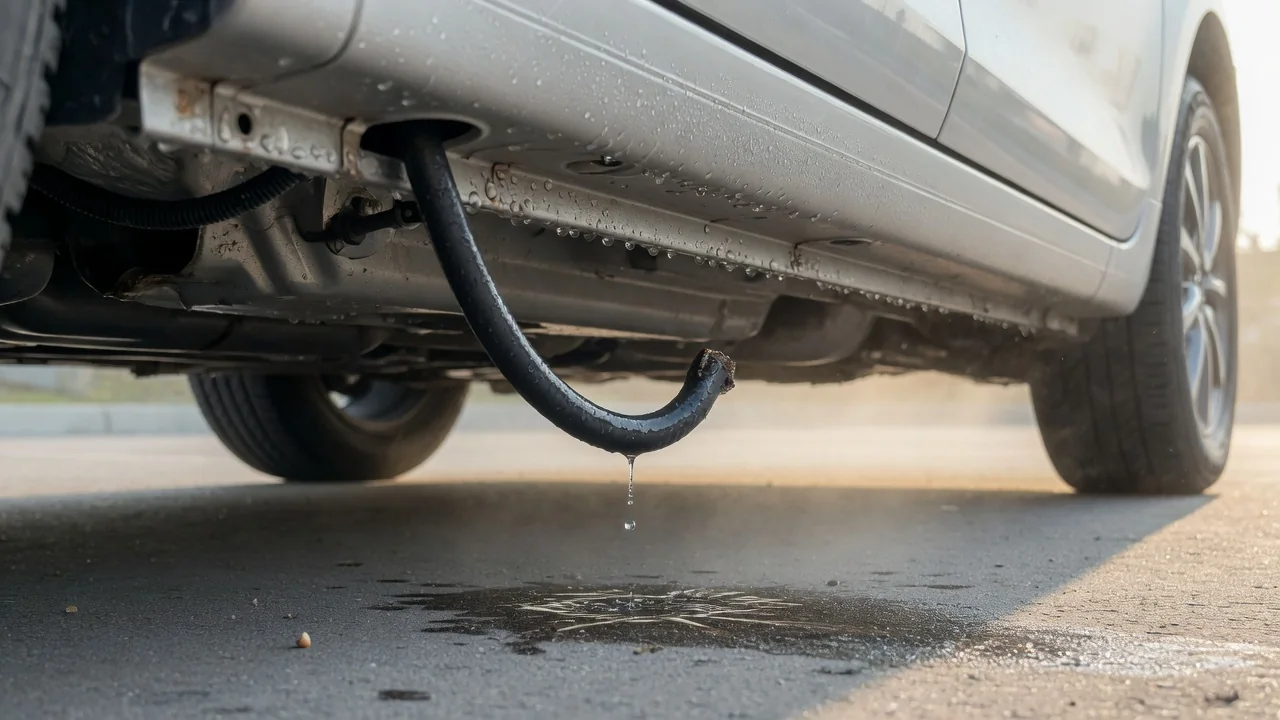
If you have parked after a warm-weather drive and found a small puddle of clear water under your car, you have seen a normal by-product of air conditioning. A car AC system cools the air, and it also pulls moisture out of it. This article explains the car AC condensation process: why the cold coil collects water, how humid air supplies that water, and where the drain sends it.
Cold coil: where condensation begins
The part of the system that makes water is the evaporator, a heat exchanger made of tubes and thin metal fins. It usually sits inside the HVAC housing behind the dashboard. Liquid refrigerant enters the evaporator at low pressure, then evaporates inside the tubes. Evaporation absorbs heat, so the refrigerant draws heat out of the metal and the coil becomes cold. The blower fan pushes air across the fins, and that air gives up heat to the coil before it flows through the vents into the cabin.
Condensation happens because the coil surface is colder than the dew point of the air passing over it. The dew point is the temperature at which air can no longer hold all of its water vapor. When air touches a surface below that temperature, some of the vapor turns into liquid water on the surface. It is the same effect that makes droplets form on a cold drink on a summer day. The evaporator is built with many closely spaced fins to give the air a large area of contact, which helps it cool the air efficiently. That same surface area also collects a lot of moisture.
Automotive AC systems are generally designed to keep the coil cold but above freezing. If water froze on the fins, ice would block airflow and reduce cooling. Systems regulate this in different ways, such as by sensing refrigerant pressure or evaporator temperature and adjusting compressor operation. The exact control method depends on the vehicle.
Humid air: where the water comes from
The water dripping from a car is not refrigerant and does not come from inside the AC system. It is water vapor that was already in the air. Air almost always carries some moisture, and warm air can hold more of it than cool air. When the AC cools air on its way to the cabin, it removes two kinds of heat. Sensible heat is the heat you feel as temperature. Latent heat is the energy held in water vapor. Removing latent heat means turning vapor into liquid, so dehumidification is part of what the AC does, not a side effect it can avoid.
How much water forms depends mainly on how humid the incoming air is and how much of it moves across the coil. On a hot, muggy day the system can produce a steady stream of condensate. In dry weather it may produce very little, even while it cools well. Moisture also comes from inside the vehicle: occupants exhale water vapor, and wet clothing, umbrellas or damp floor mats add more. In fresh-air mode the system keeps drawing in outside air with its own moisture load. In recirculation mode it re-cools cabin air that it has already partly dried, so the amount of condensation can change with the setting.
This drying effect explains why the AC helps clear fogged windows. Dried air absorbs moisture from the inside of the glass more readily. Many vehicles run the compressor automatically in defrost mode for this reason, even when the heater is warming the air afterward. Whether and how that happens varies by design.
Drain: how the water leaves the car
Water collecting on the evaporator fins has to go somewhere. It drips down into the bottom of the HVAC housing, which is shaped as a pan or sloped surface that leads to an outlet. From there, a drain tube or fitting carries the water through the firewall or floor and releases it beneath the vehicle. That is why condensate usually appears under the front portion of the car rather than at the tailpipe or under the trunk. The exact exit point differs between vehicles, so the service information for a specific model is the reliable reference for its location.
Some drains end in a simple open tube. Others use a rubber check valve, often called a duckbill, that lets water out while limiting the entry of debris, insects and outside air. Water often keeps dripping for a while after the engine is off, because the moisture already on the coil and in the housing continues to drain.
The drain only works if the path stays open. Leaves, dirt, insect nests, biological growth or a kinked or dislodged hose can block it. When that happens, water builds up in the housing and may overflow inside the vehicle. Common signs include damp carpet or standing water in a front footwell, a sloshing sound behind the dash when braking or turning, a musty smell and windows that fog more easily. These symptoms point to a drainage problem rather than a refrigerant fault.
Practical implications and limits
For everyday ownership, the most useful skill is recognizing normal condensate. It is clear, thin like tap water and essentially odorless. Fluid that is colored, oily, slippery or sweet-smelling is not AC condensate and should be traced to its source. Engine coolant, for example, is typically tinted and has a sweet odor. Because condensate depends on humidity, temperature and airflow, there is no single correct amount. A dry pavement after a drive in arid weather is not a warning sign by itself. Little or no dripping on a humid day with the AC working hard deserves a closer look, especially if you also find moisture inside the cabin.
Moisture left on the evaporator after shutdown can support the growth of microorganisms that cause musty odors. Some drivers turn off the AC compressor and run the fan for a few minutes before parking to help dry the coil, and some vehicles include a feature that does something similar automatically. Keeping the cabin air filter in good condition and the cowl area below the windshield clear of leaves also reduces debris that can reach the housing or the drain. If a drain appears blocked, avoid pushing stiff or sharp tools far into the tube, because the evaporator and housing can be damaged. The owner's manual or service manual should guide access and cleaning.
The mechanism described here applies broadly to automotive air conditioning, but the details do not. HVAC layout, drain routing, check-valve use, evaporator temperature control and automatic drying or defrost behavior all vary by manufacturer and model. Use this general explanation to understand what you are seeing. Rely on vehicle-specific documentation or a qualified technician when diagnosing leaks, odors or water inside the car.